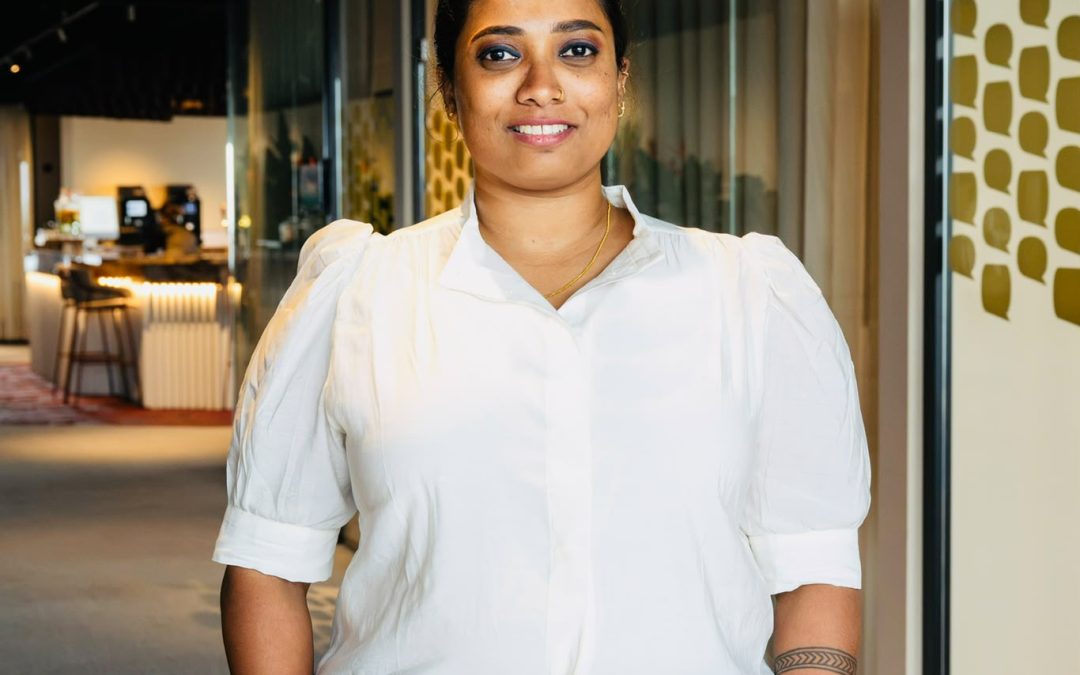
Shilpa is a narratologist, writer and founder of The Bridge HUB. She moved to the Netherlands as an undiagnosed neurodivergent expat and learned the cost of masking firsthand. Now she builds ways across. Affordable Dutch classes. Music lessons for those with passion but not privilege. Storytelling for people ready to tell their own. She is a National ECHO Award nominee. Her belief is simple. Access shouldn’t be a privilege. Everyone deserves a way across. She is a guest writer with IamExpat and contributor for The Hague Online.
When you move to a new country as an expat spouse, something inside you changes. It is not only the obvious change: new streets, new language, new weather, new paperwork. It is something deeper. You have left behind a job, colleagues, routines, friends, family, and the small daily interactions that quietly made you feel like a person. And then you begin again.
Not as a student with a clear programme. Not as a professional with a job waiting for you. You begin as a trailing partner: someone who has moved because someone else moved, someone whose visa, housing, and future are often tied to another person’s status. People talk about expat life as if it is exciting. Sometimes it is. But there is another side: the loneliness of starting from scratch. This is the part of migration that does not make it into relocation guides.
When I moved to the Netherlands as an expat spouse, I had to learn how to exist in a place where everyone else seemed to know what to do. They knew which supermarket to choose, how to book a doctor’s appointment, how to register with the municipality. I had to learn all of it while also learning how to be alone in a new way.
As a trailing partner, your arrival can feel strangely passive. You did not choose the job. You did not choose the city. You followed someone you love. That is an act of trust, love, and sacrifice. But it can also make you feel like your life is happening in the background of someone else’s life. Your partner has colleagues, a schedule, and a reason to leave the house every morning. You have a to-do list: registering, applying, translating, waiting. And while everyone congratulates you on the move, very few people ask the harder question: “What will your life look like here?”
Sometimes the hardest moments are not dramatic. Sometimes it is buying bread and milk. At home, it takes five minutes. You do not think about it. In a new country, you stand in a supermarket comparing labels you cannot read. You find fifteen types of bread, none of them familiar. At the checkout, the cashier says something. You do not catch it. You panic for a second. Are you holding up the queue? It sounds ridiculous when you explain it later. But it is not really about bread and milk. It is about competence. It is about feeling capable in the world. You start thinking: I used to manage so much. Why is this so difficult? Because you are rebuilding an entire life from zero, in a language that is not yours, without the support system that once made daily life feel easy.
Before moving, you were someone with a clear role. You had people who knew you. Now your qualifications need validation, your experience does not fit the local job market, and your network may be reduced to one person: your partner. You become “the partner of” someone. People ask what your partner does. They rarely ask what you are building. And slowly, you begin to shrink your own story. You stop introducing yourself as a writer, a professional, a person with ambitions. You start saying you “just moved here.” Those phrases are honest, but they can also become a cage. You are not only someone who moved. You are someone who had a life before this move, and you are building a life after it.
One of the hardest parts is missing the ease of friendship. At home, friendships grow through repetition. Life puts you in the same room with the same people again and again. In a new country, that repetition disappears. You meet someone once. You say, “We should get coffee sometime.” Then nothing happens. Not because either person does not care. But because connection requires someone to take the first step. For an expat spouse, that step feels especially hard. You worry about your accent, your Dutch, your job situation. So you wait until you feel more “ready.” But belonging does not arrive when you feel ready. It arrives when you keep showing up before you feel ready.
Being alone can be peaceful. Loneliness is different. Loneliness is sitting in a beautiful apartment in a new country and feeling invisible. It is having a partner who loves you but cannot fully understand your loss. It is cooking for one, or going to bed early because there is nowhere to be tomorrow. And you may feel guilty for it. I chose this. I am safe. Why am I struggling? But loneliness is not a lack of gratitude. Both things can be true. You can love your new life and miss your old one.
Then there is the pressure to become useful quickly. “Are you working?” “Are you studying Dutch?” “Have you found a job yet?” Every vacancy asks for a network in the Netherlands or Dutch language skills. You are told you need local experience, even though no one will give you local experience until someone gives you a chance. Opportunity is not only about talent. It is also about access. But your worth does not disappear because your career is paused. Migration is not a productivity challenge. It is a major life transition. Sometimes the most productive thing you can do is give yourself permission to take time.
Language is more than grammar. Many people in the Netherlands speak English, which can be comforting. But you can understand enough to survive and still not enough to belong. Language is how people invite you into their world. Every new word is a small key. You do not need to speak perfectly to belong. But saying “goedemorgen” and allowing yourself to be a beginner again can open doors.
You will need to learn how to celebrate differently. Your victories may look small: you make a phone call in Dutch, you attend an event alone, you understand a joke, you introduce yourself without apologising for being new. These are not small things. Each one is proof that you are building a life. Your timeline is your own.
One mistake I made was expecting connection to feel immediate. But it begins with small, imperfect moments. A neighbour says hello. A woman at a language class remembers your name. None of these feels like friendship yet. But they are its raw material. Go to the same café. Say yes to the second invitation. Send the message first. Ask for help, too. It is not weakness. In migration, it is survival. It may feel awkward. But that awkwardness is often the price of belonging.
If you are living this now, you do not have to perform a successful migration story for anyone. You are allowed to say: “This is hard.” “I miss who I was.” “I am still finding my place.” Those sentences are not complaints. They are truth. And when you speak them, you may discover that someone else has been waiting for permission to say the same thing.
Slowly, something shifts. You learn the streets. You recognise the cashier. You meet someone who becomes a friend. You begin to create rhythm, and rhythm is what turns a place into a home.
Moving to the Netherlands as a trailing partner taught me that belonging is not something you receive. It is something you participate in. There were days when buying bread and milk felt like a challenge. There were days when I wondered whether I would ever feel like myself again. But I was not losing myself. I was meeting a new version of myself. A version that could live between cultures. A version that understood that home is not only a place you come from, but also a place you create.
Starting from scratch is painful. But it is also powerful. Because when you build something from nothing, you learn that you were never nothing. You were always the foundation.