The smell hits you before anything else on Lange Voorhout — charcoal smoke curling off satay grills, the sweet-sharp tang of sambal, someone’s kroket frying two stalls down. This is Jalan Pedis, the culinary spine of Jalan Jalan festival, and for three days in August it turns one of The Hague’s grandest streets into something closer to a Jakarta night market — if a Jakarta night market had also absorbed seventy years of Dutch history along the way.
Indonesian roots, Dutch soil, something entirely its own is exactly what Jalan Pedis, the food festival at the heart of the wider Jalan Jalan organisation, is built to hold. Vanja van der Leeden, one of its organizers shares her hopes for the festival and beyond. Vanja is a chef and cookbook author, and when I sat down with her, I expected a straightforward conversation about food. What I got instead was a family history that doubles as a history of this city’s largest, quietest diaspora.
Vanja grew up in The Hague of Indisch origin — the term for the mixed Dutch-Indonesian community that has shaped this city since the mid-20th century, when hundreds of thousands of people left the newly independent Indonesia for a Netherlands many of them had never actually lived in. Her grandmother, she told me, wasn’t much of a cook. Her mother cooked, but only ever from recipes — nothing improvised, nothing passed down by feel. What Vanja absorbed growing up was Indisch cooking: the Dutch-Indies hybrid cuisine that Indo families built for themselves after arriving here, working with whatever ingredients they could find, filling the gap where a formal food culture for their community simply didn’t exist yet.
It’s a detail that says more about this city than any timeline could. The Hague earned the nickname “Weduwe van Indië” — Widow of the Indies — because so many repatriates from the former Dutch East Indies settled here after 1949, and especially after Indonesia’s more nationalist turn in the late 1950s pushed out remaining Dutch nationals. You can still read it in the street names of the Archipelbuurt — Javastraat, Sumatrastraat — and in the toko shelves stocked with ingredients that had nowhere else to exist in Dutch supermarkets. But Vanja’s story is a reminder that what took root here wasn’t a transplanted Indonesian cuisine. It was something new, built from memory, scarcity, and improvisation. Indisch food, not Indonesian food — a distinction that matters more than it might sound.
What she didn’t grow up with, Vanja went looking for later. She travelled to Indonesia and spent time learning from some of the country’s most respected chefs — encountering, in many cases for the first time, the cooking her own family’s version had been adapted from. She brought that research home and eventually shaped it into a cookbook: Indo Rock, named for the food and the music of the Indo-Dutch community — a nod to the genre Indo musicians helped build in the Netherlands in the 1950s and 60s, guitars and all, as well as how Vanja is bringing some rock n roll to cooking. It’s a neat structure for a life’s work: grow up on the adapted version, go find the source, then write the book that puts them in conversation with each other. In fact, Vanja brought her copy of Indo Rock to our meeting for exactly this reason — to show, concretely, how a traditional recipe can move into the present without losing what makes it what it is.
That balancing act is really the whole culinary mission behind Jalan Pedis. Vanja was careful to spell it out: this isn’t only an Indisch food festival. The ambition is to show the full breadth of the diaspora’s cuisines side by side — Indisch, Indonesian, Moluccan, Papuan, Surinamese-Javanese, Peranakan — and to give more room than usual to Indonesia’s own vast regional variety, which rarely gets represented in full outside the archipelago itself. Memory and nostalgia matter deeply here — Vanja’s own story makes that obvious — but she’s just as focused on the third and fourth generation: the visitors and creators who are taking these cuisines somewhere new. Knowing where the food comes from, in other words, without treating that as the end of the story. The world will continue to evolve and grow and it only makes sense that this food and its chefs, evolve and grow with it.
Vanja wants Jalan Pedis to grow — not just in size, but in what it’s asking of the people who show up. Her hope is straightforward: that each year, it pulls a few more people into actually understanding the community and the history behind the food, rather than just eating it. Last year’s smaller preview, a single afternoon of Jalan Pedis on Lange Voorhout, drew far more visitors than organizers expected — toko and Indisch restaurants across the city reportedly saw the overflow. This year’s expanded, three-day edition of the broader Jalan Jalan Festival, spread across Filmhuis Den Haag, Museum Sophiahof, GR8, and Pulchri Studio, felt like the festival catching up to the appetite that was already there.
Standing on Lange Voorhout with a paper plate of nasi, it’s easy to just enjoy the festival as a festival — good food, good music, a packed street on a warm August evening. And that’s fine. But talking to Vanja, I kept coming back to her grandmother, the one who wasn’t much of a cook, and her mother, cooking carefully from recipes because nothing else had been handed down. Somewhere between them and Vanja’s cookbook is the story of an entire community rebuilding a cuisine — and by extension an identity — from scratch, in a country that didn’t always make space for it to happen.
Jalan Jalan, at its best, is that rebuilding made visible for a weekend. And if Vanja gets her way, it’ll only get bigger from here.
Who was cooking at Jalan Pedis
Part of what makes the festival worth returning to year after year is the sheer range on offer — home cooks alongside restaurant kitchens, Moluccan specialities next to fusion experiments. Here’s who was serving this year:
Food tuk — Saté ajam / babi / kambing / tempeh as full portions, with lontong, atjar, homemade satésaus, fried onions, kentang, and pandan cake
Gina Bratawidjaja — Homemade Indonesian iced drinks, including ijs rujak pedis, ijs tjendol durian, ijs campur, ijs klepon, ijs kelapa muda/dawet, and ijs aardbei
Saté Bar on Tour (from restaurant Sarinande in The Hague) — Everything off the BBQ: ikan bakar, half chicken, ribs, saté
Ins&Outs Catering — Pisang goreng, lemper and an Indo bar platter (maize cakes, loempia, pangsit, pastei, and more)
Organisatie Jalan Jalan — The Jalan Bites bus, serving fusion bites like Indo tostadas with chicken rendang and acar, spicy aubergine with basil, and salmon with Balinese sambal matah, alongside babi pangang ribs with mango sambal and pecel made from roasted pointed cabbage with lontong and krupuk
Indische curryworst — A caterer from Uitgeest
Coffee on Wheels (Mark Zevenbergen, Kim Padding) — Coffee truck and warm drinks
De Indo / Hangry Foodtruck (from Scheveningen) — Sandwiches and sate
El Careto – pandan tiramisu fusion from the mobile chef often found on Lange Voorhout
Vanja’s picks for Indonesian food beyond the festival
If Jalan Jalan leaves you wanting more, Vanja’s own go-to spots are a good place to start — a mix of Hague institutions and Amsterdam detours:
Warung Lapek Jo (The Hague)
De Javaan (The Hague)
Trio Eethuis (The Hague)
Martabak House (The Hague)
Paon Bali (Amsterdam)
Warung Pas (Amsterdam)
Warung Indonesia (Haagse Markt)
Follow Vanja on Instagram and grab one of her cookbooks here
Photos provided by: Vanja van der Leeden on behalf of photographers Nina Akollo, Hans Mahler and Rosa van Leeuwen
Do you have a story about your own café, restaurant or bar in the city? Reach out to sherika@thehagueonline.com to possibly be featured.
Sherika Rooplal-Clappers is a contributing writer for The Hague Online, covering culture, lifestyle, and local events. With a passion for storytelling and international perspectives, she highlights the people, places, and experiences that make The Hague a dynamic city.
Photographer Eva Besnyö (1910 – 2003) was not only a witness to, but also a driving force behind the emancipation of photography. Together with her contemporaries, she experimented freely with a new visual language: away from painting, focused on reality, close-up, and full of dynamism.
This autumn, Fotomuseum Den Haag presents one of the largest retrospective exhibitions ever of Eva Besnyö’s work. It is composed of photographs from its own collection, the most extensive Besnyö collection in the world. Set against the backdrop of a profoundly changing Europe, the exhibition traces Besnyö’s life: from her first experiences with the camera in Budapest and her formative years in the raw Berlin of the 1930s to her life and career in Bergen and later Amsterdam, where she was part of a progressive creative network. The Second World War, which left deep scars, and her involvement with the Dolle Mina movement in the 1970s are also included. With vintage prints, archival material, magazines, and personal documents, the exhibition offers a rich picture of Besnyö’s oeuvre as well as of the twentieth century, in which political upheavals and the struggle for women’s emancipation are closely intertwined with her life and work.
“Besnyö possessed not only exceptional photographic talent but also entrepreneurial spirit. From her position as a migrant, she consistently managed to carve out a place for herself within leading artistic circles, build her own practice through photo assignments, and develop initiatives that advanced photography, including the groundbreaking exhibition Foto ’37 at the Stedelijk Museum Amsterdam.” – Margriet Schavemaker, General Director of the Kunstmuseum and Fotomuseum The Hague
New Photography
Stylistically, a large part of Eva Besnyö’s work belongs to New Photography, a movement in which the camera was used to show the world in a new, objective, and experimental way. Surprising camera angles, strong diagonal lines, and clear compositions are characteristic of this. With a keen eye, she captures people, cities, architecture, and societal changes. Her photographs show the world as it was: modern, dynamic, and constantly in motion.
In the footsteps of a century
The exhibition traces Besnyö’s life, starting with her childhood in Budapest and her move to Berlin. Together with her then-lover John Fernhout, she exchanged Berlin for Bergen in 1932, where she formed a close friendship with her mother-in-law, Charley Toorop. Through her in-laws, she found herself at the forefront of the Dutch artistic scene. The Second World War marked a turning point in her life. The Jewish Besnyö had to go into hiding, and her work came to a standstill. In post-war Netherlands, she focused her camera on a society in transition: from reconstruction to women’s emancipation, of which her photographs of Dolle Mina have since become iconic documents. In addition to photographs and personal documents by Besnyö, a self-portrait by Charley Toorop and chairs by Gerrit Rietveld are also on display in the exhibition. This addition underscores the extent to which Besnyö was part of the artistic circle in the Netherlands during the 1930s.
Largest collection of Besnyö
In 2023, Fotomuseum Den Haag / Kunstmuseum Den Haag acquired an important collection of 341 prints by photographer Eva Besnyö. All of these photographs were printed in the darkroom by Besnyö herself or under her supervision. The collection includes, among others, the famous portrait of the little boy with the bass, portraits of artist friends such as Charley Toorop and Violette Cornelius, and the street scene taken on Starnberger Straße in Berlin with her characteristic diagonal lines.
This collection was in the possession of Iara Brusse, the daughter of Besnyö. The acquisition of the collection was made possible by a combination of purchase and donation, with support from the Erik Bos Fund.
Publication
Accompanying the exhibition is the publication of the same name, ‘Eva Besnyö – The Liberated Camera’. With text contributions by Maurits de Bruijn, Nienke Coers, Margriet Schavemaker, Iris Sikking, Lou Stoppard, and Willemijn van der Zwaan. The photobook was designed by Hans Gremmen and is published by Hannibal Books.
Biography
Eva Besnyö (1910 – Laren 2003) was born in Budapest. As a teenager, she received a camera from her father, and this proved to be a pivotal moment for the rest of her life. In Budapest, she took lessons from the renowned photographer József Pécsi, who encouraged her to leave for Berlin in 1930 to pursue photography. Due to the rise of fascism, she was forced to move to the Netherlands in 1932, where she quickly gained fame as a professional photographer. Besnyö played a crucial role in the development of Dutch photography in the 20th century. She was one of the most famous figures within the New Photography movement in the Netherlands, which was characterized by a modern, experimental approach and a focus on everyday subjects.
In addition to her artistic work, Besnyö was also socially engaged. In the 1970s, she used her photography as a means to draw attention to women’s rights. Her photographic oeuvre encompasses a wide range of subjects, varying from portraits and street photography to landscapes and abstract compositions. Eva Besnyö passed away on December 12, 2003, in Laren.
This exhibition is made possible in part by the City of The Hague, VriendenLoterij, Erik Bos Fonds, Vereniging Vrienden van Kunstmuseum Den Haag, and V-fonds.
The research preceding the exhibition and publication was carried out with the support of the Vereniging Rembrandt (thanks in part to its Fund for Research into Modern and Contemporary Art).
Venue provided complimentary food and drinks during Sherika’s visit for this feature. The Hague Online retained editorial control, and the views expressed are the writer’s own
When I first visited The Story Café and Concept Store shortly after it opened, I wrote about the sense of warmth you feel the moment you walk in — the hand-painted walls, the encouraging words on every table, the smell of soup and baking that makes you slow down. But on a second visit, I found something more. Behind the beautiful surface of this café is a woman with a very clear philosophy, and the more time you spend here, the more you understand it.
Meryem Hammiche is, depending on when you catch her, a dietician, a mental health coach and a wellness instructor. “I want people to feel good when they leave here, to also know they have a space where they feel comfortable” she tells me.
Nowhere is this philosophy more evident than in the café’s expanding range of sugar-free bakes and sweet treats. Not “good for sugar-free,” just good. Rich, satisfying banana bread that is paired with mascarpone and chia seed jam and the simple yet light, poppyseed cake which make for a gezellig afternoon treat that is good for mind and body.
But more than just food, tucked into corners and along shelves are beautiful small objects — candles, stationery, interior pieces, handmade cards — all from independent makers and small business owners that Meryem has chosen to platform. The idea is simple: if you’re a small business owner with a well-made product and nowhere to show it, you can reach out to Meryem and she will find a place for it here. It’s a living, rotating shop floor inside a café — and it means that every visit feels slightly different, slightly new. For the makers involved, it’s a chance to get their work in front of the steady stream of locals and regulars who call The Storycafe their own.
The newest addition to The Story Cafe’s offering is one I’m particularly excited about: art workshops, for both children and adults. Given everything else Meryem has built here — the mental health coaching background, the community-first ethos, the café as living room — it makes complete sense. Creative expression, she believes, is another form of nourishment. A way of processing, connecting, and showing up for yourself.
Whether you’re a parent looking for something meaningful for your child on a weekend, or an adult who has been meaning to pick up a brush for years and never quite managed it, this feels like exactly the kind of low-stakes, warm-environment way to start. Details on upcoming sessions are on their Instagram — and given how quickly things tend to fill up at places like this, it’s worth following sooner rather than later. Also on the calendar is a dog-friendly event — imagine a space where your furry friend is truly welcomed and the two of you can enjoy it together.
What strikes me most about The Story Cafe, on this second visit, is how rare it is. It’s easy to open a café. It’s much harder to build something with a genuine point of view — a place where the food, the space, the community and the programming all point in the same direction. Meryem has done that. And The Hague is better for it.
The Story Café and Concept Store is open seven days a week on Appelstraat 175. Small business owners interested in featuring their products in the concept store space can reach out via Instagram. Art workshops for children and adults, dog parties and more are coming soon — follow them so you don’t miss out.
Do you have a story about your own café, restaurant or bar in the city? Reach out to sherika@thehagueonline.com to possibly be featured.
Sherika Rooplal-Clappers is a contributing writer for The Hague Online, covering culture, lifestyle, and local events. With a passion for storytelling and international perspectives, she highlights the people, places, and experiences that make The Hague a dynamic city.
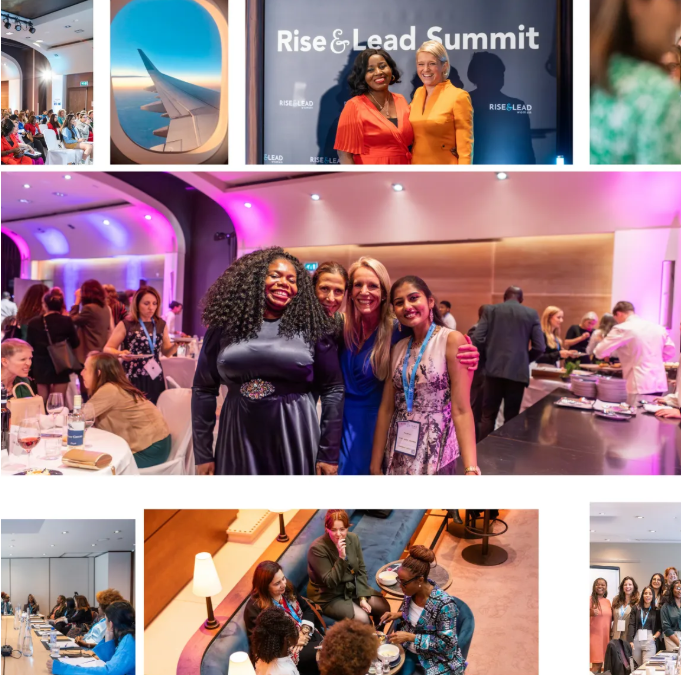
Europe’s premier gathering for leaders who are serious about inclusive leadership, gender equity, and what it means to lead with purpose when everything is changing.
Each year since 2018, Rise and Lead Women bring together exceptional and authentic leaders for a cross-sector knowledge-sharing event, engaging in conversations that drive change in inclusion and leadership. Senior executives, international thought leaders, policymakers, and experts share their wisdom and insights on the latest trends in inclusion, women’s leadership, and allyship.
This year’s theme, Leading With Purpose in the Age of AI, sits at the intersection of everything leaders are navigating right now: technological transformation, inclusion accountability, and the question of what it means to lead with values when the pressure to move fast demands.
The Summit will focus on four pillars: Leadership, Inclusion, Allyship, AI & Future of Work.
Join to soak up the knowledge, add to the conversation and ignite empowerment!
Speakers this year includeHanneke FaberCEO Logitech, Hajir Hajji CEO Action and many more
Venue provided complimentary food and drinks during Sherika’s visit for this feature. The Hague Online retained editorial control, and the views expressed are the writer’s own
Say “Indian food” to most people in the West, and a familiar picture comes to mind: takeout containers, a lot of oil, and a spice level that’s either “mild” or “regret.” It’s cheap, it’s convenient, and — the assumption goes — it’s basically all the same, just curry in different colours.
It couldn’t be further from the truth.
India isn’t one cuisine. It’s thousands of them. The country splits into broad geographic zones — north, south, east, west, and the northeast — and each one cooks with entirely different staple grains, techniques, and flavour profiles shaped by its own climate, history, and culture. Kashmiri rogan josh and Chennai-style chicken Madras have about as much in common as a Neapolitan pizza and a Swedish meatball — they’re both “Indian food” the way both those dishes are “European food,” which is to say, technically true and practically meaningless. Travel across the country and the menu changes completely: steamed momo (dumplings) in the northeast, pork with fermented soybean, tangy tamarind-and-coconut curries down south, delicate mustard-and-fish dishes in the east. It’s a tapestry, not a single dish repeated in different sauces.
This is exactly the reputation Vinoth Govind is working to change from his restaurant, Mad’Ras, on Piet Heinstraat. Walk into Mad’Ras and the first thing you notice is that it doesn’t look like most Indian restaurants you’ve been to. Blue ceramic plates are lined precisely along the tables, copper wine goblets catch the light behind the bar. It reads more like fine dining than the casual spots the cuisine usually gets slotted into — and that’s deliberate.
Vinoth never trained formally as a chef. He was, in his own words, always a foodie. While he grew up in Chennai, he visited his grandparents who had a small farm in Tamilnadu, where feeding anyone who walked through the door wasn’t optional, it was the rule. “If you weren’t going to eat here, don’t bother coming,” his grandparents used to say. That ethic of hospitality followed him into a corporate HR career, one that took him and his wife through Singapore, the Philippines, and other parts of Asia before they eventually settled in The Hague in 2022.
But HR is not the industry for someone who believes food is love. Vinoth spent years on the exhausting, emptying task of laying off hundreds of people at a time, and at some point the pull back toward the kitchen got too loud to ignore. He’d already opened restaurants before, in other countries, each time leaving behind a piece of his heart along with the business. He wasn’t planning on starting another one when his wife’s job brought them to the Netherlands. Then he got lost on a walk one day and stumbled onto Piet Heinstraat.
There, he struck up a friendship with Clarence, owner of the café then known as Bij Clarence, and found himself pulled back into the food world almost by accident. A space on the street had just come free — previously home to a Brazilian fusion restaurant run by João Proença — and after six months of work, it became Mad’Ras.
Vinoth is quick to credit the neighbourhood for what came next. Plenty of people doubted a new restaurant could survive in that spot; others had tried and closed before him. But Clarence and João, along with the wider street community, backed him from day one. He now counts them as family, and it’s part of why The Hague, a city he arrived in almost by chance, has stayed close to his heart.
Mad’Ras keeps its menu tight, but each dish carries its own regional identity rather than blending into one generic “Indian” flavour. The lamb rogan josh — Vinoth’s personal favourite — carries a rich, warming character, and the tandoori prawns arrive smoky and char-kissed, in the northern tradition. And the chicken Madras brings the fire and depth of the south.
Crucially, none of it has been dialled down for a Dutch palate. What lands on your table is what you’d be served in Chennai or Kashmir itself — spice included. That said, if heat isn’t your thing, there’s still plenty on the menu to give you an honest taste of the cuisine without watering it down into something unrecognisable. You will also find some iems unique to Mad’Ras, such as the truffle naan which was inspired by Vinoth’s 13 year old daughter – a combination I had doubts about as truffle is often overused in most restaurants or of poor quality – yet paired with dishes like the butter chicken, it was sensational.
Behind that consistency is a kitchen team of four, all trained in five-star hotels across India, and it shows in the precision of every plate. The drinks list carries the same care. The Mad’Ras Tadka cocktail — gin or whisky, lime, sugar, ginger ale, and chaat masala — is light and refreshing, built to stand up against the spiced food rather than disappear next to it. Vinoth’s own love of wine shows up here too, with bottles sourced from further afield than you’d expect, including Georgia and Lebanon, rounding out a drinks menu as considered as the food.
Mad’Ras is the kind of place you find yourself wanting to return to — and to bring everyone you know along with you. It’s comfort food, elevated without tipping into pretension, and Vinoth’s hospitality is evident from the moment you walk through the door. If you’ve been carrying around the wrong idea of what Indian food is, this is exactly where to go to have it corrected. I myself, am of South African-Indian heritage and this place tastes like a mothers embrace.
Vinoth has since moved back to India; however, he continues to operate the restaurant with his dedicated team. Soon, a new menu will be unveiled — one I’m eagerly anticipating.
Piet Heinstraat 97, The Hague
Open for dinner only, Tuesday to Sunday
Images: Sherika Rooplal-Clappers
Do you have a story about your own café, restaurant or bar in the city? Reach out to sherika@thehagueonline.com to possibly be featured.
Sherika Rooplal-Clappers is a contributing writer for The Hague Online, covering culture, lifestyle, and local events. With a passion for storytelling and international perspectives, she highlights the people, places, and experiences that make The Hague a dynamic city.