Eight European cities that host international organizations are calling on the European Commission to actively contribute to the protection of the International Criminal Court (ICC) in The Hague. The joint appeal follows the far-reaching sanctions announced by the US government against the ICC. According to the mayors, not only is the future of the court at stake, but also the protection of the international legal order and of international organizations working worldwide for peace, justice, and security.
The appeal is made in a letter sent on October 27 to the President of the European Commission, Ursula von der Leyen. The letter is signed by the mayors of Amsterdam, Barcelona, Brussels, The Hague, Lille, Paris, Rome, and Strasbourg. These cities have in common that they host international organizations that contribute to a better and safer world.
“It is our duty to ensure that they can do their work in a safe and independent manner,” the mayors write. “The sanctions imposed by the United States against the ICC, an institution established to provide justice for the most serious crimes affecting the international community, show that we cannot do this alone.”
Existential challenge
They also state that the burden of that protection cannot be borne by the individual host countries. “To ensure that the International Criminal Court can withstand this existential challenge, a coordinated global and European response is required.”
In their letter to the President of the European Commission, the eight mayors call this moment a litmus test. “Not only for the future of the ICC, but for all international organizations to which we attach importance. We cannot protect the international legal order if we do not stand behind the people who dedicate themselves to it every day.”
International network
The mayors call on Ursula von der Leyen to strongly express her support for the ICC. They also ask her to use the instruments and international network of the European Commission to ensure that the ICC can continue to function. For, as they state: “No one serving the law should suffer as a result.”
Mayor Jan van Zanen of The Hague, international city of Peace and Justice, is the initiator of the letter. It is signed by Femke Halsema (Amsterdam), Jaume Collboni (Barcelona), Philippe Close (Brussels), Arnaud Deslandes (Lille), Emmanuel Grégoire (Paris), Roberto Gualtieri (Rome), and Catherine Trautmann (Strasbourg).
Source: Gemeente Den Haag, translation to English The Hague Online
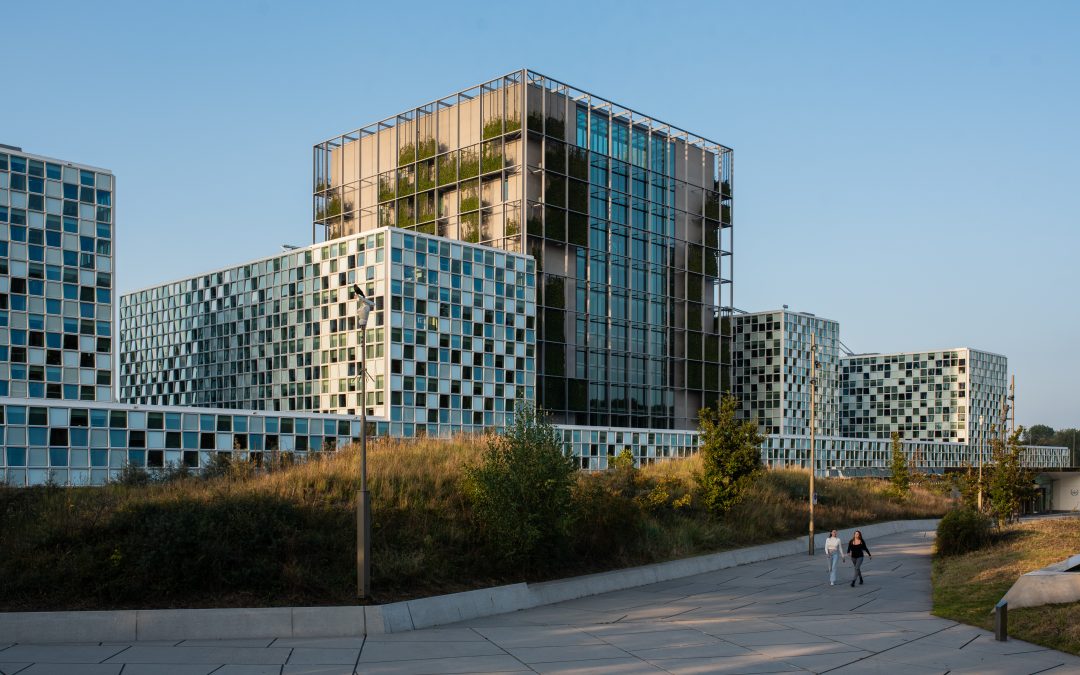
Image: The Hague & Partners/HPM. The building of the International Criminal Court (ICC) on Oude Waalsdorperweg in The Hague.
The Municipal Executive of The Hague has adopted a new Two-Year Policy Plan for Arts and Culture 2027–2028. Through this scheme, the municipality supports cultural institutions for two years in the implementation of their plans. For the period 2027–2028, €1,226,500 per year will be awarded to 14 institutions that achieved the highest scores in an assessment by an independent advisory committee.
This subsidy scheme is intended for organisations that wish to receive support for their cultural activities for two years. The scheme was established two years ago to facilitate the flow of incidental funds to the four-year subsidy scheme – the Multi-Year Policy Plan for Arts and Culture.
Alderwoman Lotte van Basten Batenburg (Culture): “The Hague is bursting with cultural talent and wonderful initiatives. From places where residents and visitors can enjoy culture, to organizations that provide space for creators and help new talent grow. With this two-year scheme, we are giving a number of institutions the certainty and space to continue their work and further develop new plans. The fact that so many organizations submitted an application shows how vibrant and diverse our cultural sector is. Unfortunately, we were unable to award all positively assessed applications.”
Great interest
The following institutions receive a grant from the Two-Year Policy Plan for Arts and Culture 2027-2028:
Flora Film Theater
Modelo62
No Limits Festival
Alba Theatre House
Poernima Dance Company
Life at Haverkamp
House of Rapture
Jalan Jalan Festival
Theater Branoul
Cameretten
Connect the Dots Movement
Classical Behind the Dunes
Orisun Studio
The Grey Space in the Middle
A total of 66 applications were submitted. Of these, 54 applications have already been assessed by an independent advisory committee. Based on pre-established criteria, the applications received an evaluation and a point score. The available funds are distributed according to a tender system: applications with the highest scores receive a subsidy until the budget is exhausted. Due to a limited budget, not all positively assessed applications could be awarded.
Seven applications still being processed
During the handling of objections against the dismissal of several applications, it became apparent that seven applications must still be assessed. These organizations have been given the opportunity to submit missing information, after which the independent advisory committee will assess their applications in the same manner as the other applications.
To prevent the 54 applicants who have already been assessed from remaining in uncertainty any longer, the Municipal Executive has decided to adopt the Two-Year Policy Plan now based on the available assessments. The Executive is expected to make a decision on the seven additional applications in early December.
Should that assessment reveal that one or more of these applications achieve a score exceeding the current subsidy ceiling, the Municipal Executive will make additional funds available to award subsidies to these organizations as well.
The complete Two-Year Policy Plan for Arts and Culture 2027-2028 can be read here (in Dutch)
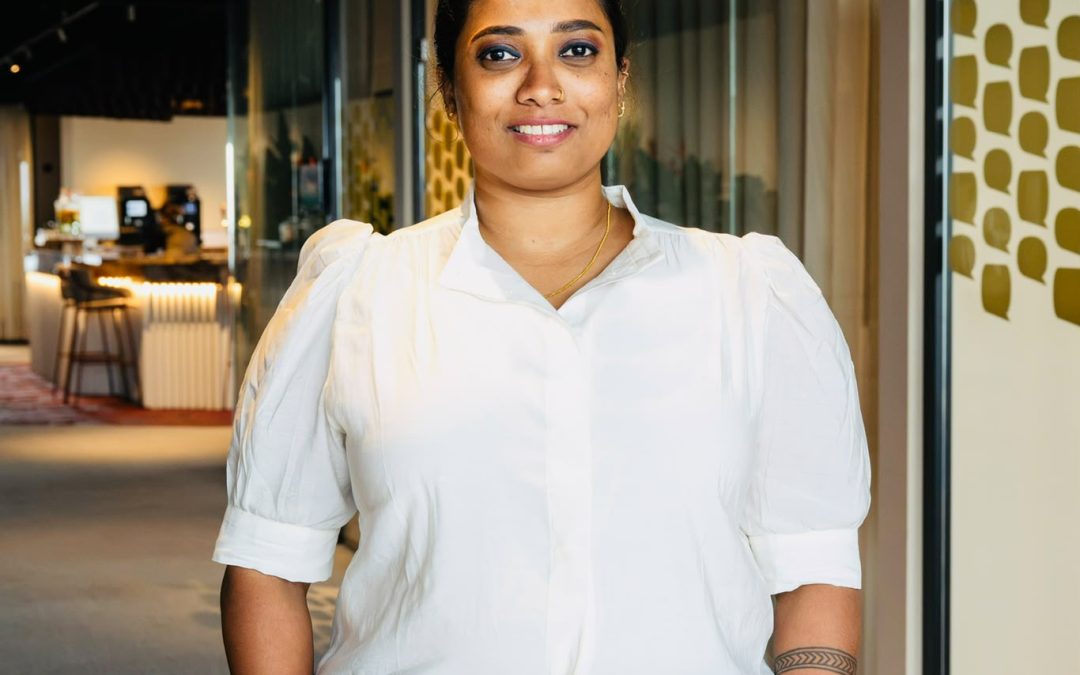
Shilpais a narratologist, writer and founder of The Bridge HUB. She moved to the Netherlands as an undiagnosed neurodivergent expat and learned the cost of masking firsthand. Now she builds ways across. Affordable Dutch classes. Music lessons for those with passion but not privilege. Storytelling for people ready to tell their own. She is a National ECHO Award nominee. Her belief is simple. Access shouldn’t be a privilege. Everyone deserves a way across. She is a guest writer with IamExpat and contributor for The Hague Online.
When you move to a new country as an expat spouse, something inside you changes. It is not only the obvious change: new streets, new language, new weather, new paperwork. It is something deeper. You have left behind a job, colleagues, routines, friends, family, and the small daily interactions that quietly made you feel like a person. And then you begin again.
Not as a student with a clear programme. Not as a professional with a job waiting for you. You begin as a trailing partner: someone who has moved because someone else moved, someone whose visa, housing, and future are often tied to another person’s status. People talk about expat life as if it is exciting. Sometimes it is. But there is another side: the loneliness of starting from scratch. This is the part of migration that does not make it into relocation guides.
When I moved to the Netherlands as an expat spouse, I had to learn how to exist in a place where everyone else seemed to know what to do. They knew which supermarket to choose, how to book a doctor’s appointment, how to register with the municipality. I had to learn all of it while also learning how to be alone in a new way.
As a trailing partner, your arrival can feel strangely passive. You did not choose the job. You did not choose the city. You followed someone you love. That is an act of trust, love, and sacrifice. But it can also make you feel like your life is happening in the background of someone else’s life. Your partner has colleagues, a schedule, and a reason to leave the house every morning. You have a to-do list: registering, applying, translating, waiting. And while everyone congratulates you on the move, very few people ask the harder question: “What will your life look like here?”
Sometimes the hardest moments are not dramatic. Sometimes it is buying bread and milk. At home, it takes five minutes. You do not think about it. In a new country, you stand in a supermarket comparing labels you cannot read. You find fifteen types of bread, none of them familiar. At the checkout, the cashier says something. You do not catch it. You panic for a second. Are you holding up the queue? It sounds ridiculous when you explain it later. But it is not really about bread and milk. It is about competence. It is about feeling capable in the world. You start thinking: I used to manage so much. Why is this so difficult? Because you are rebuilding an entire life from zero, in a language that is not yours, without the support system that once made daily life feel easy.
Before moving, you were someone with a clear role. You had people who knew you. Now your qualifications need validation, your experience does not fit the local job market, and your network may be reduced to one person: your partner. You become “the partner of” someone. People ask what your partner does. They rarely ask what you are building. And slowly, you begin to shrink your own story. You stop introducing yourself as a writer, a professional, a person with ambitions. You start saying you “just moved here.” Those phrases are honest, but they can also become a cage. You are not only someone who moved. You are someone who had a life before this move, and you are building a life after it.
One of the hardest parts is missing the ease of friendship. At home, friendships grow through repetition. Life puts you in the same room with the same people again and again. In a new country, that repetition disappears. You meet someone once. You say, “We should get coffee sometime.” Then nothing happens. Not because either person does not care. But because connection requires someone to take the first step. For an expat spouse, that step feels especially hard. You worry about your accent, your Dutch, your job situation. So you wait until you feel more “ready.” But belonging does not arrive when you feel ready. It arrives when you keep showing up before you feel ready.
Being alone can be peaceful. Loneliness is different. Loneliness is sitting in a beautiful apartment in a new country and feeling invisible. It is having a partner who loves you but cannot fully understand your loss. It is cooking for one, or going to bed early because there is nowhere to be tomorrow. And you may feel guilty for it. I chose this. I am safe. Why am I struggling? But loneliness is not a lack of gratitude. Both things can be true. You can love your new life and miss your old one.
Then there is the pressure to become useful quickly. “Are you working?” “Are you studying Dutch?” “Have you found a job yet?” Every vacancy asks for a network in the Netherlands or Dutch language skills. You are told you need local experience, even though no one will give you local experience until someone gives you a chance. Opportunity is not only about talent. It is also about access. But your worth does not disappear because your career is paused. Migration is not a productivity challenge. It is a major life transition. Sometimes the most productive thing you can do is give yourself permission to take time.
Language is more than grammar. Many people in the Netherlands speak English, which can be comforting. But you can understand enough to survive and still not enough to belong. Language is how people invite you into their world. Every new word is a small key. You do not need to speak perfectly to belong. But saying “goedemorgen” and allowing yourself to be a beginner again can open doors.
You will need to learn how to celebrate differently. Your victories may look small: you make a phone call in Dutch, you attend an event alone, you understand a joke, you introduce yourself without apologising for being new. These are not small things. Each one is proof that you are building a life. Your timeline is your own.
One mistake I made was expecting connection to feel immediate. But it begins with small, imperfect moments. A neighbour says hello. A woman at a language class remembers your name. None of these feels like friendship yet. But they are its raw material. Go to the same café. Say yes to the second invitation. Send the message first. Ask for help, too. It is not weakness. In migration, it is survival. It may feel awkward. But that awkwardness is often the price of belonging.
If you are living this now, you do not have to perform a successful migration story for anyone. You are allowed to say: “This is hard.” “I miss who I was.” “I am still finding my place.” Those sentences are not complaints. They are truth. And when you speak them, you may discover that someone else has been waiting for permission to say the same thing.
Slowly, something shifts. You learn the streets. You recognise the cashier. You meet someone who becomes a friend. You begin to create rhythm, and rhythm is what turns a place into a home.
Moving to the Netherlands as a trailing partner taught me that belonging is not something you receive. It is something you participate in. There were days when buying bread and milk felt like a challenge. There were days when I wondered whether I would ever feel like myself again. But I was not losing myself. I was meeting a new version of myself. A version that could live between cultures. A version that understood that home is not only a place you come from, but also a place you create.
Starting from scratch is painful. But it is also powerful. Because when you build something from nothing, you learn that you were never nothing. You were always the foundation.
For one woman Rik van Wieren met while developing the PillenPopper, getting seven pills out of their packaging was a weekly struggle. Living with severe arthritis, she described spending around fifteen painful, frustrating minutes on the task.
During an early test with the PillenPopper, she managed it herself in under two minutes and reported no pain.
It is a small part of a medication routine, but being able to do it independently can matter a great deal. Helping more people regain that ability is the aim of Rik’s latest project.
The 23-year-old entrepreneur recently graduated cum laude in Entrepreneurship & Retail Management at The Hague University of Applied Sciences (THUAS). Alongside developing physical products through his company, Core Solutions, he works as Community Manager at the university’s Center for Entrepreneurs (CfE) and StartHub.
Now, the PillenPopper has earned Core Solutions a nomination for The Hague Student Innovator Award 2026, and Rik is asking the community to support him in the public vote.
When a familiar task becomes difficult
Pushing a pill through a pill strip requires pressure and control that can be difficult for people with weak or painful hands. Splitting a pill can present another challenge, especially when it involves positioning a small pill near a sharp blade.
The PillenPopper is a tabletop aid designed around those difficulties. A lever allows users to apply pressure with their palm or forearm to remove pills from pill strips, which are then collected in a tray. It also splits suitable pills without a sharp blade.
The design has developed through research, 3D-printed prototypes and tests with six users and three occupational therapy experts. Their feedback has helped Rik and Don Daniëls, an industrial product designer contributing to the project, refine how it works.
The splitting mechanism is a new innovation created by Rik and Don and a patent has been filed for it. It allows for pills to be split by pressure instead of a sharp blade making it safer for the user. Rik told us the mechanism can be compared to how natural stone is cut into slabs by hitting it at the right spots.
The woman’s experience during testing offers an encouraging example of its potential. Further independent validation is planned to understand how the device performs for more people with different needs and medication routines.
Watch Rik introduce the PillenPopper and the idea behind it in his short video below.
Building a community while building a business
Rik’s work at THUAS also involves helping other students take their first steps in entrepreneurship.
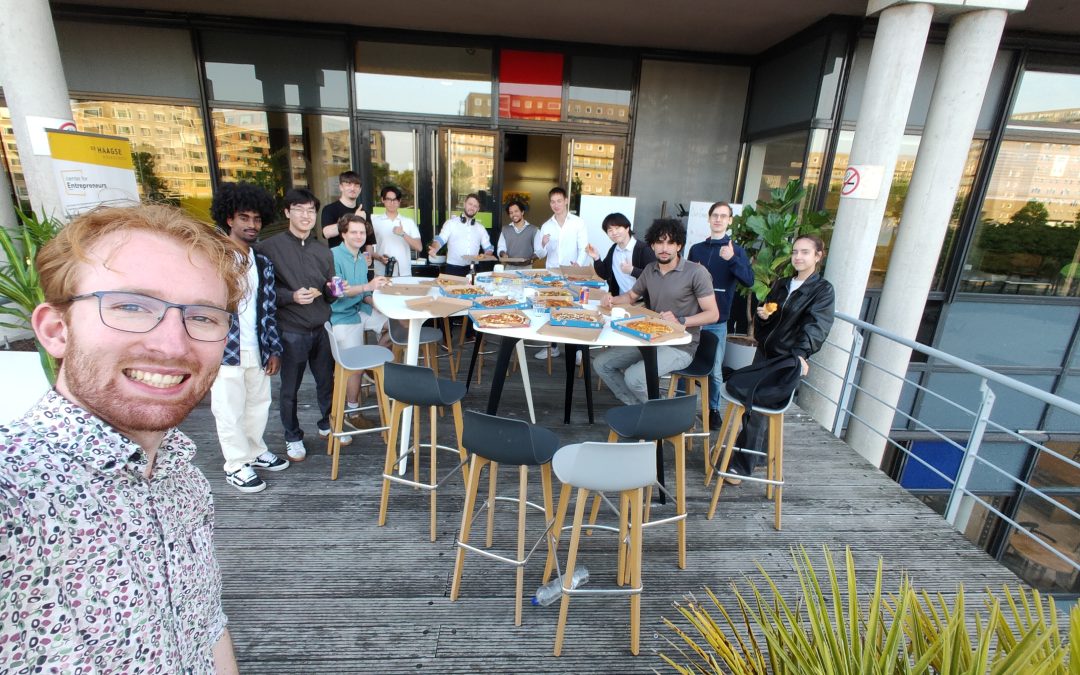
Over the past three years, he has built a community of more than 100 student entrepreneurs and people supporting them through the CfE and the StartHub. His work includes organising the recurring Pizza & Drinks gatherings (view impression in the image below), bringing in guest entrepreneurs, casual coaching and helping students find advice and useful connections.
These informal events give students somewhere to discuss the questions that come with starting a business. They can share an idea, talk through a problem or hear how someone else has approached a similar challenge, with a slice of pizza making that first conversation a little easier.
CfE connects this community with coaching, entrepreneurship education and the wider business network in The Hague. At the StartHub, Rik helps students find their way into that support, whether they already run a business or are still wondering where to begin.
His own experience gives those conversations a practical basis. Before the PillenPopper, he developed and brought other physical products to market, including iHeel pads against heel-slip and blisters and the BATBOX battery tester for households to finally know which batteries still work. Alongside his studies, he has learned what it takes to turn an idea into something people can actually buy and use.
The next step for the PillenPopper
For the PillenPopper, the next stage is to build stronger evidence through independent user testing and prepare for production. The planned approach includes an initial pilot batch made through local 3D printing, allowing feedback to inform the product before a wider launch.
The Hague Innovators nomination brings the project to a wider audience and creates opportunities to meet people who can help it progress. The public vote also offers a chance to win the €2,500 Audience Award. With this award Rik would produce a 100 devices given for free to participants in a pilot in The Hague.
For anyone who has watched a parent, partner or friend struggle with medication packaging, the problem may feel familiar. Rik’s aim is to enable these people to take back control.
Support Rik and the PillenPopper
Voting is open until Sunday 8 November 2026.
To support Rik, visit the ImpactCity voting page and scroll down to the voting form at the bottom. Select Core Solutions, enter your email address and submit the form. Remember to confirm your vote using the email you receive.
A vote for Core Solutions supports Rik’s work towards giving more people the chance to regain their independence.
Municipal Executive allocates funds for a new round of night culture subsidies
In the coming year, the Municipality of The Hague will again support innovative initiatives that contribute to The Hague’s nightlife. Starting today, creators, organizers, and cultural entrepreneurs can submit an application for the Impuls Nachtcultuur subsidy scheme.
The subsidy scheme stems from the Night Vision and contributes to the ambition to make The Hague an attractive city for residents and visitors not only during the day, but also in the evening and at night.
Alderwoman Lotte van Basten Batenburg (Culture): “The Hague nightlife is much more than just a night out. It is a place where new ideas emerge, talent develops, and different cultures and communities meet. With this subsidy scheme, we are giving makers and organizers a helping hand to bring good ideas from the drawing board into the city.”
Room for innovation
Initiatives eligible for a grant may relate to music, dance, theatre, fashion, digital culture, or innovative combinations thereof. Both new initiatives and existing concepts looking to grow can submit an application.
“It is wonderful that there is a Night Impulse scheme again this year, giving makers the chance to create something themselves in The Hague’s nightlife. I look forward to all the new initiatives, because The Hague is full of good ideas!” says Lotte Ottevanger, Night Mayor of The Hague.
In 2025, fifteen Hague-based creators and organisations received a contribution from the Night Culture scheme. This made possible, among other things, new club nights, live performances, and free jam sessions. This created accessible venues where emerging DJs could play. Additionally, there was room for other forms of nightlife, such as alcohol-free club nights, and for investments in sound and equipment.
Support for makers and organizations
For 2026, the Municipal Executive has again made €100,000 available. Individuals can apply for a contribution of up to €3,000. Organizations can receive a maximum of €10,000.
Applications can be submitted up to and including 20 November 2026. Subsidies will be assessed based on established criteria and granted in order of receipt until the budget is exhausted. The municipality will make a decision within six weeks of receiving a complete application.
Interested parties can register here (in Dutch). For questions, please contact nachtzaken@denhaag.nl .