In ACCESS Stories this month, Rawia Liverpool reflects on more than three decades of international life, beginning with her first move to the Netherlands in 1992. Relocation, career changes, motherhood, caregiving, bereavement and divorce repeatedly required her to adapt and rebuild her life. Along the way, she discovered the importance of community, transferable skills and asking for support. Now an NLP coach and Transactional Analysis counsellor, she draws on these experiences to support other internationals navigating relocation, identity shifts and major life transitions.
ACCESS is a volunteer-run, not-for-profit organisation that has supported the international community in the Netherlands since 1986. English-speaking volunteers provide free, independent information and guidance on living, working and settling in the Netherlands, via a helpdesk, email support and partnerships across the country.
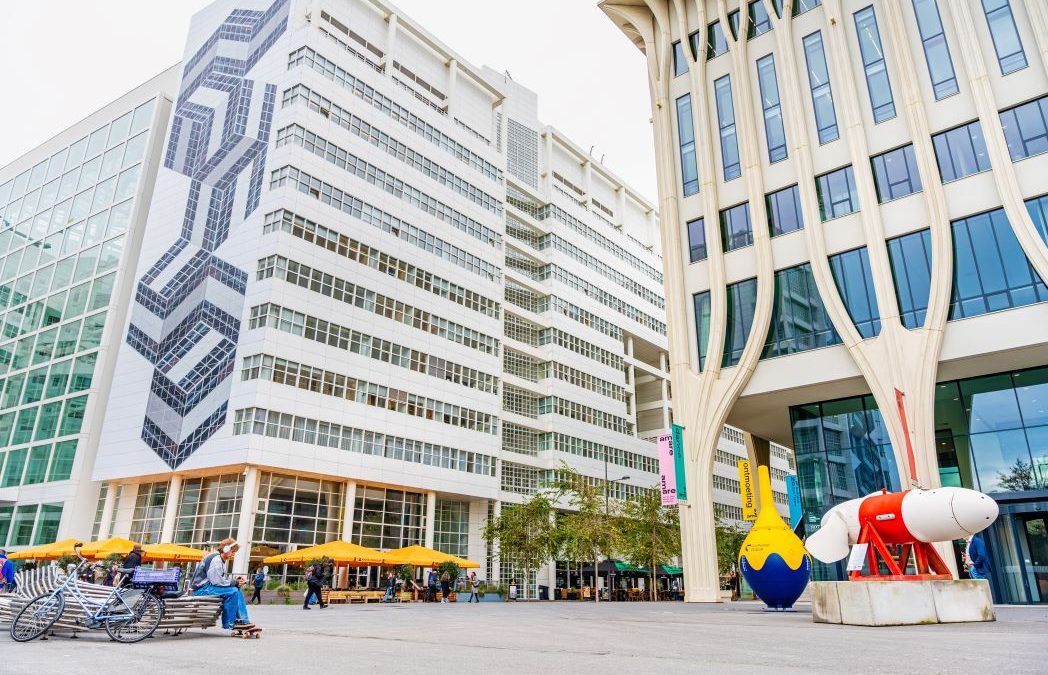
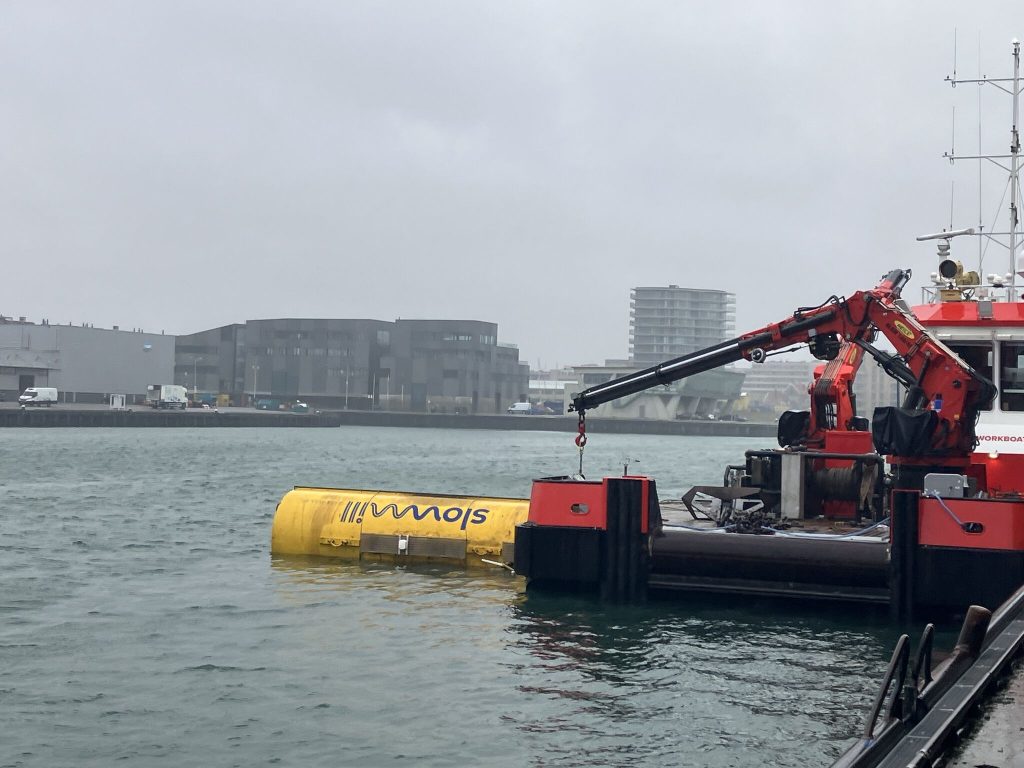
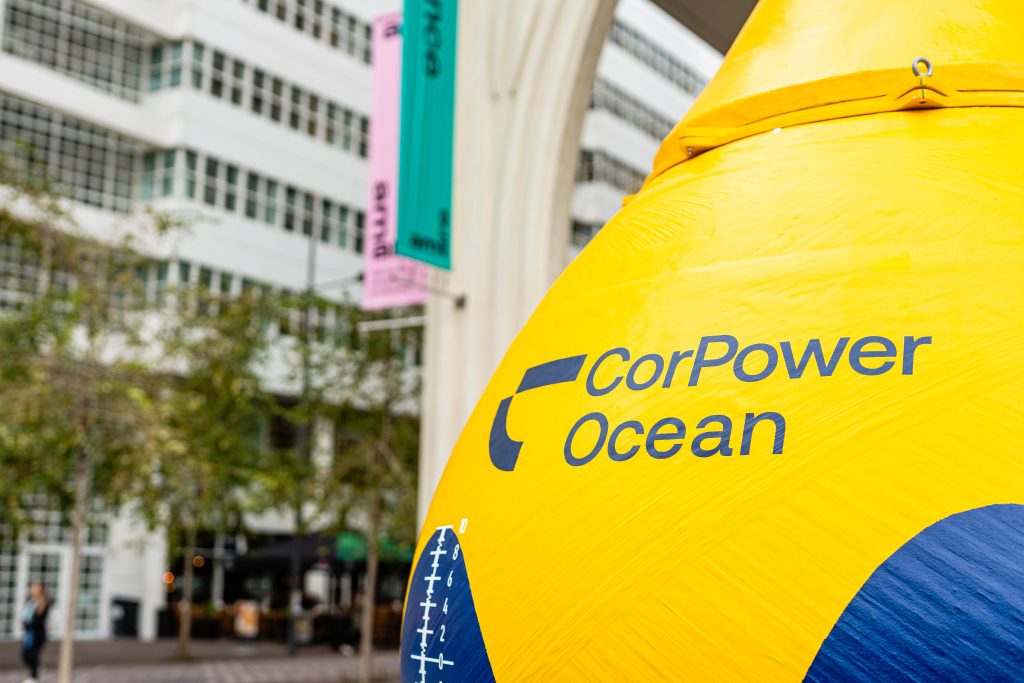
The Hague will welcome international experts in renewable ocean energy from 5 to 7 October 2026, when the ICOE-OEE 2026 conference brings together companies, researchers, policymakers and investors at Amare.
The event focuses on technologies that generate renewable electricity from waves, tides and ocean currents, offering potential alternatives and complements to established sources such as wind and solar power.
Organised jointly by Ocean Energy Europe (OEE) and the Dutch Energy from Water Association (EWA), the conference combines the organisations’ flagship international events into one gathering for the first time.
Innovation and International Collaboration
Over three days, participants will discuss developments in ocean energy technology, investment opportunities and policies needed to support the sector.
The programme includes conferences, an exhibition showcasing European innovations, networking opportunities and visits to Dutch ocean energy projects and companies.
Although ocean energy is still an emerging industry, it is attracting growing interest as countries seek to diversify their renewable energy sources and improve energy security.
The Hague’s Growing Blue Economy
The Hague and the wider South Holland region are home to companies, research institutes and organisations working on offshore renewable energy and maritime innovation.
The Port of Scheveningen also plays a role in these developments, with the city exploring how the harbour can support sustainable maritime industries and emerging energy technologies.
Peter Scheijgrond, Chair of the Dutch Energy from Water Association and Conference Chair of ICOE-OEE 2026, highlighted the region’s expertise in offshore engineering and water management, including opportunities to test new technologies under real North Sea conditions.
By hosting the conference, The Hague aims to strengthen international cooperation and support the development of ocean energy technologies towards commercial applications.
More information:
Read the full article from The Hague & Partners Newsroom:
The Municipality of The Hague recently presented the 2027-2030 budget. The Municipal Executive has opted for targeted investments in housing construction, safety, accessibility, liveable neighbourhoods, and a vibrant city. At the same time, work is being done to restore the municipality’s financial position so that The Hague can continue to invest in the growth and quality of the city in the future.The total size of the budget for 2027 is €3,715 million.
The budget is a proposal from the Municipal Executive and will be adopted by the City Council on November 11. The document constitutes the financial translation of the ambitions set out in the coalition agreement ‘For The Hague, with The Hague’ .
Alderwoman Lotte van Basten Batenburg (Finance): “With this budget, we are laying the foundation for a stronger The Hague. We are investing in the growth of the city and in the facilities that residents use every day. We are doing this with an eye on the future: by making decisive choices, we ensure that The Hague remains financially strong in the coming years.”
A liveable and growing city
The Hague continues to work on accelerating the realization of homes to meet the high demand for housing. The Municipal Executive is committed to building 4,000 homes per year and ensuring a balanced distribution of affordable and more expensive homes across the city. In addition, investments are being made in area developments, attractive public spaces, and new amenities. This creates room for growth while strengthening the livability of existing neighborhoods.
Safe and healthy neighborhoods
Safety and liveability form a key pillar of the budget. Therefore, the Municipal Executive is allocating additional resources for enforcement and surveillance in the neighborhoods. 80 extra special enforcement officers will be deployed to focus on issues such as street harassment and littering. In addition, structural investments are being made in tackling subversive crime and strengthening the city’s digital resilience.
The municipality also invests in strong neighborhoods and the implementation of the neighborhood agendas, with a focus on prevention, well-being, and what residents consider important in their neighborhood.
Opportunities for children and young people
The Municipal Executive continues to invest in equal opportunities for all children and young people in The Hague. Extra attention will be paid to reducing child poverty, quality education, and talent development. Investments will also be made in additional sports facilities, such as artificial turf football pitches. Free travel on public transport will also be available to young people up to and including the age of 17 with an Ooievaarspas.
A bustling city
A vital economy and a strong cultural offering make The Hague an attractive place to live, work, and visit. Therefore, the municipality invests in shopping areas, business parks, the coast, and The Hague’s cultural sector. Cultural institutions, events, and creators that contribute to The Hague’s identity and appeal are cherished. In addition, the Municipal Executive focuses on attracting international conferences and events, as these are inextricably linked to The Hague as an international city of peace and justice.
Improved accessibility for residents and businesses
To keep The Hague accessible, the Municipal Executive is investing in infrastructure, road safety, and parking solutions. Paid parking will only be introduced if parking pressure exceeds 90% and with the support of residents. Existing on-street and garage parking capacity is being utilized more effectively. The Municipal Executive also remains committed to good connections for public transport, cycling, and cars. These investments not only support residents but also contribute to a strong business climate for entrepreneurs.
Looking to the future
The 2027-2030 budget marks the start of the implementation of the coalition agreement. At the same time, the financial position of municipalities nationwide remains under pressure due to rising costs and uncertainty regarding future central government contributions. The Municipal Executive is therefore firmly committed to sound financial policy and decisive choices. This creates room to make investments that demonstrably contribute to a stronger The Hague.
Twenty startups are among the 100 most innovative companies in the Netherlands.
For the 21st edition of the KVK Innovation Top 100, innovation experts selected 100 companies from more than 200 submissions. The finalists are developing innovations in diverse fields, from health and circularity to digital technology and artificial intelligence (AI). The Chamber of Commerce (KVK) announced the list recently.
According to Rodrique Engering, Chairman of the Executive Board of the Chamber of Commerce, the list shows how quickly entrepreneurs respond to change: “The quality of the submissions was high and the competition for a spot in the Top 100isfierce. We see shifts in the themes that concern entrepreneurs. Whereas a few years ago many innovations revolved around the energy transition, topics such as digitalization, AI, and labor productivity are clearly gaining ground. Innovation moves along with the challenges of our time.”
The 100 companies were assessed by panels of innovation experts. They looked at impact, originality, growth potential, and societal significance, among other factors. Entrepreneurs could register in five categories: Circular Economy, Energy Transition, Labor Market and Society, Agriculture, Water and Infrastructure, and Health and Nutrition.
Knowledge cities and startups well represented University cities are once again strongly represented in the Top 100 this year. Companies from Utrecht, Delft, Groningen, Wageningen, Eindhoven, Enschede, and Leiden, among others, demonstrate how important collaboration between knowledge institutions and entrepreneurs remains for innovation in the Netherlands. In addition, twenty startups have secured a spot in the Top 100. This means that young enterprises are once again among the drivers of innovation within the Dutch SME sector.
Innovation from 58 locations The finalists come from 58 different places spread across ten provinces. It is striking that almost three-quarters of the companies are located outside Amsterdam, Rotterdam, The Hague and Utrecht. North Holland is the most strongly represented province with 19 companies, followed by South Holland (17), North Brabant (16) and Utrecht (13).
Exciting conclusion in November During the KVK Entrepreneur Days on November 13 and 14 at the Jaarbeurs in Utrecht, the winners of the category awards will be announced on November 13. It will also be revealed then which company can call itself the most innovative company in the Netherlands and takes over the baton from Tree Composites, last year’s winner. In addition to the five category awards, five Innovation Promise Awards will also be presented this year to young enterprises and startups with promising innovations that are just entering the market or are not yet on the market.
The public votes along The Dutch public will once again influence the final result. You can vote for one of the 100 finalists until October 18 via www.kvkinnovatietop100.nl . The professional jury’s assessment accounts for 80 percent, and the public vote for 20 percent.
About the Chamber of Commerce Innovation Top 100 The KVK Innovation Top 100 was established in 2006 to showcase the innovative strength of Dutch SMEs. Since then, the list has grown into a leading overview of innovative entrepreneurship in the Netherlands. Deliberately, no cash prize is attached to the competition. Its value lies in visibility, recognition, and inspiration.
A free tool that helps you better understand and compareCBR pass rates, Google reviews and lesson prices.
Written by Chris Prosman, Co-Founder of Theorio.
This is a paid advertisement on The Hague Online, specifically written for our international community in The Hague.
You can love cycling in the Netherlands and still want a car. Image: Jules Kassas/Unsplash.
It’s raining sideways. Of course it is. Your jeans are soaked for the third time this week, you spent the whole train ride with a stranger’s backpack in your face, and there’s still twenty minutes of cycling to go. Into the wind, obviously. Dutch wind only blows one way: whichever way you’re heading.
You can love living here and still think: okay, I need a car.
Especially if you already have a licence. You did the lessons back home, passed the tests, maybe drove for ten years without anyone complaining. Then you move here and suddenly you don’t even know if you’re allowed behind the wheel.
That should be a five-minute question, right? Fill in a form, swap the licence, done.
Ha. You open the RDW website. Then the CBR. Then your gemeente. One page is about exchanging foreign licences, another is about Dutch exams, and twenty minutes later you’ve got six tabs open and still no answer to the one thing you wanted to know. Can I drive here, or am I starting over?
Starting over would sting. The Netherlands has a reputation as one of the priciest, strictest places in the world to get a licence, and once you add up lessons, exams and fees you’re easily past €3,000. That’s a lot of stroopwafels. And you haven’t even picked a driving school yet.
Why a Dutch theory app ended up building this
We kept getting these questions at Theorio. Which was a bit awkward, because Theorio is a theory app we built for Dutch teenagers. Duolingo for the CBR exam, basically. We’re good at getting people through the test. Whether you legally have to take it in the first place? At the time, honestly, no idea.
And look, we’re Dutch. Watching people waste time and money on something they might not even need physically hurts us.
So we built a free Dutch driving licence guide in English. You answer a few questions and it tells you which rules apply to you, including whether you can just exchange your licence. There’s an AI assistant on the page too, for when your situation is complicated (if you’re an expat, it usually is). And it’s gratis. Free. Possibly our favourite word.
Then people who did need lessons started asking which school to pick. So we built a driving school comparison tool as well. It puts CBR exam results and Google reviews next to each other, so you’ve got something better to go on than a school’s own website. No ads, no paid spots. A school can’t buy its way up the list, however nicely it asks.
First things first: do you even need a Dutch licence?
Check this before anything else. Plenty of people can keep driving on their current licence for a while, or swap it without going anywhere near an exam.
Got a licence from the EU, EEA or Switzerland? For categories like B (car) and BE (car plus large trailer), you can generally use it for up to 15 years from the date it was issued. There are conditions, like when exactly it was issued and whether it’s still valid, but that’s the general rule.
From outside the EU or EFTA? Then you usually get your first 185 days here.
Some people skip the exams entirely and just exchange. That covers exchangeable EU or EFTA licences, licences from a country or territory on the RDW exchange list, and qualifying workers under the expat scheme most people know as the 30% ruling. Everyone else, according to the RDW, takes both the theory and the practical exam at the CBR. Doable, plenty of expats have done it. And we’ve got plenty of tips for you below.
Our licence guide works out which group you’re in with three questions. Still stuck? Ask the AI assistant, no signup needed. Give it the country that issued your licence, the relevant dates and your licence type, and it’ll point you to the right rule and the official source. One request: keep your personal details out of it. It doesn’t need your BSN to figure out you’re from Canada.
The route finder separates exchange cases from people who need the CBR exams. Image: Theorio.
What it actually costs (spoiler: more than the hourly rate)
Right, so you need lessons. And your inner Dutchman is already sorting the list by price, lowest first. Good instinct! Just make sure you’re sorting by the right thing, because the hourly rate says surprisingly little about what your licence costs in the end.
Here’s a realistic picture, from our cost guide. The CBR average is 41 one-hour lessons. At €60 to €80 a lesson, plus the 2026 CBR fees (€50.50 for the theory exam, €46.90 for the Health Declaration and €143.50 for the practical), you’re looking at roughly €2,700 to €3,520.
Knowing that number upfront already puts you ahead of most people. It covers the big stuff, and the rest is smaller: €6.50 extra for the English theory exam, the municipal licence fee, photos, study materials, any medical checks and your school’s exam-day costs. Much nicer to budget for those now than to discover them at the counter. (And no, there’s no Tikkie you can send to split it with anyone.)
The part you have the most control over is the number of lessons. Every extra lesson or retake adds up, so a good school that gets you through first time is where the real savings are.
A few quick checks help a lot. Compare prices per 60 minutes, since some schools sell “lessons” of 45 or 50 minutes. Look at what’s in the package: the CBR exam fee, the car and instructor on exam day, a warm-up lesson before the test? And ask what happens to unused lessons and what a retake costs. The school comparison shows most of this at a glance.
And here’s the nice part: the school that’s a few euros an hour more expensive can easily work out cheaper, because they teach well and they’re honest about how many lessons you’ll need. The easiest way to find out? Book a proefles (trial lesson). More on that in a minute.
One attempt and 41 hours of lessons already produce an example budget of €2,700 to €3,520. Image: Theorio.
A high pass rate is nice. Context is nicer.
You’re about to hand a stranger a few thousand euros. A nice website shouldn’t be enough.
For reference: in 2025, only 49.8% of learners passed their first practical driving test in the Netherlands. That’s basically a coin toss. The good news? You don’t have to flip it blind. Pick the right school and your odds get a lot better. So a school where roughly 8 out of 10 pass first time is worth a closer look. Do check how many exams that’s based on, though. Three students passing isn’t a track record. It’s a good month.
In the Theorio driving school comparison you type in your town and get nearby schools with their pass rates next to their Google reviews, plus lesson prices where we have them.
Then read the reviews for the stuff numbers can’t tell you. Do people mention clear explanations in English? Lots of cancelled lessons? An instructor who stays calm when you stall at the same traffic light for the third time? You’re going to spend a lot of hours next to this person in a very small car. Chemistry matters.
And please, just call them. Most driving instructors are relaxed, chatty people who genuinely enjoy getting someone through their exam. As we say here: nee heb je, ja kun je krijgen. You already have the no. The only thing left to get is a yes.
The tool lets users sort the evidence themselves. Schools cannot buy a higher position. Image: Theorio.
From shortlist to phone call
The numbers get you a shortlist. The phone call does the rest.
Ask whether your instructor actually teaches in English regularly (you want “yes, all the time”, not “sure, we can try”). Ask when you can start and how often they can fit you in. If you can only do evenings or weekends, say so upfront.
Then find out exactly what you’re paying for:
Is it pay-as-you-go or a package?
How many lessons are in the package?
How long is each lesson?
Is the practical exam included?
Expect Dutch answers, by the way. Meaning direct ones. Trust me, that’s a good thing here.
Then book that *proefles* (trial lesson) before you commit to anything. Within the hour you’ll know whether you click with the instructor, and they’ll give you a far more honest guess at how many lessons you need than any website will.
A data shortlist should end with a trial lesson, not a blind package purchase. Image: Kindel Media/Pexels.
The English exam, now with bonus Dutch
Then there’s the theory. Good news: you can take the CBR theory exam in English. Slightly less good news: five words stay in Dutch, because English just doesn’t have an exact match. Better to meet them now than for the first time at the exam computer.
APK: the compulsory periodic safety inspection for cars. The English exam simply calls it APK.
autoweg: a road marked by a white car on a blue sign, often an N road. Not the same as an autosnelweg (motorway).
brommobiel: a small enclosed four-wheeler limited to 45 km/h. You’ll know one when you see one. There’s no everyday English word for it.
erf: a residential or shopping area marked by the blue erf sign. Maximum speed is 15 km/h, and you can only park in marked bays.
snorfiets: a two-wheeler limited to 25 km/h with a blue number plate. Not the same as a bromfiets, which is the faster moped category.
Some translations look familiar but mean something very specific. Rijverbod is translated as “forbidden to drive”, rijontzegging as “driving licence suspended”. Sounds like the same thing. Legally, it isn’t.
The English can trip you up on its own, too. You learn “hard shoulder” from a book, a quiz calls it “emergency lane” or “verge”, and your instructor calls it the vluchtstrook. You know exactly which bit of road it is. You’re just no longer sure everyone else does.
So we put together a Dutch driving theory glossary based on the vocabulary in the CBR exam plan. Search English to Dutch or the other way round. We wrote the definitions; the terms and translations come straight from the CBR’s own list.
Five terms stay Dutch in the English theory exam. Image: Theorio.
Why we wrote the course in English instead of translating it
Theorio started as a Dutch app for Dutch teenagers: short explanations, practice per topic, feedback after every answer and CBR-style mock exams once you’re ready.
For the English course, we didn’t want to hand you a Google Translate version of that. Nobody should have to decode a clunky sentence before they can even start on the traffic rule. So we wrote the videos, questions and explanations for people who don’t speak Dutch. That’s more than 1,700 practice questions and 35 CBR-style mock exams, with an explanation for every answer.
It also meant explaining the stuff Dutch kids pick up before they can walk. The shark teeth painted on the road. Priority from the right. What to watch for when you turn across a cycle lane (short version: a cyclist, and they are not going to brake). Plus those Dutch exam words, taught right next to the rule, so they don’t catch you off guard.
Not everyone needs a theory course first, though. If you can just exchange your licence, you shouldn’t have to pay for a subscription to find that out. That’s why the guide and the comparison are free. Figure out your route, get a feel for the cost, pick a school. Then decide if you want help with the exam.
The guide won’t take the exam for you (believe me, I asked). But it saves you a lot of guessing, and it beats picking an instructor based on whoever paid for the top Google ad.
If something in the guide is wrong, or your situation isn’t in there, tell me. The whole thing started because people asked us questions our app couldn’t answer, and every new question makes it better.
Now picture this. A grey Tuesday in November, rain doing its sideways thing, and you’re warm and dry in your own car with the radio on, passing the cyclists fighting that one-way headwind. You’ve earned it.
Succes! (That’s Dutch for good luck, not a typo.) See you on the road.