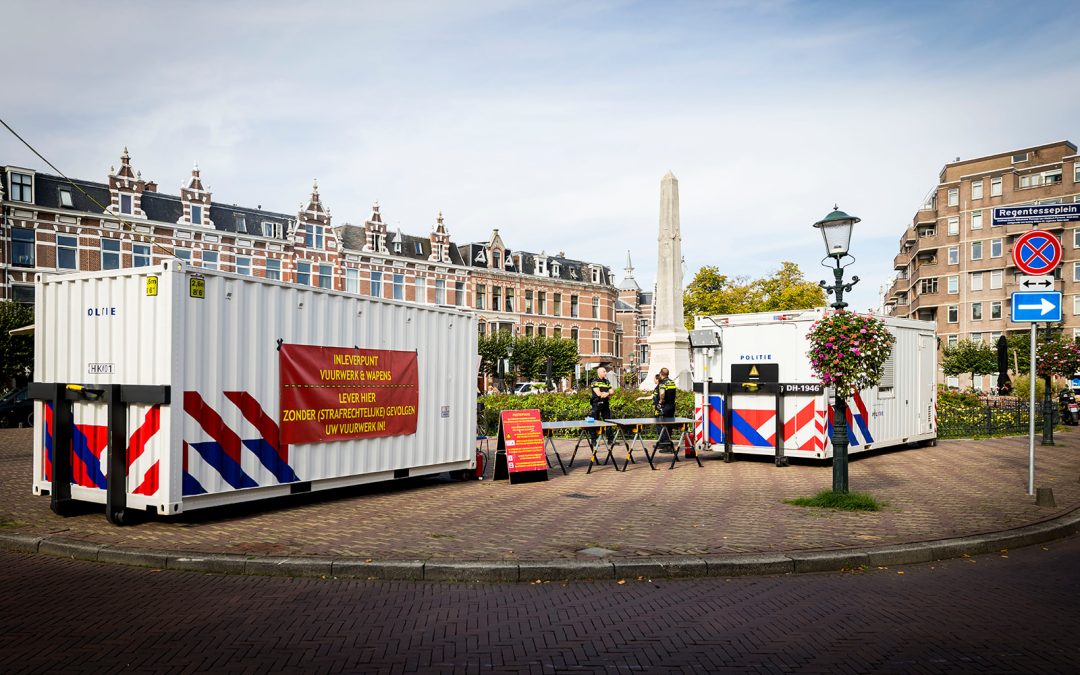
Residents handed in almost 250 kilos of fireworks and 19 weapons during The Hague’s Week of Safety, according to figures released by the municipality on 14 October. The collection took place from 5 to 11 October, with more than three times the 80 kilos of fireworks surrendered a year earlier.
Four collection points in Segbroek, Loosduinen, the Zuiderpark and Leidschenveen-Ypenburg allowed residents to hand in fireworks and weapons anonymously and free of charge. The items included knives and other prohibited weapons.
The campaign also involved schools and nightlife venues. Police emptied eight weapons and drugs safes used by hospitality businesses, removing 26 weapons and more than eight kilos of drugs.
Bag and locker checks took place at ten secondary schools. Apart from a small number of vapes, the municipality reported no notable findings. Young people also took part in sessions about peer pressure, weapons and the consequences of their choices.
The results offer a snapshot of the city’s wider approach to prevention, bringing together residents, schools, businesses, police and community organisations. The October collection events have finished; they are not ongoing drop-off arrangements.
Source: Gemeente Den Haag, press release/update dated 14/10/2026.
The Hague has joined a national partnership intended to address unhealthy homes, energy poverty and related health problems.
The municipality signed the City Deal Gezond en duurzaam wonen in Leeuwarden on 29 October. The four-year collaboration brings together municipalities, provinces, national government, health insurers, knowledge organisations and social partners.
The aim is to develop and share practical approaches that connect housing improvements with health and financial security. For households facing several problems at once, these issues can be closely linked.
Rather than announcing a new universal grant, the City Deal provides a framework for cooperation and learning between organisations. The Hague says the partnership will help improve connections between care, social support and housing improvement.
Residents seeking immediate help should use the relevant municipal advice and support services; joining the City Deal does not itself establish individual eligibility for funding.
The Hague is encouraging residents, clubs and businesses to help people with dementia stay involved in activities they value, from singing and sport to gardening and creative hobbies.
In a response to council questions, the municipality stressed that a diagnosis does not remove a person’s interests, skills or experience. Practical support, a familiar face or travelling together can make participation easier.
Local examples include the GeheugenBuddyKoor, where people with memory difficulties sing alongside buddies, and visits to Kunstmuseum Den Haag with a carer.
The council is also exploring how existing volunteering and support networks can connect more closely with people’s earlier working lives and interests. Research in Loosduinen and the Schilderswijk involves residents, people with dementia and their families.
According to the municipality, around 7,400 Hague residents currently have a dementia diagnosis, a figure projected to rise to approximately 16,000 by 2050.
The invitation to the wider community is to consider what can be made possible through ordinary, welcoming activities, alongside specialist support.
Source: Gemeente Den Haag, press release/update dated 28/10/2026.
The Hague’s alderman for Economic Affairs and the City Centre, Richard de Mos, wants to investigate whether people who used social media to encourage looting and violence can be held financially responsible for losses suffered by local businesses.
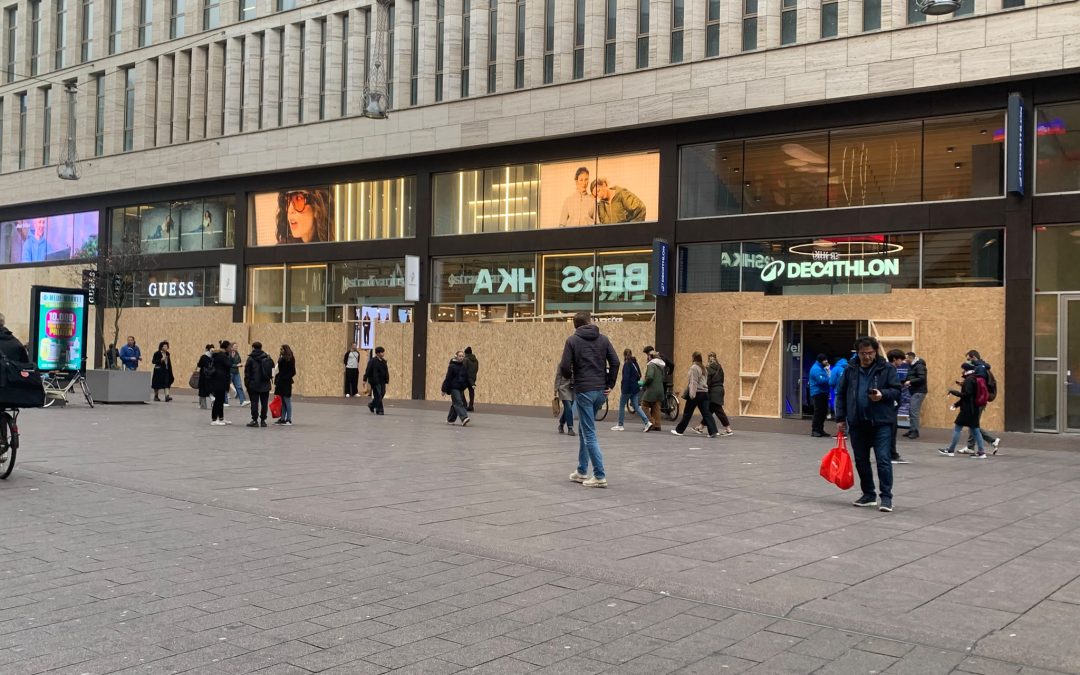
Although the feared looting did not take place on Saturday, businesses incurred costs preparing for possible unrest. According to city centre business organisation Binnenstad in Bedrijf, the financial impact runs into many thousands of euros.
Shopfronts were boarded up, additional security was hired and some shops remained closed. Businesses that stayed open also reported fewer customers and lost sales.
“It is an enormous relief that the feared looting did not happen,” De Mos said. “But that is not the end of the matter.”
He questioned why businesses should have to bear the cost of boarding up their premises, hiring security and losing income following online calls for violence.
Exploring legal options
De Mos wants to work with business organisations and legal experts to examine whether costs can be recovered from people demonstrably responsible for criminal incitement.
The proposed investigation would consider civil liability alongside criminal prosecution, including whether preventative security costs and demonstrable lost profits could be recovered under certain conditions.
De Mos acknowledged that responsibility would need to be established legally before any costs could be recovered.
“Of course, it must be legally demonstrated who is responsible for what, but we should make full use of the possibilities available,” he said.
Discussions with local businesses
Bas Winkler, chair of Binnenstad in Bedrijf, has also indicated that he wants to explore the options for recovering losses.
De Mos plans to discuss the issue with local businesses, establish the extent of the damage and investigate who could be held responsible.
The proposal remains an investigation into possible legal routes. No decision on liability or compensation has been announced in the statement.
When South African entrepreneur Elizabeth Joss moved to The Hague in 2013, she had little idea of the challenges that lay ahead. From finding accommodation and understanding unfamiliar Dutch systems to building a social circle, adjusting to life in the Netherlands took quite some time!
Elizabeth moved to the Netherlands alone in 2013, initially spending a week in a hotel before finding accommodation. Although she was excited about the opportunities ahead, the transition was not straightforward.
“When I first arrived, I remember feeling pretty lonely and worried about the future. I was fortunate to meet some wonderful colleagues through work, and I’m still in touch with some of them today. But building a life somewhere new takes time, especially when you don’t have an established support network around you.”
Beyond the social challenges, she found the amount of practical information about living here overwhelming. This included everything from understanding rental arrangements and health insurance to opening a bank account and making sense of Dutch bureaucracy. “In the beginning, you think you can just Google it all to find the answers you need, but in the end, seemingly simple tasks can take hours of research and cross-checking,” explains Elizabeth.
“When I arrived, there was so much information available online, but it was scattered across different websites (and back then, most of it wasn’t even in English). I often didn’t know where to start or which sources to trust. Sometimes I just wished that someone would explain things to me in plain English.”
Over time, Elizabeth came to appreciate many aspects of Dutch life, from its infrastructure and cycling culture to the opportunities for enjoying the outdoors. But she also learned that adjusting to a new country takes patience. The high cost of living, dark winters, and cultural differences can make the first few years particularly challenging, especially for those arriving on their own.
Turning personal experience into SecondSoil
The idea for the SecondSoil app came directly from Elizabeth’s experiences of moving to the Netherlands and recognising how many practical questions internationals face when relocating and settling into a new country.
“There’s not always one answer to the questions that newcomers face. There are different answers for different situations. And finding out what you need can be a huge challenge.”
“I created SecondSoil as something I would have found useful when I first arrived. Not another complicated website or pages of AI-generated answers that need to be double-checked, but a practical, easy-to-use resource you can download on your phone that helps you understand how things work here. People can listen to the audio guides on the go, or simply navigate to a specific category in the app and find the most important information they need in a few bullet points. Sometimes hearing a friendly voice who’s been through it all can make you feel a little better and less lonely.”
Making everyday Dutch life easier to understand
For Elizabeth, the aim is to make reliable, practical information easier to access, particularly for people who are unfamiliar with Dutch systems or unsure where to begin.
While The Hague has become home, she hasn’t forgotten what it felt like to arrive without knowing how everyday life worked. And although the Netherlands has much to offer, she believes internationals also benefit from realistic expectations about the challenges they may encounter.
“Moving abroad can be a wonderful experience, but it isn’t always easy. It can be extremely difficult at first, especially if you’re arriving here alone, like I did. There are exciting moments, but there are also times when you feel completely out of your depth, and you don’t always know where to turn.”
For those just starting their lives here, her advice is simple: settling into a new country takes time, but having the right information and the right people around you can make the process a lot easier.
About SecondSoil
SecondSoil is an English-language app offering short, human-recorded audio guides, practical articles, and useful resources for people moving to or living in the Netherlands. It offers both free and premium content, allowing users to explore essential topics before deciding whether they would benefit from additional guidance.
The Android version launched on Google Play in October 2026.