The Municipality of The Hague is collaborating with Stedin and TenneT on the construction of a new main distribution substation in The Hague Southwest. The substation will be located on the edge of the ZKD (Zichtenburg Kerketuinen Dekkershoek) business park, between De Werf and Lozerlaan. A new main distribution substation strengthens The Hague’s power grid and is part of the solution to grid congestion.
The new main distribution station is necessary to eventually supply power to 60,000 households and businesses in The Hague Southwest. Power supply is a crucial prerequisite for the further development of facilities and business activity in the area. The main distribution station is being designed in consultation with the municipality and stakeholders from the surrounding area. Once completed, the site will be taken over by grid operator Stedin. The station is part of a larger national program in which grid operators are constructing additional main distribution stations to make the electricity grid future-proof.
Due to the growing demand for electricity, the grid in many parts of the Netherlands is under pressure. The Municipality of The Hague therefore considers it necessary to reserve capacity for this in advance, together with grid operators.
Alderman Co Engberts (Southwest) emphasizes the importance of timely investments in the power grid: “The Hague, together with Tennet and Stedin, is committed to resolving grid congestion. As a municipality, we must think ahead regarding the power supply for many years to come. Only by making room for grid expansion at an early stage can we continue to enable housing construction, social facilities, and future business activity.”
Regional Director Maarten Bijl of grid operator Stedin: “Finding a location for cables and a distribution station in a busy city like The Hague requires careful planning and measurement. It demands choices and, above all, decisiveness. And that is why we are very pleased with this decision. It is exactly what we need to prepare the electricity grid for the future. We need this kind of decisiveness in more places in The Hague to enable growth and sustainability.”
Sustainability
The extra capacity on the power grid is also needed to meet the city’s sustainable ambitions, continues Alderman Arjen Kapteijns (Energy Transition): “As a city, we want to be less dependent on fossil fuels. That requires a more powerful electricity grid than currently exists.”
“The energy transition requires more than good intentions; a robust electricity grid is needed that can support our sustainable ambitions. A new main distribution station is indispensable in this regard. If we want thousands of homes and businesses in Southwest The Hague to be able to switch to clean mobility, local generation, and sustainable heat, the grid must be able to handle that growth. This station therefore forms a crucial link in enabling a future in which The Hague can be completely gas-free,” says Alderman Arjen Kapteijns (Energy Transition).
The municipal council still has to make a final decision on this matter. Together with Stedin and the other parties involved, the municipality is continuing the preparatory work to achieve the planned realization of the main distribution station. Stedin is expected to commission the station between 2033 and 2035.
The Municipality of The Hague has launched the campaign ‘Put it out, throw it in’. (Maak ’m uit, gooi ’m in). Stickers have now been placed on waste bins, signs on the street (milk paint), and additional facilities for cigarette butts have been installed throughout the city, such as ashtrays attached to waste bins and, as an experiment, ashtray tiles at a few locations. With these measures, the municipality aims to make it as easy as possible for smokers to put out their butts and throw them directly into the waste bin, so that filters do not end up on the street, in green areas, or in the water.
“Cigarette butts are small, but the environmental damage caused by butts ending up on the street is significant. We want to make it as easy as possible for residents and visitors to dispose of their butts properly. That is better for the city and for the environment ,” says Alderman Arjen Kapteijns.
The campaign focuses on behavioral change: cigarette butts do not belong on the street. Stickers with the slogan ‘Put it out, throw it in’ are appearing on waste bins throughout the city. Milk paints on the sidewalk direct smokers to the nearest waste bin. Additional facilities are being installed in areas where many cigarette butts are found, such as busy pedestrian routes, bus stops, and hospitality zones. The municipality is deliberately choosing ashtrays attached to waste bins as the most accessible solution.
Cigarette filters are still one of the most commonly found forms of litter. Especially in busy areas, butts often end up next to waste bins, and rain washes microplastics and harmful substances into the sewer system and surface water. The campaign and the additional facilities are intended to break this pattern.
“ Leiden University appreciates the efforts of the Municipality of The Hague to reduce pollution caused by cigarette filters in the city, including around educational buildings. We actively appeal to our students and staff regarding their responsibility for a smoke-free entrance and preventing litter and pollution on the streets. Together with the municipality, we are working towards a clean, pleasant environment. This joint step helps to curb a persistent problem ,” says Kim Duistermaat, Director of Campus The Hague at Leiden University.
In addition to its commitment to a smoke-free generation, the municipality emphasizes that cigarette filters pose a significant environmental problem. The Hague therefore advocates for a European ban on filters so that pollution is tackled at the source. The campaign aims to take immediate action against the pollution caused by filters, while simultaneously working on structural solutions. The results of the campaign and the experiment with ashtray tiles will be included in the progress report of the Waste Action Plan 2026.
Students and professionals gathered at The Hague University of Applied Sciences (THUAS) this week for the Talent for Good Forum, an event focussed on careers for social impact under the theme “Shaping Trust in The Future”.
Organised by The Hague Humanity Hub in partnership with THUAS, the event transformed the university’s Atrium into one of the Netherlands’ largest impact-driven career fairs. Students, young professionals and career changers had the opportunity to connect directly with organisations working in areas including peace and justice, human rights, sustainability, governance, humanitarian action and technology for good.
At the career fair, attendees could meet representatives from more than 60 organisations. NGOs, government bodies, educational institutions and mission-driven businesses were on hand to discuss internships, volunteering opportunities and future careers. Workshops throughout the day covered topics such as networking, negotiation skills, leadership, entrepreneurship and careers in emerging fields.
The keynote session explored the forum’s theme, “Shaping Trust in the Future”. Emma Wedner, Chairperson of the Council of Europe Advisory Council on Youth, shared a youth perspective on rebuilding trust in communities, institutions and international systems during a period of rapid technological and social change.
HRH Princess Laurentien van Oranje shared some of her extensive experience and challenged attendees to consider how they can contribute to a more inclusive and sustainable future.
The afternoon programme featured breakout sessions on topics including climate action, international law, artificial intelligence, governance, international trade and disinformation. Participants were encouraged to explore how trust can be strengthened within organisations, communities and society more broadly.
The event concluded with a networking reception, allowing attendees to continue conversations with employers, speakers and fellow participants.
The Talent for Good Forum reflects The Hague’s unique position as an international city of peace, justice and innovation. By bringing together students, professionals and organisations committed to positive change, the event offered both inspiration and practical opportunities for those looking to build careers with impact.
Photos and LinkedIn profile photography were provided by Holland Park Media, one of the event’s supporting partners, giving participants the opportunity to refresh their professional profiles while networking with potential employers.
This is an annual event and planning will be underway soon for a 2027 edition. For more information, visit:
The quality of canals, ponds, rivers and other waterways in and around The Hague improved in several areas during 2025, according to a new report from the regional water authority. However, pollution remains a significant challenge, and environmental targets are still far from being met.
The report was published by the Hoogheemraadschap van Delfland, the regional water authority responsible for managing water levels, flood protection, wastewater treatment and water quality across The Hague, Delft, Westland and surrounding municipalities.
“Clean water is not something we can take for granted, but it is essential,” says Stijn van Boxmeer, the Delfland board member responsible for water quality. “Not only because of legislation, but because clean water is vital for people, nature and a healthy living environment.”
Water Quality in 2025
The waterways across the Delfland region continue to face increasing pressure from population growth and longer periods of dry weather. Pollutants from businesses, industrial areas, agriculture, horticulture and households still find their way into canals, ponds and rivers.
Despite these challenges, some improvements were recorded compared with 2024. Levels of nitrogen and phosphorus, two nutrients that can negatively affect water quality when present in excess, decreased in many monitored waterways. Nitrogen concentrations improved in seven of the eight waterways monitored under the European Water Framework Directive, while phosphorus levels improved in six of the eight.
The report also found fewer exceedances of environmental standards for pollutants such as PFAS, heavy metals and other substances of concern. However, these waterways still do not meet the required standards.
The ecological health of waterways showed mixed results. While some locations saw improvements in aquatic plants and wildlife, others declined. The use of pesticides remains a concern, although the number of exceedances is continuing to fall. Nine greenhouse horticulture areas recorded little or no toxicity in 2025, compared with only two areas in 2024.
A Shared Responsibility
According to Van Boxmeer, improving water quality is not something the water authority can achieve alone.
“As a water authority, we are doing everything we can to improve water quality. The necessary transition is a societal challenge that can only be solved together.”
Delfland expanded its monitoring efforts during 2025 by analysing data from all of its monitoring locations and by measuring water quality closer to pollution sources. Through initiatives such as the “Measuring at Ditch Level” pilot, the organisation worked directly with businesses and other organisations to identify where pollutants are entering waterways.
Municipalities have already invested in nature-friendly banks and waterways, while the greenhouse horticulture sector has also shown progress. However, many businesses still need to take further action.
The report also highlights the role of residents. Everyday activities, such as flushing unsuitable products down toilets or allowing pollutants to enter drains, can have a direct impact on local waterways.
Delfland says that raising awareness, monitoring pollution and enforcing regulations are all important, but lasting improvements will depend on businesses and residents reducing pollution at its source.
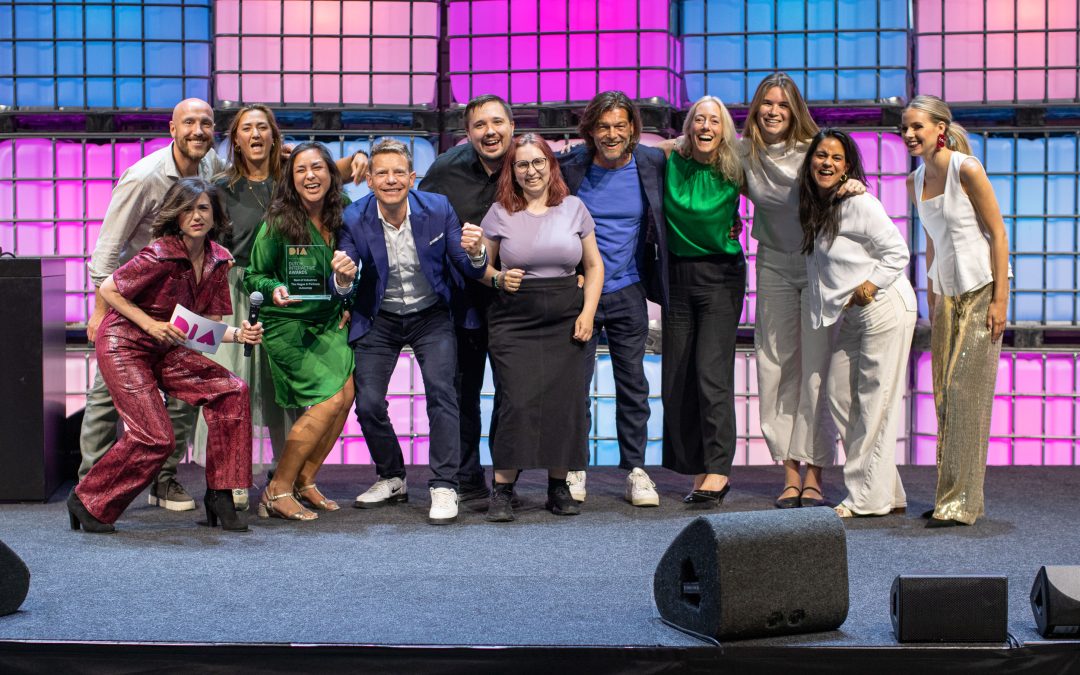
The joint ‘Big 5’ museum campaign by The Hague & Partners and mJourney has been awarded a Dutch Interactive Award in the ‘Best of Industries’ category. Through the campaign, national and international visitors have been inspired in a targeted and effective manner to visit The Hague’s museums, further strengthening the city’s position as a leading cultural hub.
The Big 5 stands for five world-famous Dutch artists – Vermeer, Rembrandt, Mondrian, Escher, and Mesdag – whose iconic works are on permanent display in four museums in The Hague. The Mauritshuis, Escher in Het Paleis, Museum Panorama Mesdag, and Kunstmuseum Den Haag thus together form a unique cultural experience: five masters, within walking and cycling distance of each other, in one city.
Additional visits The campaign has put The Hague more firmly on the map as a destination for art and culture. At the same time, efforts were made to attract new target groups, including international ones, and to encourage actual museum visits.
“The strength of the campaign lay in the combination of creativity and the smart use of technology. Potential visitors were reached at the right time and in the right place, for example via digital screens and targeted online communication,” says Suzanne Fillekes of The Hague & Partners.
Subsequently, insight was provided into how many people visited a museum. This approach led to demonstrable results, with over 13,000 museum visits as a direct consequence. These culture visitors also engaged in other activities in the city, so many institutions benefited from it.
Connect In addition, the Big 5 tells a larger story about The Hague: a city where world-class art comes together and where cultural institutions join forces. Collaborating with the four museums creates a stronger whole that encourages visitors to discover not just one place, but the entire city.
Marcel Westerdiep of Escher in Het Paleis: “When museums open their doors together, visitors discover not only our collections, but also the soul of the city. Museums connect the past, present, and the city of tomorrow.”
City of Culture The Dutch Interactive Awards are among the most important awards for digital work in the Netherlands and are presented annually to projects that excel in creativity, innovation, and effectiveness.
The Hague & Partners executed the Big 5 campaign commissioned by the four museums and the Municipality of The Hague. With this win, The Hague & Partners confirms its role as a driver of innovative campaigns that contribute to the international positioning of The Hague as a cultural city.
Photo: The teams from The Hague & Partners and mJourney during the award ceremony. (photo: Merten Snijders / Dutch Interactive Awards)
Social Capital and Mammoet Oude Bouwmaterialen are this year’s winners of the Haagse Parel. The Haagse Parel is a municipal award for companies and individuals who make a special contribution to the Hague economy. There are two categories. Social Capital, a social staffing agency that helps people with a structural need for guidance find sustainable paid work in the hospitality sector, is the winner in the ‘Exceptional Contribution’ category. In the ‘Sustainable Enterprise’ category, Mammoet Oude Bouwmaterialen, where authentic building materials are given a second life, took home the entrepreneur award.
Alderman Nur Icar (SMEs, Employment and Participation) announced the winner of the ‘Exceptional Contribution’ category. Alderman Arjen Kapteijns (Energy Transition, Mobility and Raw Materials) presented the award to the winner of the ‘Sustainable Enterprise’ category. In addition to the Haagse Parel, both winners were presented with a cheque for 5,000 euros, which can be used to grow their businesses.
“The Hague has a huge number of entrepreneurs who are significant to their neighborhood, contribute to employment, or make a social impact in other ways. Social Capital is a wonderful example of this: they make a difference for people by giving them a chance to develop towards employment. It is wonderful to reflect on this today with the presentation of the Haagse Parel!”, says Icar.
Kapteijns: “Many entrepreneurs are active in our city who demonstrate that sustainability is simply possible. Mammoet Oude Bouwmaterialen truly stands out. They give used building materials a new life and show that circularity doesn’t have to be complicated, but rather smart, creative, and absolutely necessary. Through what they do, we save raw materials and energy, and they inspire other entrepreneurs to also pay attention to sustainability. That is why this Hague Gem is more than well-deserved.”
Three nominees
There were three nominees per category. They were announced at the end of April, after which the public could vote for their favorite company. The three contenders in the ‘Exceptional Contribution’ category were Apotheek Pillen en Praten, Eye Security, and Social Capital. Hubbel Stadslogistiek, Seepje, and Mammoet Oude Bouwmaterialen were nominated in the ‘Sustainable Enterprise’ category.
Public and jury votes
The final result was determined for 40% by the more than 3,500 public votes. The remaining 60% was determined by the expert jury. This consisted of Harry Wientjens (Economic Board The Hague), Pieter Scholten (MKB Den Haag), Karima el Bouchtaoui (VNO-NCW region The Hague), Stefan Baecke (Yespers, winner of the Haagse Parel ‘Impactful Circular Enterprise’ 2025) and Daan Krijger (Nelis Company, winner of the Haagse Parel ‘Exceptional Contribution’ 2025).
The Hague Inspires!
The Entrepreneurship Award was presented during Den Haag Inspireert!, the entrepreneur and employer event organized by the Economic Board The Hague and the Municipality of The Hague. In addition to the presentation of the Haagse Parel, the program consisted of bringing together entrepreneurs, government officials, educational institutions, and other organizations from the region. During the event, themes such as AI, labor market development, and entrepreneurship took center stage, featuring inspiration sessions, discussions, and networking opportunities.
Photographer: Michel Mees
Photo caption: Aldermen Icar and Kapteijns with Social Capital and Mammoet Oude Bouwmaterialen, the winners of the Haagse Parel 2026