The Hague has begun testing neighbourhood emergency support points (noodsteunpunten) to help residents during major emergencies, such as prolonged power cuts. The first practical exercise took place in Transvaal on Thursday 8 October, with further exercises planned in three other neighbourhoods throughout October.
The initiative aims to explore how local communities, volunteers and the municipality can work together to support residents when essential services such as electricity, water, telephone networks or internet connections are disrupted.
First Emergency Exercise in Transvaal
During the first exercise, Transvaal Library was temporarily transformed into an emergency support point. Residents involved in neighbourhood networks, welfare organisations, cultural institutions and The Hague Market joined municipal employees in a simulated emergency.
The scenario involved a power cut that had already lasted 16 hours, leaving residents without electricity, working lifts, telephone services or internet access. Participants were told that the disruption could continue for another two to three days.
The exercise explored how residents could help one another, what neighbourhood networks could organise themselves, and when an emergency support point would be needed to provide information or report urgent situations.
One example involved drinking water. During prolonged power cuts, water pressure can fall, potentially leaving residents on higher floors without access to drinking water. Participants worked together to organise water distribution to those most in need.
The Importance of Neighbourhood Connections
Mayor Jan van Zanen praised the involvement of local residents in the exercise.
“The Hague is a city where we look out for one another. Through this municipal pilot, we can see how quickly an emergency support point can become a place where residents can obtain information, ask for assistance and help each other, thanks to the commitment and knowledge of volunteers and neighbourhood networks.”
The municipality hopes the exercises will provide a better understanding of how emergency support points should operate and what resources, staff and equipment would be required.
More Emergency Exercises Across The Hague
The pilot programme includes four neighbourhoods, selected to reflect different population groups, types of housing and mobility needs.
Benoordenhout: Wednesday 14 October, HDM Sports Hall
Ypenburg: Monday 19 October, Ypenburg Library
Scheveningen: Monday 26 October, De Blinkerd Sports Centre
The exercises involve local residents, neighbourhood organisations, sports clubs, cultural and religious organisations and other community networks.
These are temporary, simulated emergency support points. Permanent facilities are not yet in operation in The Hague. The municipality is using the pilot to determine how they could best be established and managed.
Part of a National Emergency Preparedness Initiative
The Hague’s pilot forms part of a nationwide initiative involving all 25 Dutch safety regions (veiligheidsregio’s).
The municipality is working with Leidschendam-Voorburg and the Haaglanden Safety Region to test how emergency support points could operate in practice.
The results will be evaluated and shared with the national government to support the development of a wider network of emergency support points across the Netherlands.
According to Mayor Van Zanen, the exercises have already demonstrated the value of neighbourhood involvement, although further work will be needed to develop a properly functioning system.
How Residents Can Prepare for an Emergency
The municipality is also encouraging residents to prepare for situations in which electricity, water or communications services may be unavailable for an extended period.
Through the national Denk Vooruit (Think Ahead) campaign, households are encouraged to prepare an emergency kit, make an emergency plan and discuss with neighbours how they could support one another.
For international residents, information is available in English and several other languages.
The municipality offers a free Buurtcheck (Neighbourhood Check), a practical tool that helps neighbours discuss how they would respond to an emergency and identify anyone who might need additional support.
Residents can use these resources to make arrangements within their street, apartment building or neighbourhood, rather than waiting until an emergency occurs.
Twenty-five masterpieces from Madrid have arrived at the Mauritshuis for a special exhibition celebrating the longstanding relationship between two internationally renowned museums.
In a unique exchange, the Mauritshuis and the Museo Nacional Thyssen-Bornemisza in Madrid have temporarily exchanged 25 paintings each. While masterpieces from The Hague are on display in Spain, visitors to the Mauritshuis can discover an exceptional selection of works from the Spanish museum’s celebrated collection.
The exhibition, Thyssen-Bornemisza ❤️ Mauritshuis: Masterpieces from Madrid, features paintings by major European artists including Jan van Eyck, Albrecht Dürer, El Greco, Agnolo Bronzino, Antonello da Messina and Piero della Francesca.
A Celebration of Art and Love
The exhibition centres on the theme of love, reflecting the longstanding relationship between the two museums.
Through paintings from different periods and artistic traditions, visitors can explore the many expressions and meanings of love in European art.
Among the works on display is Michael Sweerts’ Boy with a Turban, a painting that invites comparisons with Johannes Vermeer’s famous Girl with a Pearl Earring.
To coincide with the exhibition, the Mauritshuis has released a special episode of its podcast The Secret of the Girl with a Pearl Earring. Presenter Splinter Chabot explores the possible connection between the two paintings, asking whether Vermeer may have known Sweerts’ work and drawn inspiration from it.
The exhibition offers visitors a rare opportunity to experience masterpieces from Madrid in The Hague and discover the artistic connections between the two collections.
Practical Information
Dates: 15 October 2026 – 17 January 2027
Location: Mauritshuis, Plein 29, The Hague
Tickets: Visit the Mauritshuis website for admission information and reservations.
The Hague will be the setting for the start of the Eneco Tour on Tuesday, October 13. From Sportcampus Zuiderpark, both male and female cyclists will begin a spectacular 3.1-kilometer evening prologue. It is a first: not only is it the first time that women are starting in the Eneco Tour, but they will also be starting alternately during the time trial in The Hague. Prior to the professional race, Edwin van der Sar, Richard Krajicek, Viggo Waas, and Lucinda Brand, among others, will be in action during the celebrity prologue.
The evening prologue in The Hague marks the kick-off of six days of cycling spectacle throughout the country. The men’s and women’s races are held on the same day and over the same course during every stage. This all comes together during the opening in The Hague: starting at 6:00 PM, the female and male professional cyclists depart alternately from Sportcampus Zuiderpark, a unique event.
Hague cyclists take to the course
The Hague cycling community will also have a place in the program. Prior to the prologue, women’s cycling community KEK and cycling club Trias will ride a time trial on the official course with their own members. This makes the start of the Eneco Tour not only a top international sporting event, but also a moment when cyclists from The Hague are part of the race themselves. The Hague Cycling Alliance will also gather prior to the start. In this network, committed residents of The Hague and organizations dedicated to cycling in the city meet to exchange knowledge and inspiration and forge new connections.
Nur Icar: ‘Everyone participates’
Alderman Nur Icar (Sport): “Next week, not only will the best cyclists ride through The Hague, but residents of The Hague themselves will also be allowed onto the course. As far as I am concerned, sport is not just something to watch; it must also bring people together and invite them to participate. The fact that men and women will start alternately here makes this opening extra special. Everyone participates, and everyone gets the same podium.”
The public is welcome at the free Cycling Festival in the Zuiderpark starting at 4:00 PM. Visitors can view the team buses, participate in cycling activities, enjoy music, and grab a bite to eat and a drink at the food trucks, among other things. The pros will start their prologue at 6:00 PM. Admission to the event is free.
After the opening in The Hague, the Eneco Tour continues through the Netherlands, with stages in Ede, Tilburg, Sittard-Watersley and Hoogeveen (VAM-berg), and the finale on Sunday, October 18 in Arnhem.
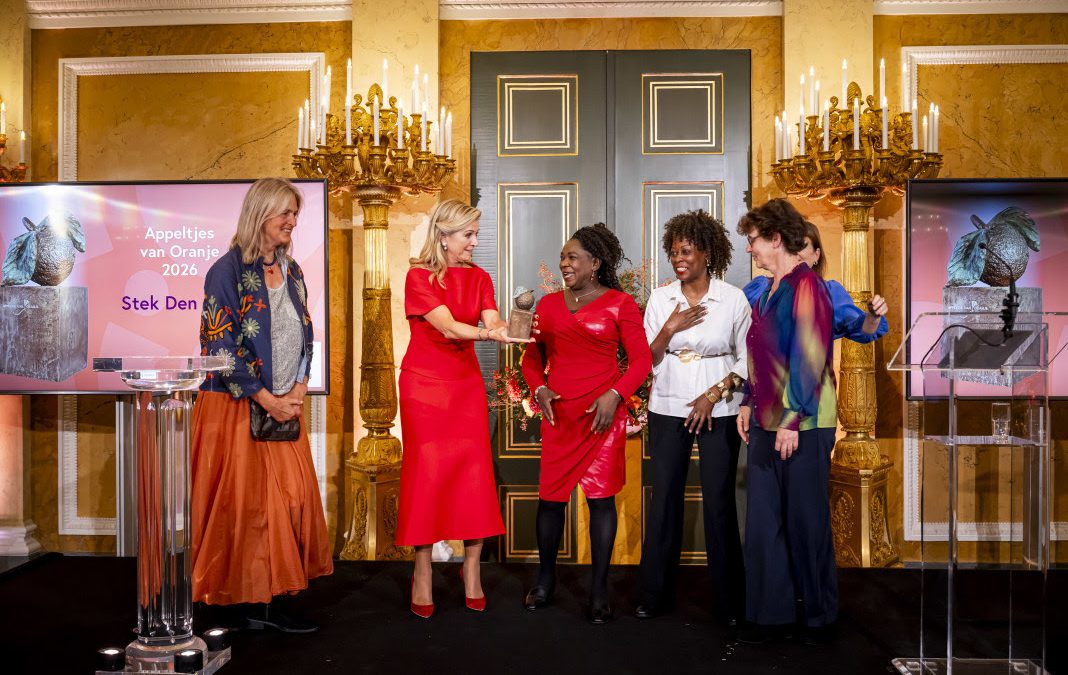
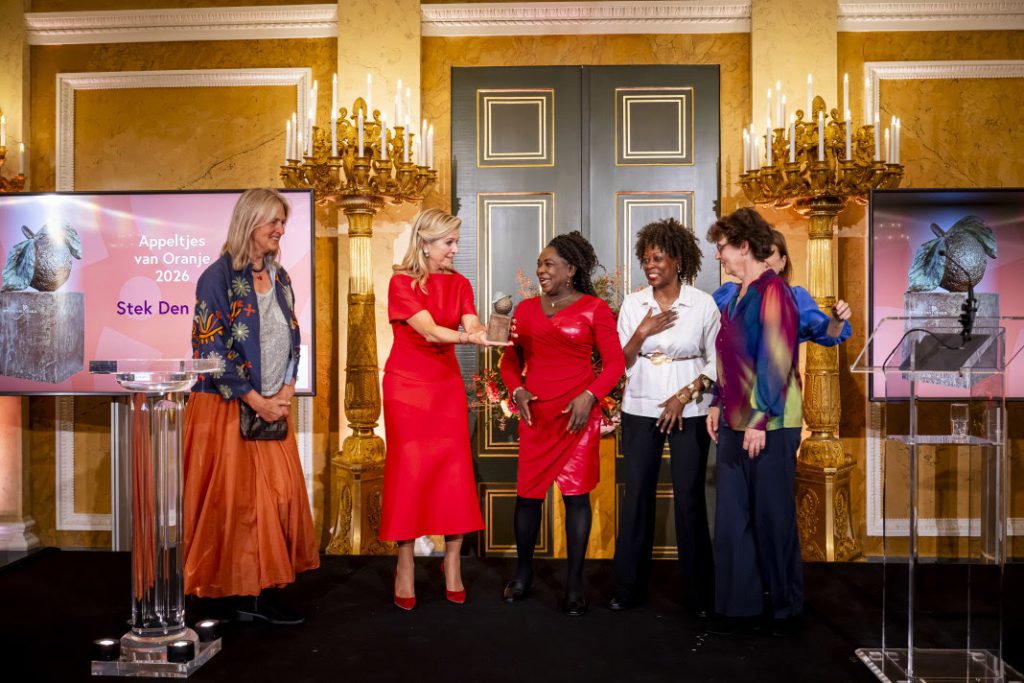
Stek – Buurt & Lukas, a community initiative in The Hague’s Schilderswijk neighbourhood, has won an Appeltje van Oranje 2026 award for its work helping people overcome poverty through practical support, community connections and opportunities to take control of their own lives.
Queen Máxima presented the awards at Paleis Noordeinde in The Hague on Thursday 8 October, recognising three organisations that are making a meaningful difference in tackling poverty.
Tackling Poverty Together
Based in the Schilderswijk, Stek – Buurt & Lukas combines practical assistance and advice with opportunities for residents to meet others, develop their talents and contribute to their community.
An important part of the initiative is its emphasis on working with people rather than simply providing services for them.
Through self-directed groups and activities, participants can draw on their own experiences and abilities to make positive changes in their lives.
The initiative also uses Luisterkracht, an approach that enables residents to share their experiences with one another and with policymakers, ensuring that the voices of people experiencing poverty are included in discussions about possible solutions.
Recognition from the Oranje Fonds
The Appeltjes van Oranje are annual awards presented by the Oranje Fonds to social initiatives that contribute to a more connected and inclusive society.
This year’s theme, Samen armoede doorbreken (Breaking the Cycle of Poverty Together), recognises organisations that understand poverty involves more than financial difficulties. It can also affect health, opportunities and a person’s ability to participate in society.
Alongside Stek – Buurt & Lukas, the other 2026 winners were Stichting Doors Wide Open from Hof van Twente and Mega D Youth Foundation from Sint Eustatius.
Each winning organisation receives €25,000 and a bronze sculpture designed and created by Princess Beatrix.
The awards are now in their 24th year.
Building a Stronger Community
By combining practical assistance with meaningful participation, Stek – Buurt & Lukas demonstrates how community initiatives can provide both immediate support and longer-term opportunities.
Its recognition is also a celebration of the residents, volunteers and professionals working together to create a more inclusive Schilderswijk.
For more information about the awards, visit the Oranje Fonds.
Source: Oranje Fonds press release, 8 October 2026.
Shilpais a narratologist, writer and founder of The Bridge HUB. She moved to the Netherlands as an undiagnosed neurodivergent expat and learned the cost of masking firsthand. Now she builds ways across. Affordable Dutch classes. Music lessons for those with passion but not privilege. Storytelling for people ready to tell their own. She is a National ECHO Award nominee. Her belief is simple. Access shouldn’t be a privilege. Everyone deserves a way across. She is a guest writer with IamExpat and contributor for The Hague Online.
Have you ever moved abroad and started feeling unwell in ways you could not easily explain? Perhaps you developed stomach problems, struggled to sleep, felt exhausted after ordinary errands, or became more aware of symptoms you had managed for years. It can be frightening, especially when you cannot tell whether you are dealing with an illness, stress, or both.
I want to be careful with that question. I cannot tell you that moving abroad makes people ill because their nervous systems are “panicking”. I can tell you that migration changes the conditions in which a person lives, and those changes can affect physical and mental health. Research on post-migration stress has found links with poorer health and symptoms such as sleep difficulties, loss of appetite, digestive problems, and headaches. Much of that research concerns refugees or people who migrated under circumstances very different from mine, so their experiences should not be treated as interchangeable with mine. But it raises a question worth asking: what happens to health when daily life requires sustained effort to navigate?
I ask it as an AuDHD person who moved to the Netherlands. I am autistic and have ADHD. I am also a writer, which means I am used to looking for connections between events. For a long time, I looked closely at the events in my life but paid less attention to what it cost my body to get through them.
The Netherlands did not greet me with one dramatic difficulty. The work of adjusting appeared in ordinary places. It was there when I read a letter and had to determine not only what it said but also what action it expected from me. It was there when I planned a journey, checked whether I was going in the right direction, and arrived already tired. It was there in conversations where I understood the words but was less certain about the expectation behind them.
A trip to the supermarket could involve more decisions than it once had. I had to find familiar ingredients or choose alternatives, read labels, manage noise and light, and decide what I could eat. None of those tasks was impossible. That was part of what made the exhaustion difficult to explain. I had done the shopping. Why did it feel as though I had done so much more?
Research on autism describes sensory processing differences, including experiences of overload when sensory input becomes too much. That does not mean every autistic person finds a supermarket difficult or that every difficult shopping trip is a medical event. It does help explain why an environment that looks manageable from the outside may demand considerably more from the person moving through it.
For me, there was also the effort of uncertainty. I could enjoy discovering a new place while wanting the day to be predictable. I could be interested in meeting people and still need quiet afterward. My ADHD and autism did not cancel each other out, and neither made me incapable of adapting. They shaped what adaptation required.
I could arrive at an appointment on time, speak clearly, ask questions, and leave with everything I needed. Someone watching might reasonably think it had gone well. They would not necessarily see the preparation beforehand or the time I needed afterward. I often judged myself by the visible result and dismissed the effort that produced it.
That distinction matters when we talk about health. If we count only completed tasks, we may miss the strain involved in completing them. I was studying, writing, learning, and making a life. I was also sometimes frightened by how tired I felt. I did not yet have a useful way to hold those facts together.
My health history did not begin with migration. For more than twenty years, I took medication for allergies. I lived with IBS and, at times, ate from a limited range of foods because eating felt difficult or uncertain. I had learned to organise parts of my life around symptoms. I want to say this clearly because it would make a more convenient story to claim that I moved to the Netherlands, developed health problems, and later discovered a single cause. That is not my story.
What changed was my understanding of the context around those symptoms. I became more aware of the effort of staying alert: noticing how people responded to me, anticipating difficulties, preparing for changes, and keeping some of my own reactions private. I began to wonder whether I was looking at my body one symptom at a time while overlooking how I was living from day to day.
That question is not a diagnosis. Allergies involve immune reactions to allergens; they should not be explained away as a person’s inability to cope. Stress and anxiety are among the possible triggers for IBS flare-ups, but that does not mean stress caused someone’s IBS or that a new digestive symptom should automatically be attributed to it. Physical symptoms deserve assessment on their own terms.
After I was diagnosed with autism and ADHD, I began asking different questions about my days. Had I been coping with more noise than I realised? Had I missed a meal while concentrating on something else? Was I resting only when I became unable to continue? Was I calling a day “easy” because nothing had gone wrong, even though every step had required attention?
Some of those questions concerned interoception, the perception of internal bodily signals such as hunger, thirst, heart rate, and breathing. Research into ADHD suggests that interoception may differ for some people with ADHD, although findings are not uniform and the studies have limitations. In one systematic review, three of five studies comparing people with and without ADHD found reduced interoception in the ADHD groups. That finding cannot explain an individual person’s symptoms, but it offers a useful reason not to assume that everyone notices or interprets bodily needs in the same way.
I recognised something in that uncertainty. Sometimes I noticed a bodily sensation intensely but could not tell what it meant. At other times, I realised too late that I was hungry, tired, or overwhelmed. I had been told to listen to my body, but listening was not always the problem. Interpretation was.
The distinction changed how I thought about my behaviour. Missing a meal did not always mean I had decided food was unimportant. Needing quiet after a conversation did not mean I disliked the person I had spoken with. Struggling with a changed plan did not mean I was unwilling to be flexible. I needed to understand what had happened before I could decide what would help.
Moving abroad added another layer: I was learning a new social and practical environment while still learning about myself. When I could not understand why something felt difficult, there were several possible explanations. Was I unfamiliar with how a Dutch system worked? Had I misunderstood a social cue? Was I overloaded? Was I tired? More than one answer could be true.
Research specifically about autistic people with immigrant backgrounds is still limited. A 2026 systematic review found twelve eligible studies and identified recurring issues including masking, social exclusion, difficulties with identity recognition, and barriers to appropriate support. It also found strengths and potentially protective experiences. The authors cautioned that direct comparisons between autistic immigrants, non-autistic immigrants, and autistic non-immigrants remain limited. That matters to me: the evidence supports taking this intersection seriously, not declaring that every autistic person finds migration harder than everyone else.
The finding that stayed with me was how easily one part of a person’s experience can conceal another. If I struggled in a conversation, I might assume it was because I was new to the country. Someone else might assume the same. Sometimes that would be right. But what if I was also processing sensory information, monitoring my expression, and trying to work out whether I had understood a social expectation? A single explanation could leave important information out.
I know what it is to appear capable while working hard to appear that way. I could prepare for a conversation and get through it, then spend time afterward going over what I had said. I could be grateful for an opportunity and still find the interaction exhausting. When I kept those experiences to myself, people saw that I had managed. They could not see what managing had required.
That pattern affected the way I sought help. Describing a symptom is difficult when it comes and goes. It becomes harder when you are also trying to decide which details matter and how to explain them in an unfamiliar healthcare system. I felt pressure to make my account clear and concise. Yet sometimes the honest account was: this has happened before, it may be changing, and I do not know whether these things are connected.
In the Netherlands, the huisarts, or GP, is the first point of contact for questions about most physical and mental health concerns. That is practical information, but there is also permission in it. I do not have to decide on my own whether a symptom is physical or psychological before asking for help. I can describe what I am experiencing and let a clinician help assess it.
That is especially important when someone offers a reassuring explanation too quickly. “It might be stress” can open a useful conversation. “It is only stress” can close one. The NHS advises seeing a GP for suspected IBS symptoms lasting more than four weeks and identifies symptoms such as unexplained significant weight loss or bloody diarrhoea as reasons to seek urgent advice. Suspected allergies also merit medical assessment; severe allergic reactions require emergency treatment. Those distinctions matter more than a compelling theory about the nervous system.
Over time, many of the symptoms I had written about in earlier years improved. I am glad they did. I am also cautious about what I claim from that change. My autism and ADHD diagnoses did not cure an allergy. I cannot prove that masking caused my IBS, or that moving to the Netherlands caused any particular symptom. I do not have the evidence to make those claims, and my experience should not become a rule for somebody else’s body.
What the diagnoses gave me was a better set of questions. They helped me notice the relationship between my health, my environment, and the effort of getting through a day. They also helped me recognise that support could take more than one form. Medical care mattered. So did knowing when an environment was difficult for me, allowing time to recover, and being more honest about what I needed.
I began paying attention to what happened before I felt unwell. I noticed whether I had slept, eaten, spent a long time in a busy place, or prepared for an uncertain conversation. Not every symptom followed a pattern. Not every pattern pointed to a cause. But recording those details made it easier to describe my experience accurately, including when I spoke to a doctor.
I also stopped using other people’s ease as a measure of what should be easy for me. If someone else could finish a busy day and go straight to a social event, that told me very little about what my body needed. The goal was not to prove I could endure the same amount of stimulation or uncertainty. The goal was to build a life I could participate in without repeatedly ignoring signs that something needed attention.
There is a social part to this finding as well. Moving abroad is often described as a personal achievement, measured by independence, language progress, work, or the ability to fit in. Those are meaningful things, but they do not provide a complete picture of adjustment. A person can be doing well by those measures and still need help. A person can love the country they moved to and have days when the effort of living there is high.
I have learned not to make gratitude compete with difficulty. I can value the life I am building in the Netherlands and speak honestly about the cost of certain days. I can say that I have adapted in many ways without claiming the process is finished. Change takes me time to understand. Sometimes I know I have adjusted only when I notice that something which once demanded careful preparation has become ordinary.
I began this piece with a question about becoming ill after moving abroad. The responsible answer is not that your nervous system is definitely panicking. It is that migration, neurodivergence, stress, environment, and health can interact, while symptoms can also have causes that require investigation. The research is developing, particularly where autism and migration meet, and no study can tell an individual what is causing their illness.
My finding is more personal, and perhaps more useful because it is limited: I understood my health better when I stopped asking for one explanation that would cover everything. I needed medical care and self-understanding. I needed to take symptoms seriously and notice what daily life demanded of me. I needed to ask what was happening in my body without assuming I already knew the answer.
I moved to the Netherlands and learned new ways to find my place here. I am still learning how to recognise what it takes for me to live well in that place. When my body tells me something is wrong, I no longer want to silence it with a neat story. I want to listen carefully, describe what I notice, and get help where I need it.