After two years of intensive work, the Pletterijkade in The Hague will reopen to traffic on Good Friday (April 3) in the late afternoon. The municipality has completely renewed the quay wall, replaced the sewer system, and redesigned the street.
A safe quay for the coming century
The quay wall has been completely replaced and is set to last for at least another hundred years. A new quay has been constructed near the Boomsluiterskade: a lowered section with benches where residents and visitors can sit close to the water and enjoy the surroundings.
More space for cyclists
The Pletterijkade has now been designed as a bicycle street with a maximum speed of 30 km/h. Cars are guests, and cyclists are given more space. Because the route is important for emergency services, no speed bumps have been installed. The Rijswijkseplein has also been modified. The construction of a two-way bicycle crossing allows cyclists to cross the square more quickly and comfortably.
More greenery
Additional trees and green areas have been added along the quay and on the house side. This creates a more attractive walking route and a pleasant environment for the neighborhood. Alderman Robert Barker (Public Space, Animal Welfare and Environment): “The Pletterijkade is now much greener thanks to the extra trees and green areas. It is a step forward for both residents and visitors. On April 16, we will celebrate the completion of the work together with residents and business owners.”
Safer cycling
Alderman Arjen Kapteijns (Energy Transition, Mobility and Raw Materials): “The Pletterijkade is part of the Sterfietsroute Trekfietstracé, an important connection between the city centre and the Binckhorst. From there, the route connects to the Metropolitan Cycle Route The Hague – from Pijnacker to Ypenburg and Pijnacker-Nootdorp. Thanks to the new layout, everyone can now cycle here faster, safer and more comfortably.” With the expected doubling of the number of cyclists on this route – to 10,000 per day in 2030 – and the growth of the surrounding neighbourhoods, The Hague is preparing for a sustainable and accessible future.
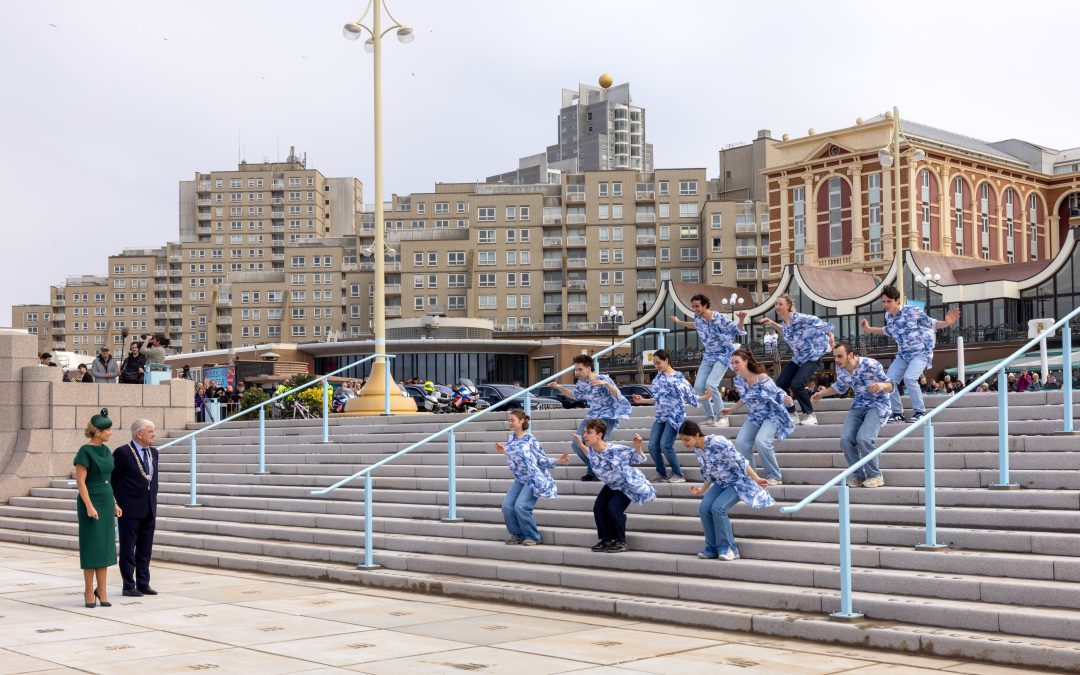
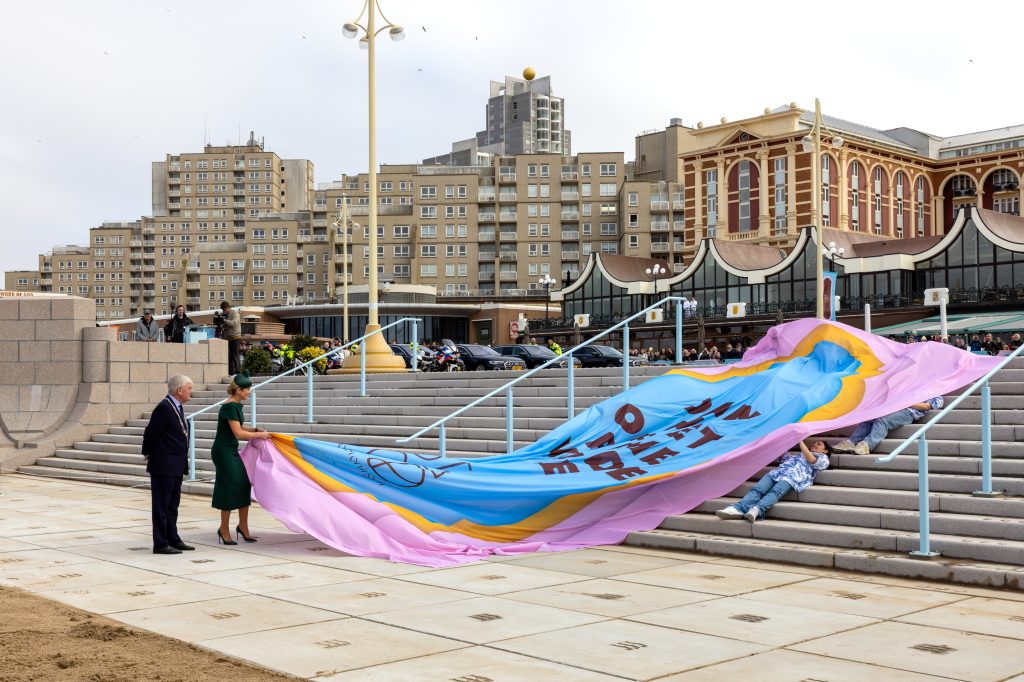
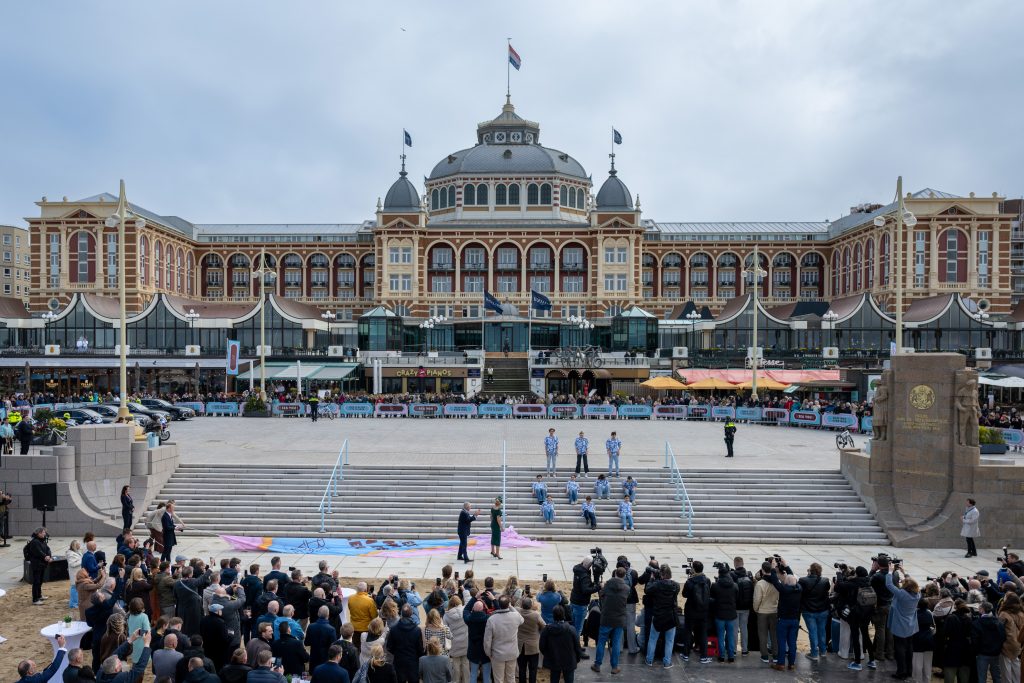
After a renovation period of two and a half years, Her Majesty Queen Máxima officially reopened the renewed Scheveningen boulevard on April 2. The boulevard has been made more accessible, greener, and future-proof. The festive completion, just before the Easter weekend, was framed by a dance performance by the Dutch Don’t Dance Division (DDDD) and music by students of the Royal Conservatory.
Renovation and renewal
Beachgoers can now enjoy a boulevard ten meters wider between De Pier and the Beelden aan Zee museum. The boulevard is also greener and features a new layout. Near the Kurhaus, a wide staircase now connects the boulevard directly to the beach, providing a panoramic view. The historic Leger en Vloot monument has also been carefully relocated to a new, prominent location. Even behind the scenes, the boulevard is ready for the future: innovative solutions have been installed beneath the paving, such as systems for sustainable rainwater harvesting.
Klaas Verschuure, Alderman for Urban Development: “For over two hundred years, bathers have been finding their way to our beautiful Scheveningen. And as far as I am concerned, we will keep it that way for the next two hundred years. And beyond that. I am incredibly grateful to all those people who have literally worked up a sweat over the past few years. Through wind and rain: from 39 degrees to -7. This is a boulevard to be proud of.”
Gavin van Boekel, CFO of Koninklijke Heijmans: “Every day we saw thousands of people walking past here: families, entrepreneurs, beach lovers. That is precisely why we wanted to create a boulevard that provides space and contributes to a healthy, attractive living environment. The fact that we achieved this together while Scheveningen remained open and with minimal disruption makes me proud.”
Official opening with those involved
Her Majesty the Queen opened the boulevard amid great interest. Prior to the opening ceremony, Queen Máxima met with representatives of the seaside resort, Royal Heijmans, and the Municipality of The Hague. Following a speech by Mayor Jan van Zanen, a video about the construction of the project and a poem by Scheveningen poet Esther van Haren were shown. During a tour, the Queen spoke with those involved in the renovation and with beach entrepreneurs who remained active during the construction.
The official opening ceremony took place on the beach section in front of the Kurhaus. The Dutch Don’t Dance Division performed a special dance show on the steps of the new staircase. Following this, visitors could participate in a symposium on the Army and Navy Monument .
Martin Wörfsdörfer, chairman of the association of beach operators: “A sunny start. The beach pavilions are positioned slightly differently, further apart, giving you a fantastic view of the sea everywhere. There are beautiful benches and lighting, and of course, there is that staircase in front of the Kurhaus. That is where you really see the old grandeur reflected. As always, we are ready with open arms in the beach pavilions to welcome visitors with a tasty snack and a drink.”
For the public: new space for events
The widened boulevard has created more space for more public events. The kick-off takes place on Saturday, April 18 and Sunday, April 19 with the free KidsFest aan Zee. Subsequently, the program includes a Hague Freedom Meal, the European Robotic League, and Aircooled Scheveningen, among others. Music performances are also regularly organized on the boulevard.
The renovation work on the Hubertus Tunnel is taking more than two months longer than planned. Strukton (the contractor) has indicated that it will not meet the original opening date of April 30. The municipality considers this unacceptable and has imposed a substantial fine on Strukton for failing to comply with the contract. The contractor expects the Hubertus Tunnel to reopen to traffic in early July 2026.
As a result of the extended closure, several projects need to be rescheduled. The impact and alternatives are currently being worked out.
Diversions
The extended closure also means that traffic must continue to take a detour until the road reopens. The existing closures and associated diversions in the area remain unchanged.
Until then, traffic will remain heavy. Expect delays during rush hour and plan your journey wisely. The Hubertus Tunnel will only be allowed to open to traffic once everything is functioning properly and safely.
The Municipality of The Hague is changing a significant number of housing regulations as of April 1st. The amended housing ordinance makes it easier to share homes. With this adjustment, the municipality aims to provide more people with a place to live in the city by making smarter use of the existing housing stock. “How nice is it when you can take someone into your home who is desperately looking for a room?”
The housing ordinance is the body of rules in which the municipality establishes how homes are allocated, which permits are required for modifications, and which rules apply to, for example, tourist rentals (such as Airbnb). These rules provide clarity for residents regarding what is and is not permitted with their home.
Ahead of national policy
The amendment focuses on relaxing rules regarding the splitting of houses into multiple dwellings, room rentals, and host family rentals. Host family rentals involve someone renting out a room in their home to, for example, a student or a young professional. With this, The Hague is anticipating national intentions to relax these matters.
The new rules will be available on the Municipality of The Hague website as of April 1. Permit applications submitted from April 1 onwards fall under the new, relaxed rules. A permit is usually required for room rentals and splitting properties. Host family rentals only need to be reported.
The municipality expects residents and developers to make use of the relaxed rules. Alderman Co Engberts: “Both residents and market parties indicate that there is a need for more options to share a home. This is understandable, as many homes in our city were built at a time when households were larger than they are now. By expanding home splitting, room rentals, and lodger rentals, we are creating living space that better meets current housing needs.”
Add more affordable homes
The reason for the change is the growing housing shortage. New construction alone offers an insufficient solution. Therefore, The Hague has chosen to create additional options within the existing housing stock as well. This makes it easier to structurally divide a home into multiple independent dwellings, to rent out rooms, or to take in a tenant as a landlady. Structural division and room rentals are not permitted everywhere: where the livability of the neighborhood is under pressure, municipalities do not allow these practices.
The amended regulation follows the Housing Stock Memorandum, which was adopted in February 2026. This document substantiates why specifically these measures are necessary and how they contribute to better use of the available homes.
Alderman Co Engberts emphasizes the importance of the new rules: “With this amended housing ordinance, we are tackling the housing shortage in The Hague quickly. Building new houses takes a long time, and there is not much space left for that within the municipal boundaries. That is why we are also focusing on making better use of what is possible within the walls of the houses that are already standing.”
Social function
Alderman Engberts also points out the social function of these new rules: “When the children have left home, people are often left with an empty nest. How nice is it to be able to take someone into your home who is desperately looking for a room? For elderly people living in homes that are a bit too spacious, having a young person in the house often works well against loneliness. This housing ordinance is therefore an enrichment for the city in several respects.”
The Mechatronics Innovation Campus Schiedam (MICS) is growing into the hotspot for the mechatronics industry. Within this 42-hectare campus, companies, education, and government collaborate on the talent and technology of tomorrow. By investing jointly and massively in this sector now, the partners are building economic growth, higher labor productivity, and future-proof employment.
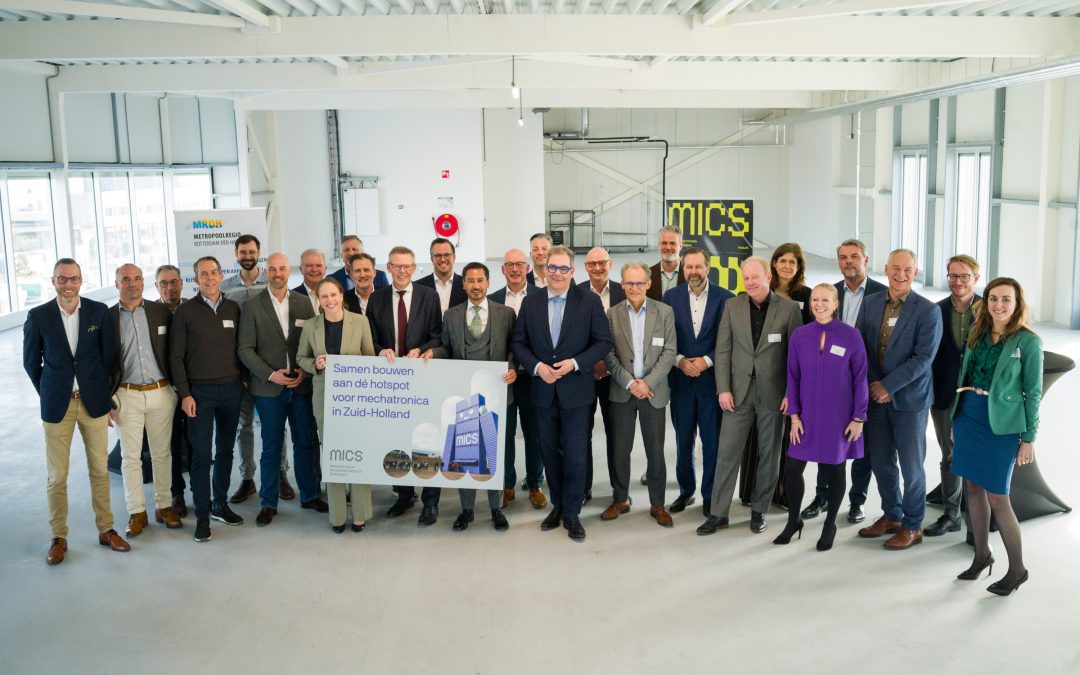
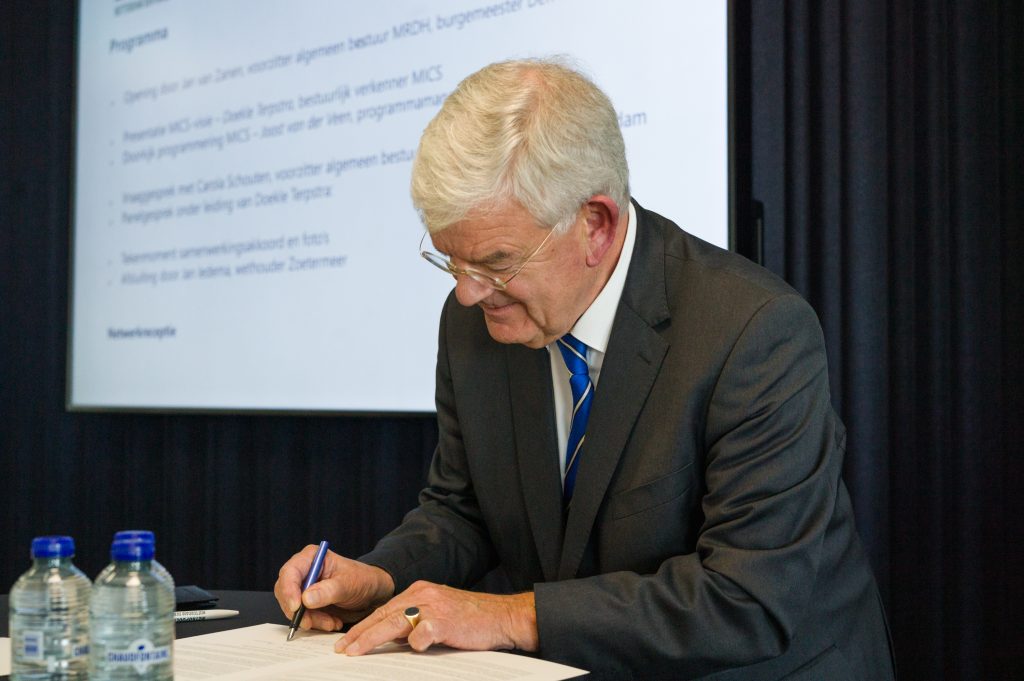
At the initiative of the Rotterdam The Hague Metropolitan Area (MRDH), 30 companies, educational institutions, and government bodies signed a cooperation agreement today for the development of the Mechatronics Innovation Campus Schiedam (MICS). MRDH Chairmen Jan van Zanen (Mayor of The Hague) and Carola Schouten (Mayor of Rotterdam) were present, along with MRDH MICS portfolio holder Jan Iedema (Alderman of Zoetermeer), to underscore the importance of this cooperation agreement. With this step, the parties are jointly strengthening the innovative manufacturing industry in South Holland. Continuing to invest is indispensableTechnology and high-quality manufacturing are important for the economic position of the metropolitan region, and consequently for (future) residents and businesses. To remain competitive internationally, continuous investment is required in innovation, talent development, and public-private partnerships. The MRDH explicitly assumes its role as an economic driver in this regard.
Chairman of the MRDH, Jan van Zanen (Mayor of The Hague): “ This cooperation agreement for the Mechatronics Innovation Campus Schiedam (MICS) demonstrates once again what we are capable of in this region when we join forces. Together with companies, educational institutions, and the government, we are building a strong manufacturing industry and, with it, a future-proof economy for our region. This agreement is an important step in that direction. ”
Carola Schouten, Chair of the MRDH (Mayor of Rotterdam): “ Talent development is more than a labor market issue: it touches upon the social agenda, the economy, and the future of our city and our region. With initiatives such as MICS, as well as Campus Rotterdam and other campus developments, we are building strong education, innovation, talent, and entrepreneurship in the region. Each with its own focus and expertise. By connecting these forces, we strengthen the innovative capacity of this region, which is crucial for the Netherlands .”
MRDH MICS portfolio holder Jan Iedema (Alderman of Zoetermeer): “ This agreement is not an endpoint, but a new step forward. By investing structurally in innovation, productivity, and a strong connection between education and the labor market, we are building a future-proof region. With MICS as the regional hub for talent, technology, and innovation, we can make a difference — if we maintain the momentum and continue building together. And now, let’s roll up our sleeves !”
The MRDH is driving the strengthening of the economic business climate through joint policy, a joint operational organization, and the deployment of financial resources. Until the end of 2026, the MRDH is deploying administrative explorer Doekle Terpstra and program manager Joost van der Veen to further advance this development.
Doekle Terpstra: “ We have a unique proposition with exceptionally broad support from thirty parties. I am fully committed to leading this coalition and this cooperation agreement, and translating them into concrete results. Together, we will capitalize on the opportunities and build an innovation campus of great stature .”
Mechatronics as an economic engine
Mechatronics is the integration of mechanics and is indispensable in numerous high-tech sectors: from aerospace to agritech, maritime applications, and smart manufacturing. Without mechatronics, solar panels cannot unfold in space, advanced measuring instruments cannot measure accurately, and agricultural robots and maritime installations will not function. In short: mechatronics is a foundation of the technology industry in the Netherlands, and in South Holland in particular. Thanks to research, education, and a strong supply chain, we excel here at designing and building mechatronic systems.
An open campus for living, working, learning, and innovating
MICS will become the regional meeting place for innovative manufacturing, knowledge institutions, and talent development. The campus will have a strong physical and programmatic connection with partners in the region and make a significant contribution to the innovation and earning capacity of the metropolitan region and beyond. MICS is developing into an open, vibrant campus that is excellently accessible via the Oude Lijn railway, the metro network, and the A20. Furthermore, it is part of the broader SchieDistrict area development, which also includes 4,000 homes, student housing, and a future-oriented vision on location policy.
Three pillars of cooperation
The agreement signed today guides the development of MICS along three pillars: (Magnet) companies as carriers of the campus Leading companies from the mechatronics, high-tech, and manufacturing industries are actively involved in innovation programs, educational development, and the use of facilities. This creates a powerful economic structure in which companies can grow. Hybrid technology center in the Spectrum campus building Spectrum will house a hybrid technology center with shared facilities for education, corporate training, and practice-oriented innovation. The focus will be on applied robotics, human-robot interaction, and smart manufacturing. There will be field labs and innovation programs, as well as a joint research agenda at the MBO, HBO, and WO levels.
Talent Development: Education and Lifelong Learning Educational institutions, both public and private, collaborate with companies on future-oriented technical education throughout the entire chain. Learning pathways align from primary education to university. In addition, there is a wide range of technical courses for anyone who wishes to continue developing their skills. MICS serves as the central learning and working environment in this context: a practical setting where pupils, students, and professionals meet and collaborate. An environment where different types of education come together and reinforce one another.
Organization and direction
To properly organize the collaboration, the partners are establishing the programmatic partnership MICS. This will not be a new organization, but a flexible structure that works closely with the MICS campus cooperative. This is an organization that brings together companies, educational institutions, and the government at MICS to stimulate collaboration, innovation, and shared facilities. Trade associations, the Province of South Holland, and Innovation Quarter support this campus development and the cooperation agreement.
Long-term joint commitment
With the signing of the cooperation agreement, all parties involved confirm their long-term commitment to a strong, innovative, and future-proof manufacturing industry in the region. The development of MICS contributes to an attractive business climate, better alignment between education and the labor market, and stronger regional earning capacity.The following companies and educational institutions signed the cooperation agreement: Batenburg Techniek – Battolyser Systems – Boers & Co – Erasmus University Rotterdam – Festo – FMI – FME – Municipality of Schiedam – The Hague University of Applied Sciences – Hatenboer Water – HiDelta Hittech – Rotterdam University of Applied Sciences – Inholland – Lentiz – MakerMinds – Metrohm – Mikrocentrum – MRDH – Nearfield Instruments – Orga – ROC Mondriaan – SDK Vastgoed – Sew-Eurodrive – Techniek College Rotterdam – TNO.
Photo 1: All 30 parties that signed the MICS cooperation agreement (photo Boudewijn Bollmann)
Photo 2: Jan van Zanen, Chairman of the MRDH, is the first to sign the MICS cooperation agreement. (photo Boudewijn Bollmann)
The Hague has made significant progress in tackling malpractice in the rental sector. Two and a half years after the Good Landlordship Act came into force, giving the municipality stronger powers to protect tenants, dozens of landlords have already been reprimanded. “It is crucial that this law remains in place.”
On 1 July 2023, the Good Landlordship Act came into force. The municipality has now evaluated how the law has worked in practice in The Hague during its first two and a half years. The act gives municipalities tools to better protect tenants and address undesirable behaviour by landlords.
At the same time as the law was introduced, The Hague launched its Reporting Point for Undesirable Landlord Behaviour. Through this reporting point, tenants can report problems in the rental sector. Since its launch on 1 July 2023, the reporting point has received 606 reports. Some of these concerned intimidation by landlords, accounting for 166 reports, while 98 reports related to excessive rent.
The Hague Housing Brigade
Enforcement of the law in The Hague is handled by the Hague Housing Brigade. It investigates reports submitted through the reporting point and can also take action based on signals identified during its daily work. Most of the brigade’s enforcement actions follow suspicions of malpractice uncovered through its own investigations.
When malpractice is confirmed, the municipality can take various measures. A landlord may receive a formal warning, or a penalty payment order or administrative fine may be imposed. Since the law came into force, the Municipality of The Hague has issued 86 formal warnings and imposed 57 penalty payment orders or administrative fines.
When a landlord is warned or fined, it can help dozens or even hundreds of tenants at a time, because landlords often rent out many properties.
Deterrent effect
Alderman Co Engberts, responsible for Housing, Welfare, Districts and South West, is positive about the law’s impact in The Hague: “The Good Landlordship Act gives us the opportunity to put tenants first by taking action against landlords who do not follow the rules. Thanks to the reporting point and the work of the Hague Housing Brigade, we have a clearer picture of what is happening on The Hague’s rental market. This means we can intervene when tenants are paying too much rent or are otherwise being treated unfairly. We hope this also has a deterrent effect, because landlords know they cannot get away with breaking the rules in The Hague. The figures show that tenants know how to find the reporting point and that, as a municipality, we are genuinely able to enforce the law.”
New cabinet
At the same time, Alderman Engberts has a message for national politics: “It is crucial that this law remains in place. I hope the new cabinet leaves the Good Landlordship Act unchanged, so that municipalities can continue to act effectively against malpractice in the rental sector in the future and tenants remain better protected.”