The Mechatronics Innovation Campus Schiedam (MICS) is growing into the hotspot for the mechatronics industry. Within this 42-hectare campus, companies, education, and government collaborate on the talent and technology of tomorrow. By investing jointly and massively in this sector now, the partners are building economic growth, higher labor productivity, and future-proof employment.
At the initiative of the Rotterdam The Hague Metropolitan Area (MRDH), 30 companies, educational institutions, and government bodies signed a cooperation agreement today for the development of the Mechatronics Innovation Campus Schiedam (MICS). MRDH Chairmen Jan van Zanen (Mayor of The Hague) and Carola Schouten (Mayor of Rotterdam) were present, along with MRDH MICS portfolio holder Jan Iedema (Alderman of Zoetermeer), to underscore the importance of this cooperation agreement. With this step, the parties are jointly strengthening the innovative manufacturing industry in South Holland. Continuing to invest is indispensable Technology and high-quality manufacturing are important for the economic position of the metropolitan region, and consequently for (future) residents and businesses. To remain competitive internationally, continuous investment is required in innovation, talent development, and public-private partnerships. The MRDH explicitly assumes its role as an economic driver in this regard.
Chairman of the MRDH, Jan van Zanen (Mayor of The Hague): “ This cooperation agreement for the Mechatronics Innovation Campus Schiedam (MICS) demonstrates once again what we are capable of in this region when we join forces. Together with companies, educational institutions, and the government, we are building a strong manufacturing industry and, with it, a future-proof economy for our region. This agreement is an important step in that direction. ”
Carola Schouten, Chair of the MRDH (Mayor of Rotterdam): “ Talent development is more than a labor market issue: it touches upon the social agenda, the economy, and the future of our city and our region. With initiatives such as MICS, as well as Campus Rotterdam and other campus developments, we are building strong education, innovation, talent, and entrepreneurship in the region. Each with its own focus and expertise. By connecting these forces, we strengthen the innovative capacity of this region, which is crucial for the Netherlands .”
MRDH MICS portfolio holder Jan Iedema (Alderman of Zoetermeer): “ This agreement is not an endpoint, but a new step forward. By investing structurally in innovation, productivity, and a strong connection between education and the labor market, we are building a future-proof region. With MICS as the regional hub for talent, technology, and innovation, we can make a difference — if we maintain the momentum and continue building together. And now, let’s roll up our sleeves !”
The MRDH is driving the strengthening of the economic business climate through joint policy, a joint operational organization, and the deployment of financial resources. Until the end of 2026, the MRDH is deploying administrative explorer Doekle Terpstra and program manager Joost van der Veen to further advance this development.
Doekle Terpstra: “ We have a unique proposition with exceptionally broad support from thirty parties. I am fully committed to leading this coalition and this cooperation agreement, and translating them into concrete results. Together, we will capitalize on the opportunities and build an innovation campus of great stature .”
Mechatronics as an economic engine
Mechatronics is the integration of mechanics and is indispensable in numerous high-tech sectors: from aerospace to agritech, maritime applications, and smart manufacturing. Without mechatronics, solar panels cannot unfold in space, advanced measuring instruments cannot measure accurately, and agricultural robots and maritime installations will not function. In short: mechatronics is a foundation of the technology industry in the Netherlands, and in South Holland in particular. Thanks to research, education, and a strong supply chain, we excel here at designing and building mechatronic systems.
An open campus for living, working, learning, and innovating
MICS will become the regional meeting place for innovative manufacturing, knowledge institutions, and talent development. The campus will have a strong physical and programmatic connection with partners in the region and make a significant contribution to the innovation and earning capacity of the metropolitan region and beyond. MICS is developing into an open, vibrant campus that is excellently accessible via the Oude Lijn railway, the metro network, and the A20. Furthermore, it is part of the broader SchieDistrict area development, which also includes 4,000 homes, student housing, and a future-oriented vision on location policy.
Three pillars of cooperation
The agreement signed today guides the development of MICS along three pillars: (Magnet) companies as carriers of the campus Leading companies from the mechatronics, high-tech, and manufacturing industries are actively involved in innovation programs, educational development, and the use of facilities. This creates a powerful economic structure in which companies can grow. Hybrid technology center in the Spectrum campus building Spectrum will house a hybrid technology center with shared facilities for education, corporate training, and practice-oriented innovation. The focus will be on applied robotics, human-robot interaction, and smart manufacturing. There will be field labs and innovation programs, as well as a joint research agenda at the MBO, HBO, and WO levels.
Talent Development: Education and Lifelong Learning Educational institutions, both public and private, collaborate with companies on future-oriented technical education throughout the entire chain. Learning pathways align from primary education to university. In addition, there is a wide range of technical courses for anyone who wishes to continue developing their skills. MICS serves as the central learning and working environment in this context: a practical setting where pupils, students, and professionals meet and collaborate. An environment where different types of education come together and reinforce one another.
Organization and direction
To properly organize the collaboration, the partners are establishing the programmatic partnership MICS. This will not be a new organization, but a flexible structure that works closely with the MICS campus cooperative. This is an organization that brings together companies, educational institutions, and the government at MICS to stimulate collaboration, innovation, and shared facilities. Trade associations, the Province of South Holland, and Innovation Quarter support this campus development and the cooperation agreement.
Long-term joint commitment
With the signing of the cooperation agreement, all parties involved confirm their long-term commitment to a strong, innovative, and future-proof manufacturing industry in the region. The development of MICS contributes to an attractive business climate, better alignment between education and the labor market, and stronger regional earning capacity.The following companies and educational institutions signed the cooperation agreement: Batenburg Techniek – Battolyser Systems – Boers & Co – Erasmus University Rotterdam – Festo – FMI – FME – Municipality of Schiedam – The Hague University of Applied Sciences – Hatenboer Water – HiDelta Hittech – Rotterdam University of Applied Sciences – Inholland – Lentiz – MakerMinds – Metrohm – Mikrocentrum – MRDH – Nearfield Instruments – Orga – ROC Mondriaan – SDK Vastgoed – Sew-Eurodrive – Techniek College Rotterdam – TNO.
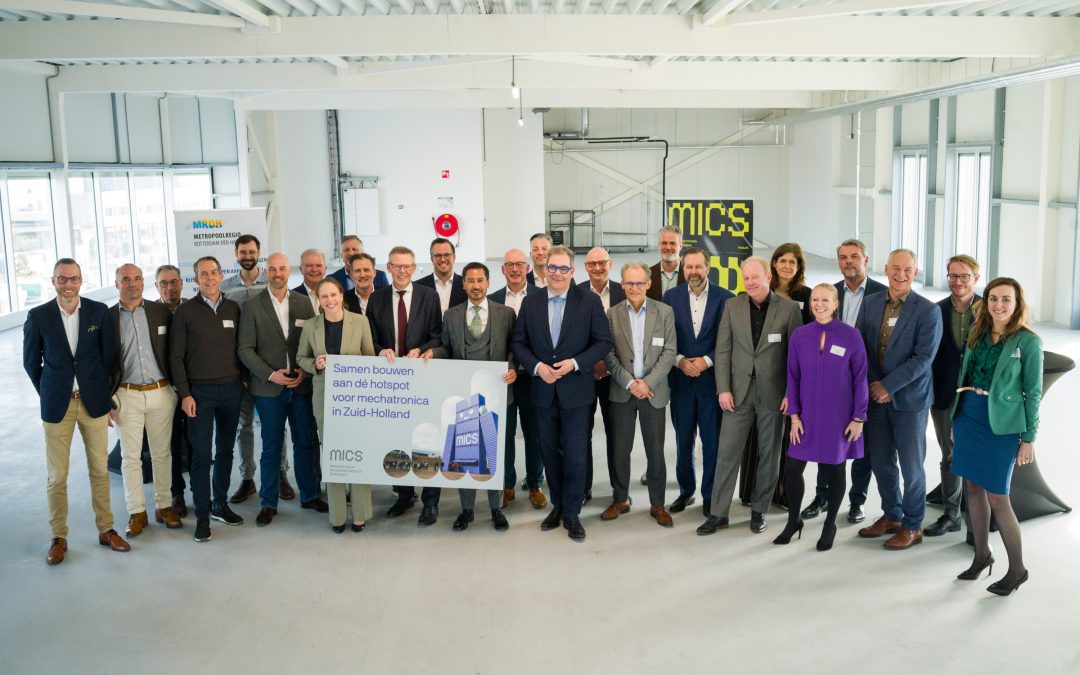
Photo 1: All 30 parties that signed the MICS cooperation agreement (photo Boudewijn Bollmann)
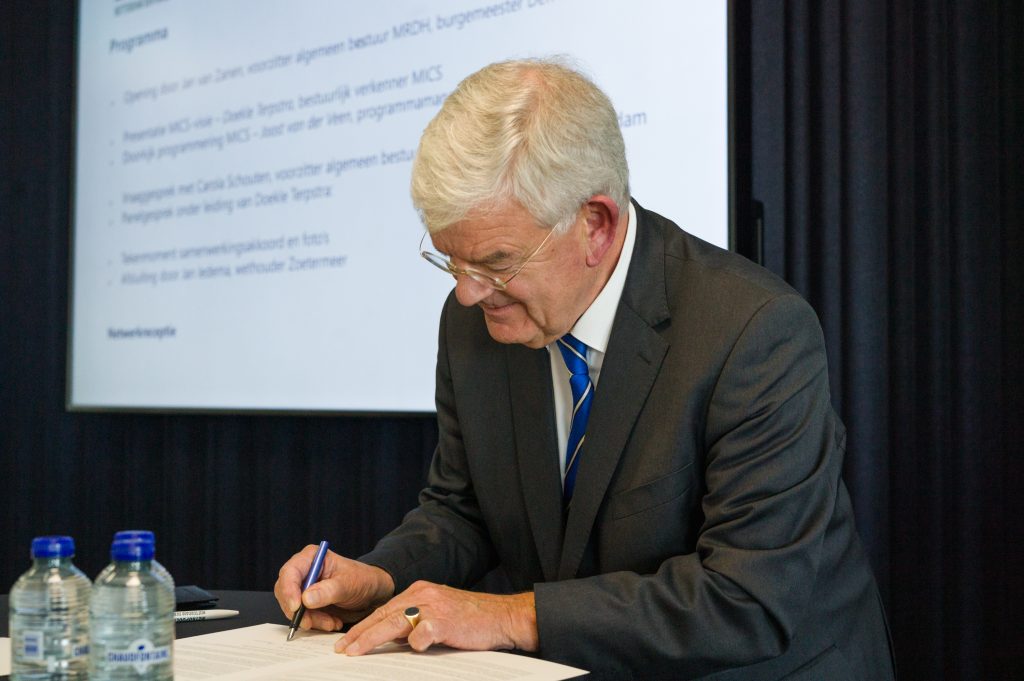
Photo 2: Jan van Zanen, Chairman of the MRDH, is the first to sign the MICS cooperation agreement. (photo Boudewijn Bollmann)