A new initiative bringing businesses and community organisations together has been launched in The Hague. PEPpodium, developed by PEP Den Haag, aims to make it easier for local companies to contribute their expertise, resources and networks to organisations working to improve life in the city.
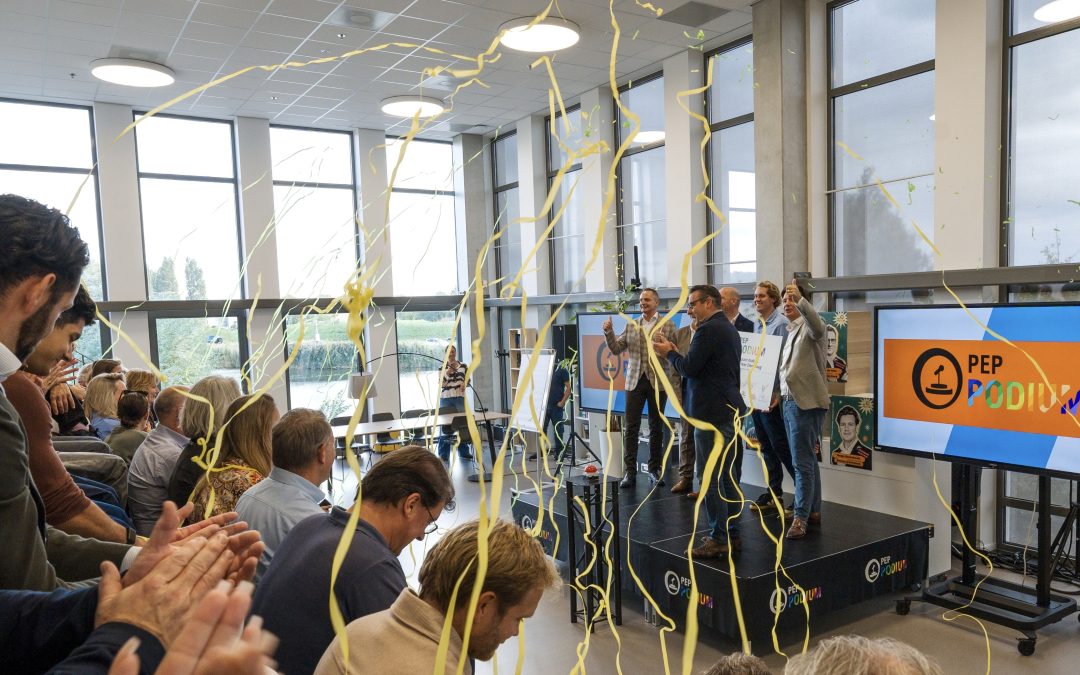
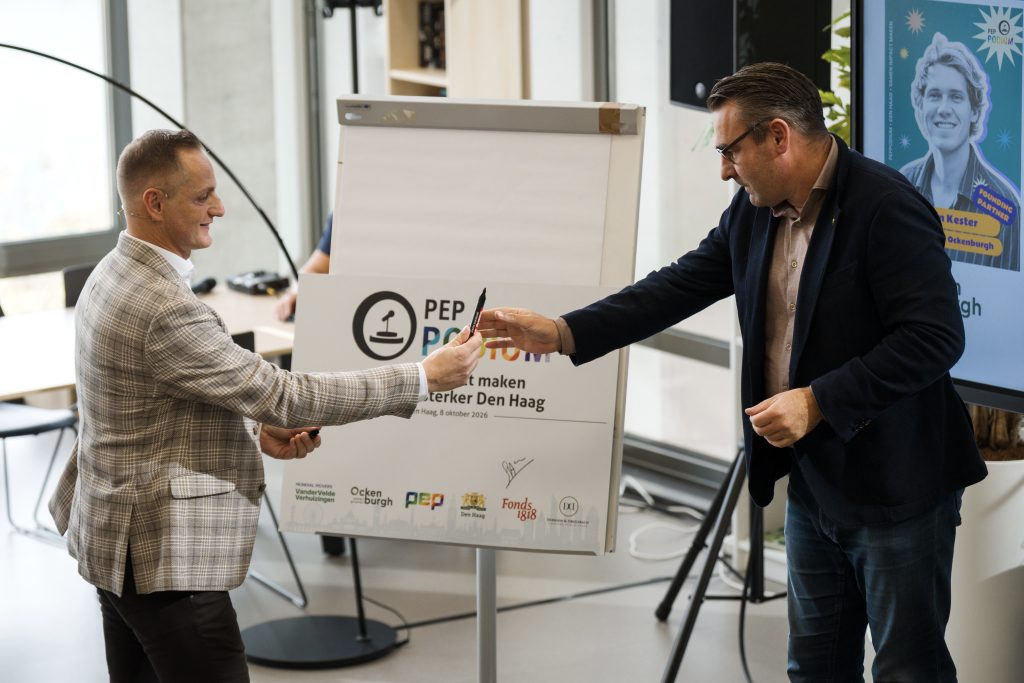
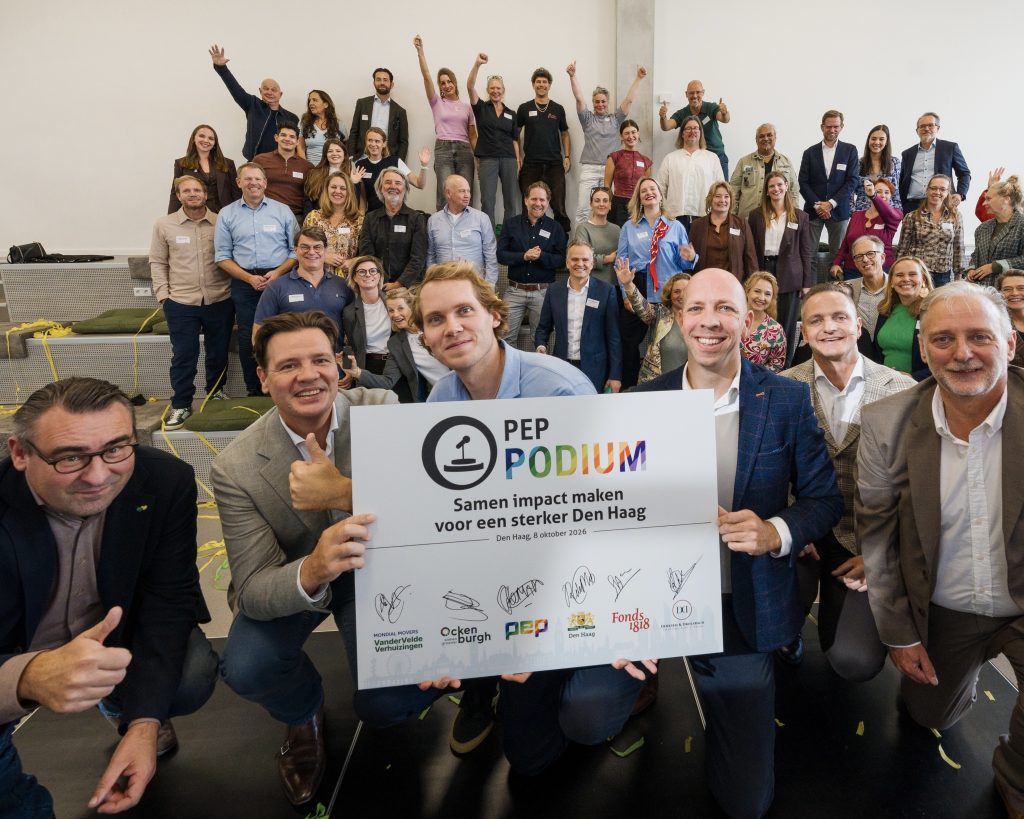
The initiative was officially launched on Thursday 8 October at ROC Mondriaan in The Hague, where Alderman for Economic Affairs Richard de Mos marked the occasion alongside representatives of businesses, community organisations and other partners.
Connecting Businesses with Local Needs
Many businesses want to make a positive contribution to their local community but are not always sure where their support would be most valuable.
At the same time, voluntary organisations, neighbourhood initiatives, charities and associations often need additional expertise, practical assistance or resources to carry out their work.
PEPpodium aims to bring these two groups together, matching the needs of community organisations with what local businesses can offer.
Support might include sharing professional knowledge, providing staff time, making equipment or facilities available, or introducing organisations to useful contacts and networks.
The focus is on creating partnerships that respond to genuine needs in the city.
Building on PEP Den Haag’s Community Network
PEP Den Haag already supports approximately 3,000 community organisations, initiatives and associations throughout the city. Through this work, the organisation has developed extensive knowledge of the challenges facing local communities.
PEPpodium builds on that network by connecting organisations with companies interested in making a meaningful contribution.
Gert-Jan Aleman, Managing Director of PEP Den Haag, explained the approach:
“With PEPpodium, we bring together businesses and community organisations in The Hague. We start with what the city needs and connect those needs with the strengths of local businesses.”
The initiative also aims to highlight successful partnerships, sharing examples that may encourage other businesses and organisations to become involved.
Four Founding Partners
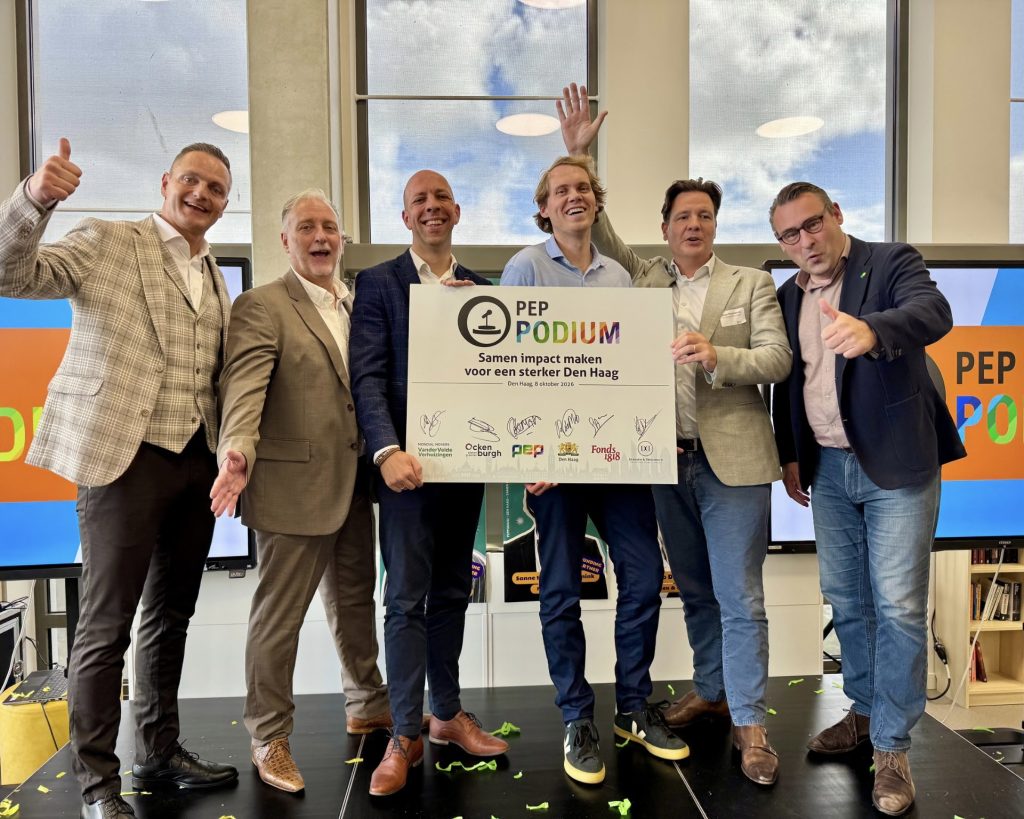
PEPpodium begins with the support of four founding partners:
Derksen & Drolsbach
Tuincentrum Ockenburgh
Mondial Van der Velde Verhuizingen
Fonds 1818
The initiative is also supported by a growing network of ambassadors who aim to encourage further cooperation between businesses and community organisations.
The launch took place alongside the Maatschappelijke Beursvloer Den Haag, an event that brings companies and community organisations together to explore practical ways of supporting one another.
Opportunities for Businesses and Community Organisations
PEPpodium is intended to create lasting connections rather than simply encourage one-off donations.
Businesses can contribute in ways that reflect their expertise, available resources and interests, while community organisations can identify the assistance they need to develop their activities.
For The Hague’s international residents, entrepreneurs and organisations, the initiative offers another opportunity to become involved in the local community and contribute to projects across the city.
Businesses and community organisations interested in participating can find more information through PEP Den Haag.
The Hague will not grant exemptions for the use of consumer fireworks during the upcoming New Year celebrations. Mayor Jan van Zanen announced the decision on Friday 9 October, confirming that the city will follow the new national fireworks ban without allowing exceptions for associations or foundations during its first year.
The decision is intended to provide clarity and improve safety following several years of increasing incidents involving fireworks, violence and attacks on emergency service workers.
What Does the New Fireworks Ban Mean?
The Netherlands introduced a nationwide ban on consumer fireworks on 1 August 2026 under the Wet Veilige Jaarwisseling (Safe New Year Celebrations Act).
Under the new legislation, individuals are no longer permitted to possess or set off consumer fireworks. Small category F1 fireworks, such as sparklers and party poppers, remain permitted.
The legislation does allow mayors to grant exemptions to registered associations and foundations, enabling them to organise fireworks activities under certain conditions.
However, Mayor Van Zanen has decided that The Hague will not issue any such exemptions for the 2026–2027 New Year celebrations.
“The national fireworks ban has support in The Hague. At the same time, I see 2026 as a transitional year in which we are choosing calm and clarity. We want to give the legislation time to take effect,” said Van Zanen.
The mayor explained that the municipality will evaluate the situation after New Year’s Eve, considering the number of incidents, the demands placed on emergency services and the level of interest in organised fireworks activities.
He also noted that very few organisations had expressed interest in applying for an exemption this year.
Sharp Increase in New Year Incidents
The decision follows a particularly challenging New Year’s Eve in The Hague.
During the previous celebrations, the fire brigade responded to 322 incidents, while police recorded 296 incidents, compared with 103 the year before.
Although most residents celebrated peacefully, emergency workers were again confronted with violence and heavy fireworks.
“We cannot continue as we have been. Last year, the number of police incidents increased to almost three times the previous year’s figure. Emergency workers were once again targeted with heavy fireworks and confronted with violence. That is completely unacceptable,” said Van Zanen.
The mayor believes the new legislation offers an opportunity to make New Year’s Eve safer for residents, police officers, firefighters and ambulance personnel.
What About The Hague’s Traditional Bonfires?
The Hague is known for its traditional New Year’s Eve bonfires, or vreugdevuren, in Scheveningen, Duindorp and Laak.
These large community bonfires are a longstanding local tradition, with fireworks displays sometimes accompanying the celebrations.
Under the new legislation, any fireworks displays accompanying the bonfires must be carried out by professional fireworks companies.
Scheveningen has already used professional fireworks operators for several years. In Duindorp and Laak, the new requirements mean changes to how the displays would need to be organised.
Previously, the organisers of all three bonfires paid for their own fireworks displays. Because professional fireworks arrangements may involve additional costs, the municipality is proposing a one-off financial contribution of up to €10,000 per location.
The amount will depend on applications and actual costs.
At the time of the announcement, organisers in Duindorp and Laak were still considering whether to proceed with their fireworks displays.
The proposed financial support relates specifically to the fireworks accompanying the bonfires, rather than the bonfires themselves.
Looking Ahead to New Year’s Eve
The municipality will review the impact of the new rules after the upcoming celebrations before deciding whether exemptions might be permitted in future years.
For residents and international visitors planning to celebrate New Year’s Eve in The Hague, the distinction is important: consumer fireworks are banned, but professionally organised fireworks displays remain possible under the applicable regulations.
Further details about local New Year’s Eve arrangements and any organised celebrations will be announced separately.
Source: Gemeente Den Haag
Translation to English/Editing/Image: The Hague Online
The Hague is encouraging residents to repair and reuse everyday items rather than throw them away, as the Netherlands prepares for its first National Repair Week, taking place from 10 to 18 October 2026. The initiative aims to show how repairing clothes, household appliances and other possessions can save money, reduce waste and help build more sustainable communities.
The week officially begins in The Hague on Saturday 10 October with a Repair Party (Reparatiefeest) at Amare, organised by the municipality and Repair Café Den Haag. Visitors can bring broken items for repair, take part in workshops and learn practical skills. Activities include repairing clothes and electronics, the Japanese clothing repair technique Sashiko, and special activities for children, including a Doll Doctor for damaged toys.
National Repair Week is an initiative of Heel Nederland Repareert (The Netherlands Repairs), which brings together repair professionals, volunteers, municipalities and community organisations. Throughout the week, activities across the country will encourage people to extend the life of their belongings and discover alternatives to buying replacements.
The Hague is also highlighting the contribution of Repair Café volunteers and other local repair initiatives. Beyond reducing unnecessary waste, these activities bring residents together, encourage the sharing of skills and help make repairing a more accessible part of everyday life.
Plans to restore a direct train connection between The Hague and Brussels have taken an important step forward. On Wednesday 7 October, the Municipality of The Hague joined businesses, educational institutions, international organisations and regional partners in signing a manifesto calling for better international rail connections.
The initiative, titled Den Haag kiest voor internationale verbinding (The Hague Chooses International Connectivity), aims to strengthen the city’s accessibility and encourage railway operators to explore opportunities for a direct service between The Hague and the Belgian capital.
Alongside the signing of the manifesto, the city has launched a market consultation, inviting international train operators to consider how such a connection could be established.
Connecting Two International Cities
The Hague is home to hundreds of international organisations, educational institutions and businesses that regularly work with partners across Europe and beyond.
As the International City of Peace and Justice, The Hague has strong connections with Brussels, which is home to major European Union institutions and NATO headquarters.
A direct railway connection would make travelling between the two cities more convenient for residents, professionals and visitors. It would also support more sustainable travel by offering an alternative to travelling by car.
The municipality believes that improving international rail connections would benefit not only The Hague but also the wider region and the Netherlands as a whole.
Broad Support for Better Rail Connections
The manifesto brings together representatives from the business community, international organisations, education, tourism, the conference sector and government.
Together, they are calling for improvements to international rail services, with particular attention to 2029, when the Netherlands will hold the Presidency of the Council of the European Union.
Alderman for Mobility Adeel Mahmood emphasised the importance of international accessibility for the city.
“The Hague is an international city. Every day, thousands of people here work on peace, justice, security, innovation and international cooperation. Good international accessibility is an essential part of that.”
He described the signing of the manifesto as an important step towards restoring the Brussels connection.
“Our joint message to railway operators, the national government and European partners is clear: the demand is there, the support is there, and The Hague is ready.”
What Happens Next?
With the manifesto signed, the municipality and its partners will now seek input from international railway operators through the market consultation.
This process will help identify opportunities and requirements for restoring a direct service between The Hague and Brussels.
Although no start date, timetable or operator has been confirmed, the initiative represents a coordinated effort to put The Hague back on the map for direct international rail travel.
For the city’s international residents and organisations, improved connections with Brussels could make cross-border work, meetings and leisure travel considerably easier.
Source/Image Credit: Gemeente Den Haag
Translation to English/Editing: The Hague Online
Photo: From left to right, Harry Wientjens (Economic Board), Alderman for Mobility Adeel Mahmood, Christel Mourik (Managing Director, Metropoolregio Rotterdam Den Haag) and Michiel Middendorf (Economic Board The Hague). Image Credit: Gemeente Den Haag.
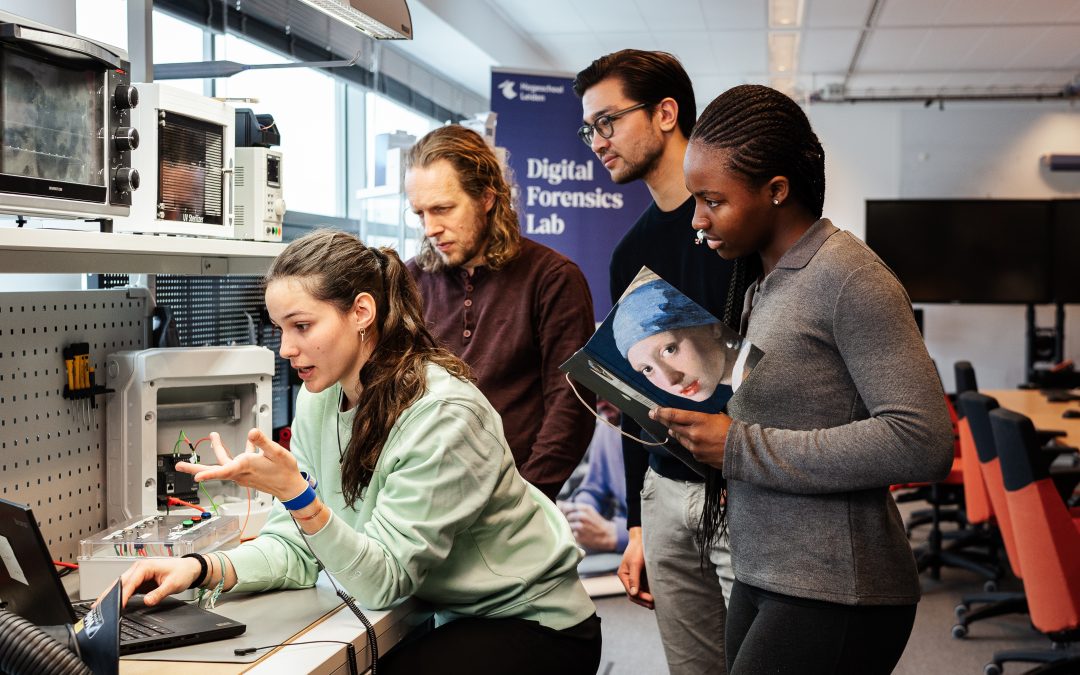
120 ethical hackers examined the digital infrastructure of the Municipality of The Hague yesterday, October 5. From the Atrium of City Hall, students and professional hackers attempted to infiltrate the systems during the seventh edition of Hâck The Hague. A total of 125 reports were submitted. The majority of the reports were resolved the same day. The vulnerabilities found included overdue updates or misconfigurations at vendors.
Adeel Mahmood, Alderman for Service Delivery at the Municipality of The Hague: “In a society that is digitising at a rapid pace, digital security is an important prerequisite for reliable service delivery to our employees, residents, and entrepreneurs. We are constantly working on improving the security of our systems. We cannot do this without the human creativity of both our own security experts and honest hackers. That is quite exciting, but at the same time, it yields many new insights that help us enormously. This is evident every year during Hack The Hague.”
Chain Reaction in cyber security
The theme of this seventh edition was chain reaction. In cybersecurity, a chain reaction refers to an attack in which various small, standalone vulnerabilities or actions are cleverly combined in sequence. The end result is much larger and more damaging than the individual actions.
Hackers use this technique to bypass defense systems. The hacker often breaks in through a relatively harmless vulnerability, such as an outdated plugin on a website or a ‘phished’ employee with minimal privileges. From that position, the attacker looks for a second flaw, such as a system misconfiguration or a script running with administrator privileges. By using the first access to trigger the second flaw , the hacker can sometimes gain maximal privileges. That is a situation every organization wants to prevent.
With this theme, Hâck The Hague places extra emphasised how small, seemingly innocent vulnerabilities can combine to lead to major risks. This shows why testing entire chains of systems is at least as important as testing individual components.
Vulnerabilities and prices found
Various cash prizes were awarded this year in the categories Most Creative Hack , Most Sophisticated Hack, Most Impactful Hack , and The Hackademic Award , supplemented by two bonus prizes: Best Use of AI and Best Report . A total of €17,000 in prize money was distributed.
Lilian Knippenberg, CISO at the Municipality of The Hague: “We are incredibly pleased with all the findings from this edition. Hackers look at our systems with a fresh, critical eye, and that yields insights that we do not always see ourselves. We were already able to resolve some of the reports with the team today, also together with our suppliers. Digital security is a responsibility for all of us. This is also underscored year after year by Hâck The Hague.”
Large turnout
120 hackers participated this year, including students and professional hackers. Of the total, there were 80 professional hackers and 40 student hackers.
In the digital society, every organization is exposed to the risks of cybercrime on a daily basis. In the physical world, it is clear where a municipality’s responsibilities lie. In the digital world, this is often still a pioneering effort. During Hâck The Hague, the Municipality of The Hague gains a fresh, external perspective on its own municipal ICT systems. Moreover, this competition day contributes to inspiring students to pursue a career in cybersecurity. This is sorely needed, as the demand for cybersecurity specialists will continue to increase in the coming years.
New research by MultiTeam Solutions, commissioned by the City of The Hague, shows that line managers can play an important role in preventing scarce cybersecurity talent from leaving the sector because of stress, burnout or a lack of support. The City is putting these insights into practice by offering subsidised leadership training for professionals starting in November 2026.
The leadership training for cybersecurity professionals is fully funded by the City and is therefore free for participants. It will focus on areas including recognising and discussing workload pressures, providing feedback that supports professional development, and acknowledging progress and achievements.
“The Hague wants to be an international leader in cybersecurity. That means investing in technology and new talent, but also in the people who already work every day to keep us digitally secure. We want talented cybersecurity professionals not only to come and work here, but also to want to stay,” says Richard de Mos, Deputy Mayor of The Hague.
The study, Retaining Talent Is a Leadership Capability, shows that the working environment and the way professionals are guided and supported can also influence talent retention. Feeling competent in their work and receiving support from their line manager are associated with lower levels of stress and burnout, and a lower intention to leave the organisation. For professionals moving from a technical role into a management position, this step brings new responsibilities and requires new skills.
Cybersecurity Week 2026 The Hague
During Cybersecurity week in The Hague, the researchers will put the findings into practice at ONE Conference on 6 October through an interactive workshop based on the research. In the session, 3 Practical Leadership Strategies to Retain Cyber Talent, they will work with participants on three practical leadership strategies for retaining cybersecurity talent. By combining research, knowledge sharing at the ONE Conference and free training, the City aims to help build a strong cybersecurity sector in The Hague and the region that is well prepared for the future. Full programme Cybersecurity week: https://thehague.com/cybersecurity/en/cybersecurity-week-2026
About the research
The study, Retaining Talent Is a Leadership Capability, was conducted by MultiTeam Solutions on behalf of the City of The Hague. It took place from mid-2025 to early 2026 and comprised a quantitative survey of 86 cybersecurity professionals and three focus groups. The research focuses on the Dutch cybersecurity sector. https://www.multiteam.solutions/