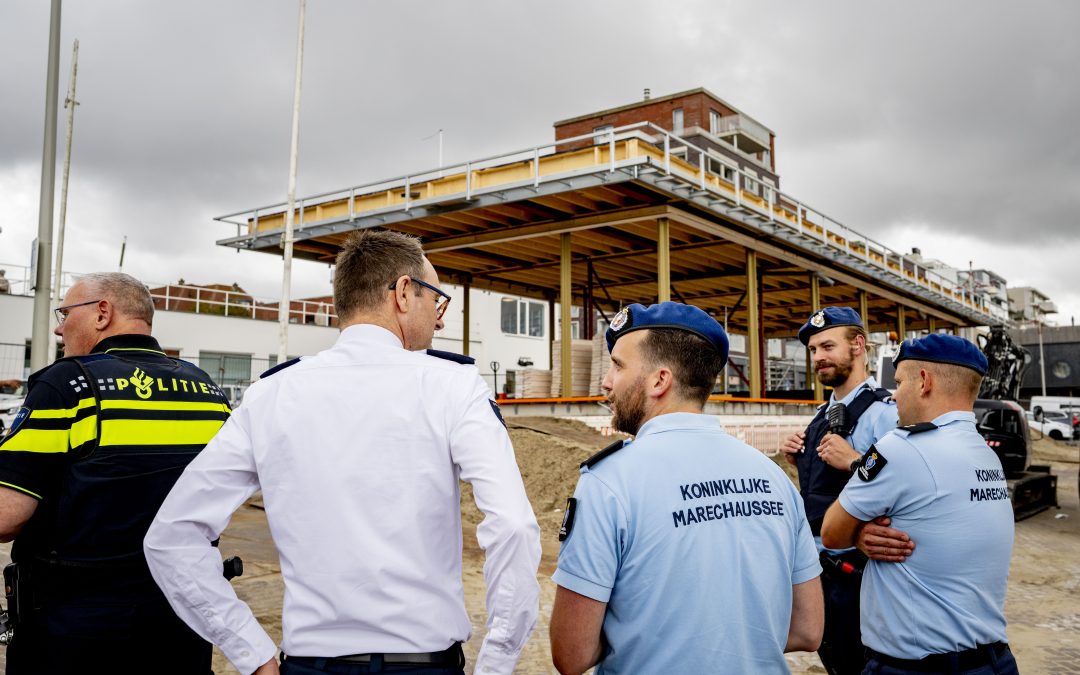
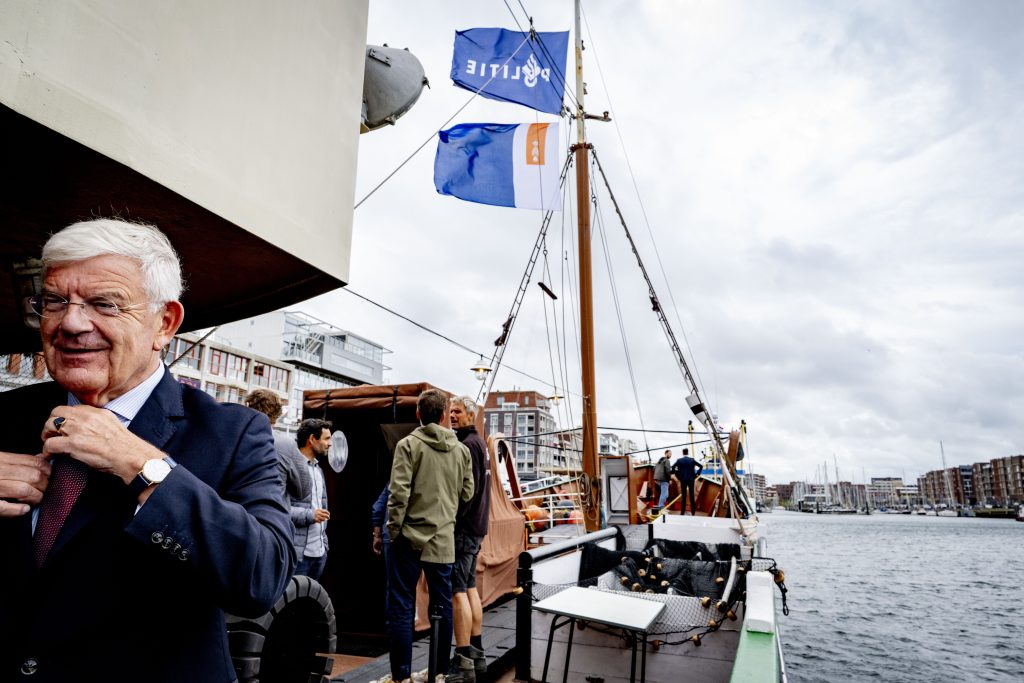
In the fight against crime in the port of Scheveningen, the municipality, police, Royal Netherlands Marechaussee (KMar), Customs, and the Port of Scheveningen Authority will collaborate more closely in a Security Hub. By having various enforcement and supervisory organizations sit together, signals can be shared more quickly and suspicious situations can be addressed sooner. During a neighborhood meeting at the hub’s construction site on Friday, Mayor Jan van Zanen invited residents and business owners to feel free to drop by the new office in the port.
The Safety Hub is also there for residents, entrepreneurs, and everyone who uses the Scheveningen harbor area. “The hub is also there for people with questions, for people who are worried, for people who see something that isn’t right. Criminals are constantly looking for opportunities for their illegal practices. That means that together we must act faster, smarter, and more visibly. That is how we make Scheveningen stronger,” said Mayor Van Zanen.
Construction of the Safety Hub at Dr. Lelykade in Scheveningen Harbour is now in full swing. The joint office is expected to be completed in the spring of 2027. From then on, the municipality, police, and Royal Netherlands Marechaussee (KMar) will be visibly present and approachable with permanent workspaces in the hub. Customs and the Port of Scheveningen Authority will be connected from their own workspaces where necessary.
Small unique seaport
The Security Hub fits into the broader approach to small seaports throughout the Netherlands, which joined forces earlier this year in the Platform against Undermining Small Seaports during a meeting in the port of Scheveningen. In recent years, security at larger seaports, such as those of Rotterdam, the North Sea Canal Area, and Vlissingen, has been significantly increased by the central government. As a result, the risk has increased that drug criminals and human traffickers will move to smaller seaports. Therefore, greater cooperation in small seaports is also necessary to prevent this.
Moreover, Scheveningen Harbour has a uniquely multifaceted character with many maritime business activities, such as fishing and tender services, and a lively mix of water sports, hospitality, tourism, and residential areas. Therefore, it is especially valuable to have various enforcement and supervisory organizations located closer together, so that signals received in the diverse areas of work are shared and investigated more quickly. This not only strengthens the approach to crime; in doing so, we also reinforce the living and business environment in and around the port of Scheveningen. After all, a safe harbour is a strong harbour.
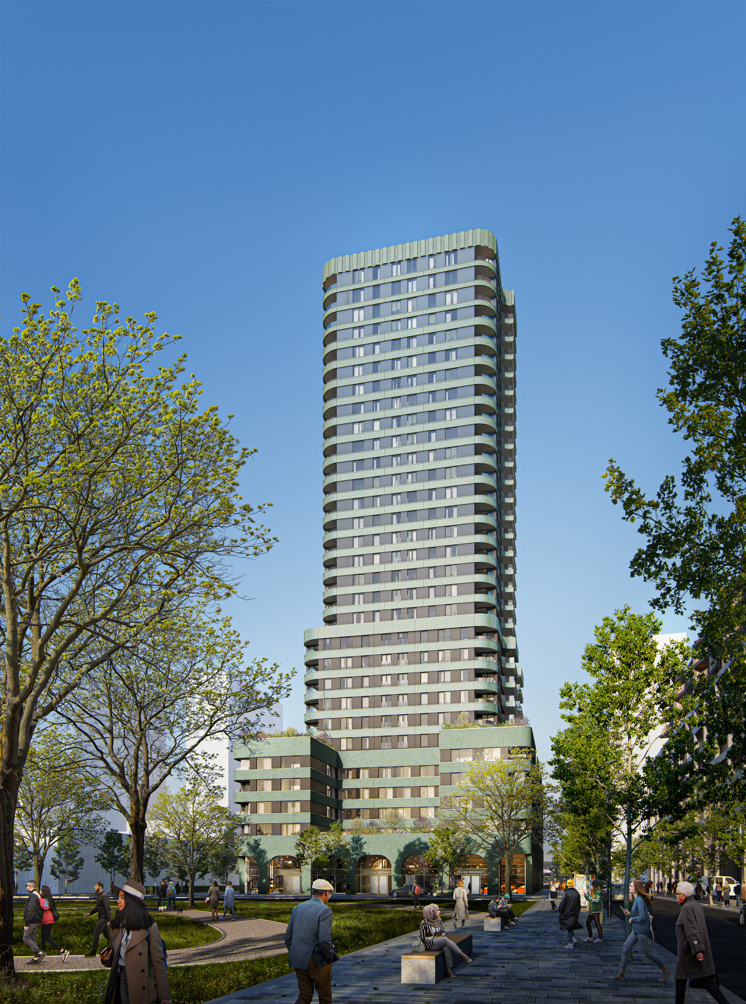
A new residential tower in The Hague’s rapidly developing Binckhorst district will provide 340 homes, including social housing, mid-market rentals and apartments for sale. The 104-metre-high building, named Skymark, is part of the ongoing transformation of the former industrial area into a new urban neighbourhood.
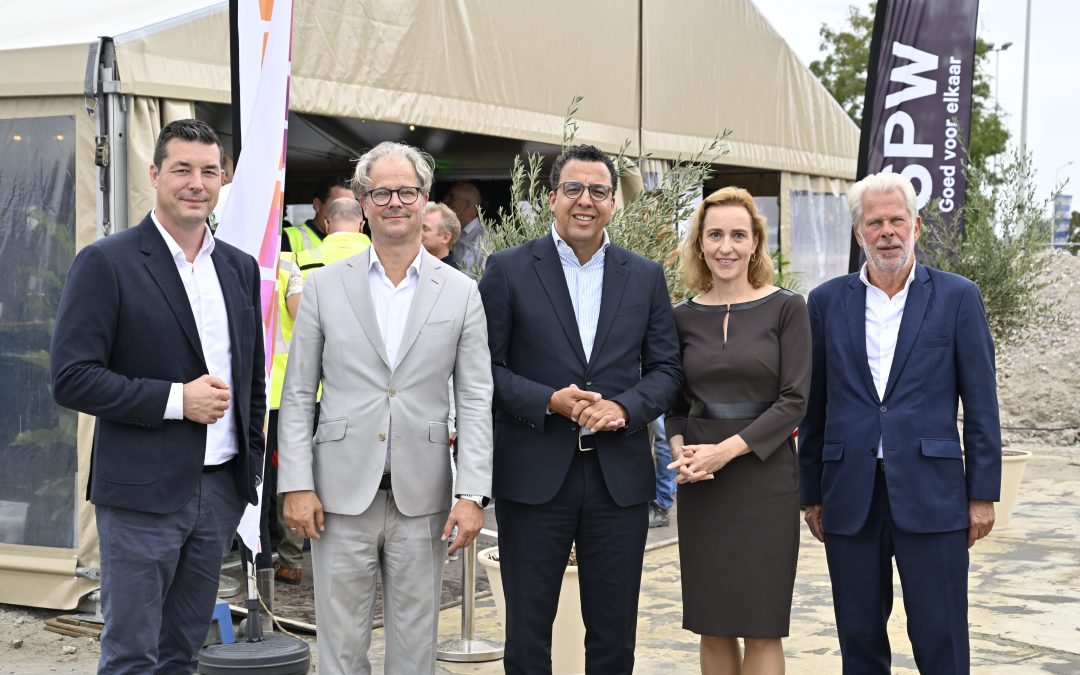
The next phase of the project was recently marked by a gathering of representatives from the Municipality of The Hague, housing association Haag Wonen, developer Amvest, construction company Boele & van Eesteren and pension fund SPW.
A Mix of Housing Options
Skymark will include a variety of homes designed for different income groups and housing needs.
The 340 apartments will be divided into:
66 social rental homes
104 mid-market rental homes
72 private-sector rental homes
98 owner-occupied apartments
In addition to housing, the ground floor will offer approximately 1,200 square metres of commercial space for shops and businesses.
The tower has been designed by architectural firm De Zwarte Hond. Its distinctive rounded corners are intended not only to give the building its appearance but also to reduce wind and noise nuisance.
Contributing to The Hague’s Housing Needs
The Hague is facing considerable pressure on its housing market, and the municipality aims to deliver 4,000 new homes annually.
Alderman Henk Harms highlighted the importance of developments such as Skymark in meeting that target.
“The Binckhorst is rapidly developing into a new neighbourhood of The Hague. Skymark will add another 340 homes, and they are urgently needed,” he said.
The project also reflects an ambition to create neighbourhoods where residents with different incomes can live alongside one another.
Mohamed Baba, Chair of the Executive Board of Haag Wonen, pointed to the nearly 90,000 active housing seekers in the Haaglanden region.
“Every home we add counts. With Skymark, we are adding 66 social rental homes in a wonderful location in the Binckhorst. Especially in a new part of the city, we believe affordable housing should be included from the beginning.”
He emphasised that a person’s income should not determine whether they have the opportunity to live in a newly developed neighbourhood.
From Industrial Area to Urban Neighbourhood
The Binckhorst has undergone significant changes in recent years, with former industrial sites gradually making way for residential developments, businesses and other facilities.
Skymark will contribute to this transformation by combining homes, employment opportunities and amenities in one building.
Construction began in December 2025, following preparations to clean up and prepare the former business site.
The project is being developed through cooperation between public and private organisations, including the municipality, Haag Wonen, Amvest, Boele & van Eesteren and SPW.
Completion Expected in 2030
According to construction company Boele & van Eesteren, work is progressing well, with sales of the first apartments planned for early 2028.
The tower is expected to be completed in 2030, when the first residents will be able to move into their new homes.
Once completed, Skymark will become another prominent addition to the Binckhorst skyline and contribute to The Hague’s efforts to address its housing shortage.
Source: Gemeente Den Haag
Translation to English/Editing: The Hague Online
Image Credit: Gemeente Den Haag / Skymark project partners
The Hague will welcome cybersecurity experts, researchers, businesses and government representatives from around the world during Cybersecurity Week, taking place from 5 to 9 October 2026. The programme brings together international conferences, ethical hacking events, workshops and networking opportunities, with a focus on strengthening digital security and cooperation.
As the International City of Peace and Justice, The Hague has also become an important centre for cybersecurity. The city is home to organisations including Europol’s European Cybercrime Centre, the NATO Communications and Information Agency and the Dutch National Cyber Security Centre. Throughout Cybersecurity Week, these organisations and other members of the city’s cybersecurity network will share knowledge and explore new approaches to protecting people, businesses and public services from digital threats.
A Week of Cybersecurity Events
The programme begins on Monday 5 October with the International Kick-Off Cybersecurity Week at the Security Delta (HSD) Campus.
One of the week’s highlights is Hâck The Hague, also taking place on 5 October. During this annual event, ethical hackers are invited to identify vulnerabilities in the municipality’s digital systems and those of participating partners. The aim is to discover weaknesses before cybercriminals can exploit them.
On 6 and 7 October, the ONE Conference at the World Forum will bring together cybersecurity professionals, policymakers and researchers to discuss developments in digital security, cybercrime and international cooperation.
Other activities include the ONE International Cyber Business Event on 6 October, the Cyber Roadshow in Segbroek on 7 October and ECSO Cyber Investor Days on 8 October. The programme also includes events focused on cybersecurity research, investment, talent development and innovation.
Protecting Community Organisations from Cybercrime
Ahead of Cybersecurity Week, the Municipality of The Hague has also announced a new initiative aimed at protecting smaller community organisations from digital threats.
Together with Protect.ngo, the municipality has launched the Cybersecurity Blueprint for Civil Society, a guide designed to help other cities improve cybersecurity among sports clubs, neighbourhood organisations, charities and volunteer groups.
These organisations increasingly depend on digital systems for their everyday activities but often lack dedicated IT departments or specialist cybersecurity knowledge.
A cyberattack can have serious consequences, including stolen personal information, inaccessible membership records, hacked email accounts or fraudulent messages sent in an organisation’s name.
The new guide builds on the experience of Digitaal Veilig Den Haag (Digitally Safe The Hague), a local initiative established in 2023. It brings together the municipality, businesses, educational institutions, cybersecurity volunteers and community organisations to help smaller organisations become more digitally resilient.
Rather than offering one fixed solution, the blueprint provides practical guidance that other cities can adapt to their own circumstances.
Alderman for Economic Affairs Richard de Mos emphasised that volunteers should be able to concentrate on supporting their communities rather than having to become cybersecurity specialists themselves.
Digital Security Is Everyone’s Concern
While many Cybersecurity Week events are aimed at professionals, the programme also highlights how digital security affects everyday life.
From protecting personal information and preventing online fraud to keeping essential services and community organisations safe, cybersecurity is increasingly relevant to residents and businesses of all sizes.
The Hague’s approach places particular emphasis on collaboration, bringing together government, industry, researchers and volunteers to share expertise and strengthen digital resilience.
Cybersecurity Week 2026 offers an opportunity to explore these developments and reinforces The Hague’s growing role as an international centre for digital security.
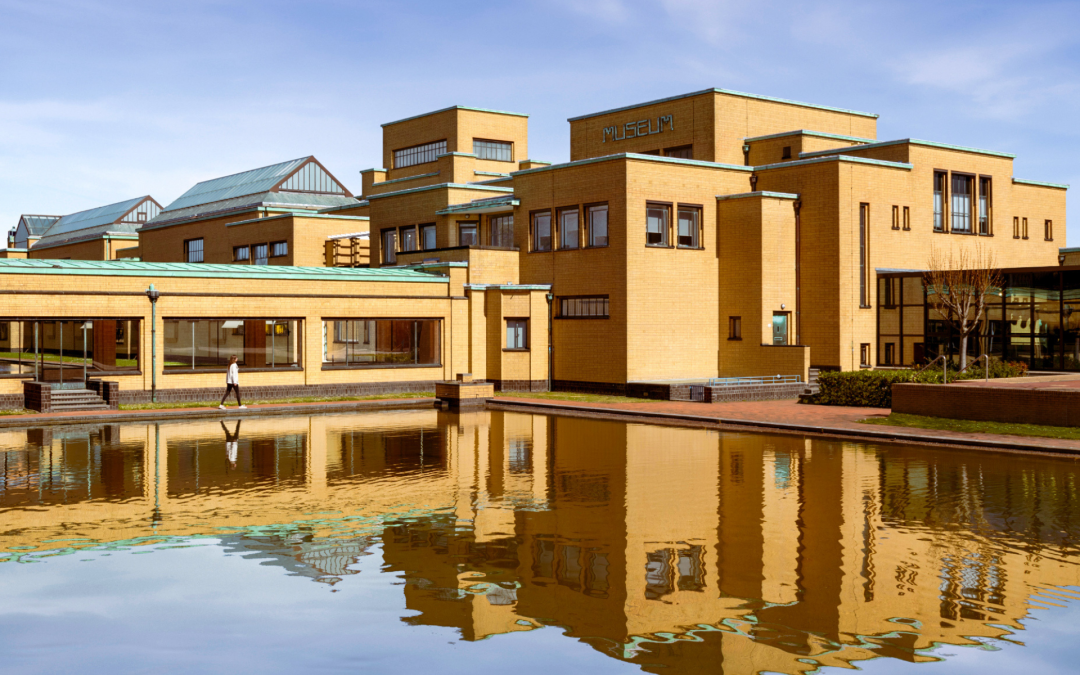
The Municipality of The Hague is preparing plans for a major renovation of Kunstmuseum Den Haag, one of the city’s best-known museums. The municipal executive has asked the city council to approve €2 million in preparatory funding to investigate how the historic building can be renovated and made more sustainable, along with a further €500,000 to explore improvements to its art storage facilities.
The museum, housed in the monumental building designed by architect H.P. Berlage on Stadhouderslaan, faces several challenges. Its technical installations are outdated, the storage facilities in the basement are affected by moisture problems, and visitor facilities are struggling to accommodate the large number of people who visit each year.
A Museum Welcoming Far More Visitors Than Originally Planned
Kunstmuseum Den Haag is home to an internationally renowned collection, including the world’s largest collection of works by Piet Mondrian. The building was originally designed to accommodate approximately 85,000 visitors annually, but now welcomes around 450,000 visitors each year.
Alderman for Culture Lotte van Basten Batenburg emphasised the importance of preserving the museum for future generations.
“Kunstmuseum is one of The Hague’s cultural treasures. Every year, almost half a million visitors from the Netherlands and abroad come to enjoy its world-class collection and wonderful exhibitions. However, the building is in need of a thorough renovation.”
She explained that the preparatory funding would allow the municipality to investigate different renovation options before presenting the city council with proposals.
Improving Accessibility, Sustainability and Art Storage
If the council approves the funding, the municipality will begin developing plans for the necessary renovations and a range of additional improvements.
These could include making the museum more accessible for visitors with disabilities, improving facilities for large groups such as school classes, and making changes to support museum operations and the historic garden.
The municipality will also examine ways to make the building more energy-efficient while preserving its architectural heritage.
A separate investigation will focus on the museum’s storage facilities, known as the depot, where artworks are kept when they are not on public display. Several options will be considered to ensure the collection can be stored safely in the future, including the possibility of constructing a new storage facility.
Decisions Expected in Spring 2027
The Municipality of The Hague owns both the Kunstmuseum building and its art collection, while the museum manages the collection and makes it accessible through exhibitions, educational programmes and other activities.
As the building’s owner, the municipality is responsible for its renovation.
Technical investigations and further planning will take place over the coming months, with the municipal executive intending to present the city council with options in spring 2027.
The proposed preparatory funding does not yet represent approval of the full renovation project. The final scope, costs and approach will depend on the results of the investigations and future council decisions.
The aim is to preserve the historic Berlage building, improve conditions for the collection and ensure that Kunstmuseum Den Haag remains accessible and welcoming for future generations.
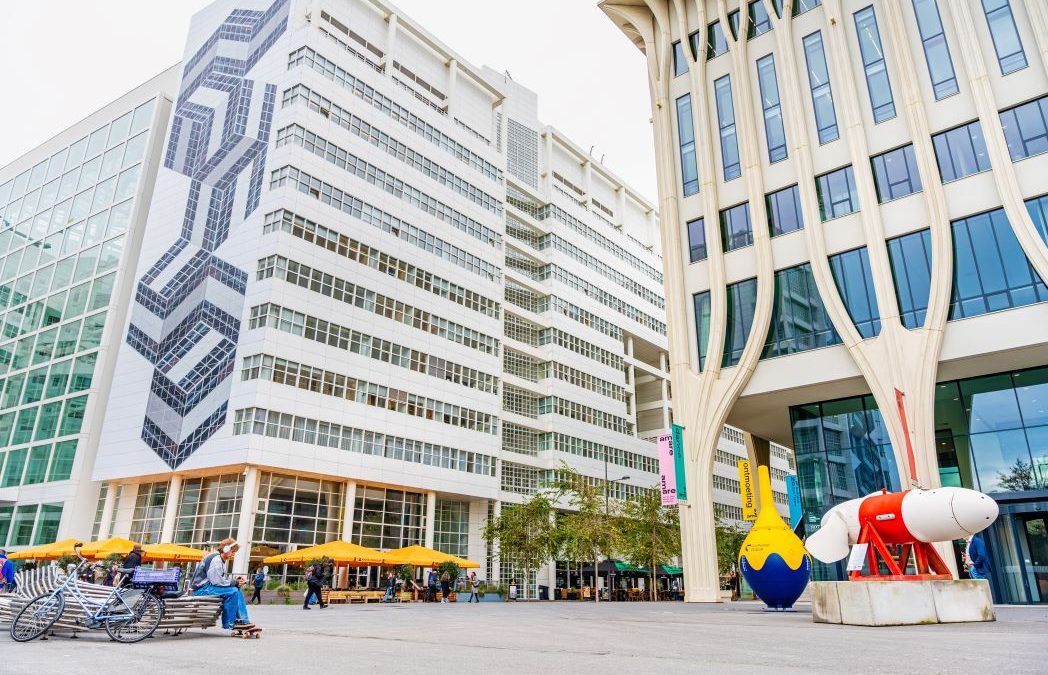
The Hague will welcome international experts in renewable ocean energy from 5 to 7 October 2026, when the ICOE-OEE 2026 conference brings together companies, researchers, policymakers and investors at Amare.
The event focuses on technologies that generate renewable electricity from waves, tides and ocean currents, offering potential alternatives and complements to established sources such as wind and solar power.
Organised jointly by Ocean Energy Europe (OEE) and the Dutch Energy from Water Association (EWA), the conference combines the organisations’ flagship international events into one gathering for the first time.
Innovation and International Collaboration
Over three days, participants will discuss developments in ocean energy technology, investment opportunities and policies needed to support the sector.
The programme includes conferences, an exhibition showcasing European innovations, networking opportunities and visits to Dutch ocean energy projects and companies.
Although ocean energy is still an emerging industry, it is attracting growing interest as countries seek to diversify their renewable energy sources and improve energy security.
The Hague’s Growing Blue Economy
The Hague and the wider South Holland region are home to companies, research institutes and organisations working on offshore renewable energy and maritime innovation.
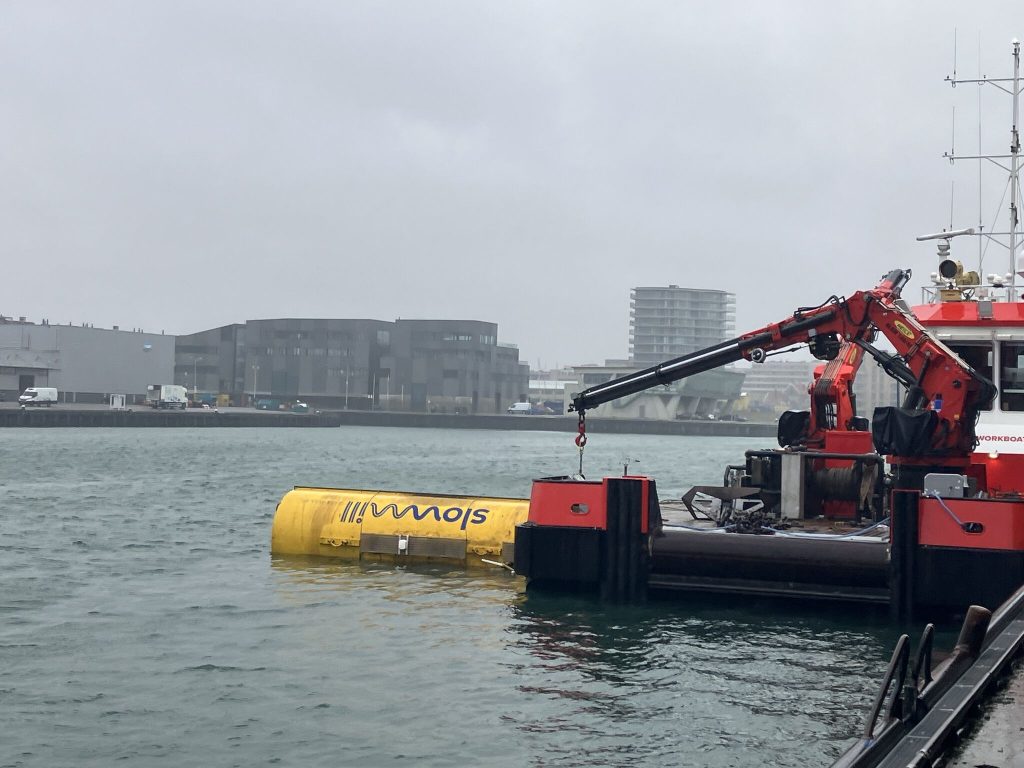
The Port of Scheveningen also plays a role in these developments, with the city exploring how the harbour can support sustainable maritime industries and emerging energy technologies.
Peter Scheijgrond, Chair of the Dutch Energy from Water Association and Conference Chair of ICOE-OEE 2026, highlighted the region’s expertise in offshore engineering and water management, including opportunities to test new technologies under real North Sea conditions.
By hosting the conference, The Hague aims to strengthen international cooperation and support the development of ocean energy technologies towards commercial applications.
More information:
Read the full article from The Hague & Partners Newsroom:
The Municipality of The Hague recently presented the 2027-2030 budget. The Municipal Executive has opted for targeted investments in housing construction, safety, accessibility, liveable neighbourhoods, and a vibrant city. At the same time, work is being done to restore the municipality’s financial position so that The Hague can continue to invest in the growth and quality of the city in the future.The total size of the budget for 2027 is €3,715 million.
The budget is a proposal from the Municipal Executive and will be adopted by the City Council on November 11. The document constitutes the financial translation of the ambitions set out in the coalition agreement ‘For The Hague, with The Hague’ .
Alderwoman Lotte van Basten Batenburg (Finance): “With this budget, we are laying the foundation for a stronger The Hague. We are investing in the growth of the city and in the facilities that residents use every day. We are doing this with an eye on the future: by making decisive choices, we ensure that The Hague remains financially strong in the coming years.”
A liveable and growing city
The Hague continues to work on accelerating the realization of homes to meet the high demand for housing. The Municipal Executive is committed to building 4,000 homes per year and ensuring a balanced distribution of affordable and more expensive homes across the city. In addition, investments are being made in area developments, attractive public spaces, and new amenities. This creates room for growth while strengthening the livability of existing neighborhoods.
Safe and healthy neighborhoods
Safety and liveability form a key pillar of the budget. Therefore, the Municipal Executive is allocating additional resources for enforcement and surveillance in the neighborhoods. 80 extra special enforcement officers will be deployed to focus on issues such as street harassment and littering. In addition, structural investments are being made in tackling subversive crime and strengthening the city’s digital resilience.
The municipality also invests in strong neighborhoods and the implementation of the neighborhood agendas, with a focus on prevention, well-being, and what residents consider important in their neighborhood.
Opportunities for children and young people
The Municipal Executive continues to invest in equal opportunities for all children and young people in The Hague. Extra attention will be paid to reducing child poverty, quality education, and talent development. Investments will also be made in additional sports facilities, such as artificial turf football pitches. Free travel on public transport will also be available to young people up to and including the age of 17 with an Ooievaarspas.
A bustling city
A vital economy and a strong cultural offering make The Hague an attractive place to live, work, and visit. Therefore, the municipality invests in shopping areas, business parks, the coast, and The Hague’s cultural sector. Cultural institutions, events, and creators that contribute to The Hague’s identity and appeal are cherished. In addition, the Municipal Executive focuses on attracting international conferences and events, as these are inextricably linked to The Hague as an international city of peace and justice.
Improved accessibility for residents and businesses
To keep The Hague accessible, the Municipal Executive is investing in infrastructure, road safety, and parking solutions. Paid parking will only be introduced if parking pressure exceeds 90% and with the support of residents. Existing on-street and garage parking capacity is being utilized more effectively. The Municipal Executive also remains committed to good connections for public transport, cycling, and cars. These investments not only support residents but also contribute to a strong business climate for entrepreneurs.
Looking to the future
The 2027-2030 budget marks the start of the implementation of the coalition agreement. At the same time, the financial position of municipalities nationwide remains under pressure due to rising costs and uncertainty regarding future central government contributions. The Municipal Executive is therefore firmly committed to sound financial policy and decisive choices. This creates room to make investments that demonstrably contribute to a stronger The Hague.