
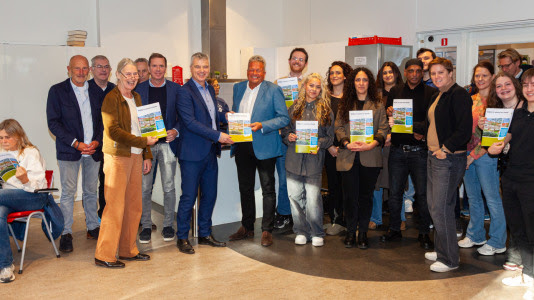
Labour migration is essential for many sectors, but the current system leads to structural bottlenecks, including exploitation, poor housing, inadequate registration, and a lack of innovation. Municipalities and provinces are taking responsibility by introducing concrete measures and are calling on the national government to join forces. Yesterday, they presented their action plan to members of the House of Representatives in The Hague.
The Roemer report on labour migration (“No Second-Class Citizens”) is now five years old. Since then, numerous studies and reports have been published on the working and living conditions of migrant workers in the Netherlands. However, these have not yet led to sufficient concrete action. As a result, several municipalities and provinces are now joining forces to take action on labour migration together.
In the action plan, providers advocate for structural improvements that should lead to fair, safe, and socially responsible labour migration. Municipalities are taking responsibility through shelter, language lessons, and access to amenities. Provinces are incorporating housing for migrant workers into their economic and spatial planning.
In addition, local authorities are urging the national government to improve structural cooperation and establish clear agreements regarding tasks, powers, and resources. According to the municipalities and provinces involved, the joint effort should also aim to reduce the economy’s reliance on low-wage labour.
The proposed approach translates into three key points:
More control over labour migration
Labour migration affects multiple domains, from the labour market and education to housing and European coordination. Only political direction at the highest level, with overriding authority across departments, can ensure a coherent approach.
From low wages to a competitive economy
The Netherlands must transition from a low-wage economy to a high-quality economy with fair pay and innovation. Migrant workers deserve equal employment conditions to Dutch workers. The government must support companies in this transition.
Improve the quality of life in neighbourhoods and villages
Crucial preconditions include consistent registration, accessible (language) education, and quality housing. Without this foundation, neighbourhoods risk becoming overloaded and labour market problems are likely to increase.
Broad coalition behind the call
The call is supported by officials from various political parties and from all parts of the country, including Tim Versnel (Rotterdam Alderman, VVD), Co Engberts (The Hague, PvdA), Marc van Caldenberg (Limburg Provincial Executive, SP), and Nadir Baali (Steenbergen Alderman, PvdA). Several provinces and other municipalities have also endorsed the action plan, including South Holland and Limburg, and the municipalities of Groningen, Eindhoven, Utrecht, Sliedrecht, and Venlo.
Source: Gemeente Den Haag
PHOTO:
During the meeting in the House of Representatives building, members of parliament from various parties received the action plan “How labour migration works for everyone.”
PHOTO CREDIT: Valerie Kuypers, Municipality of The Hague