
On Tuesday 15 September, The Hague hosts Prinsjesdag, the ceremonial opening of the Dutch parliamentary year.
For many internationals, Prinsjesdag is best known for the royal procession, military ceremony and elaborate hats. However behind the spectacle is one of the most important dates in the Dutch political calendar.
Here’s some more information for internationals living in The Hague.
What is Prinsjesdag?
Prinsjesdag takes place on the third Tuesday of September and marks the opening of the new parliamentary year.
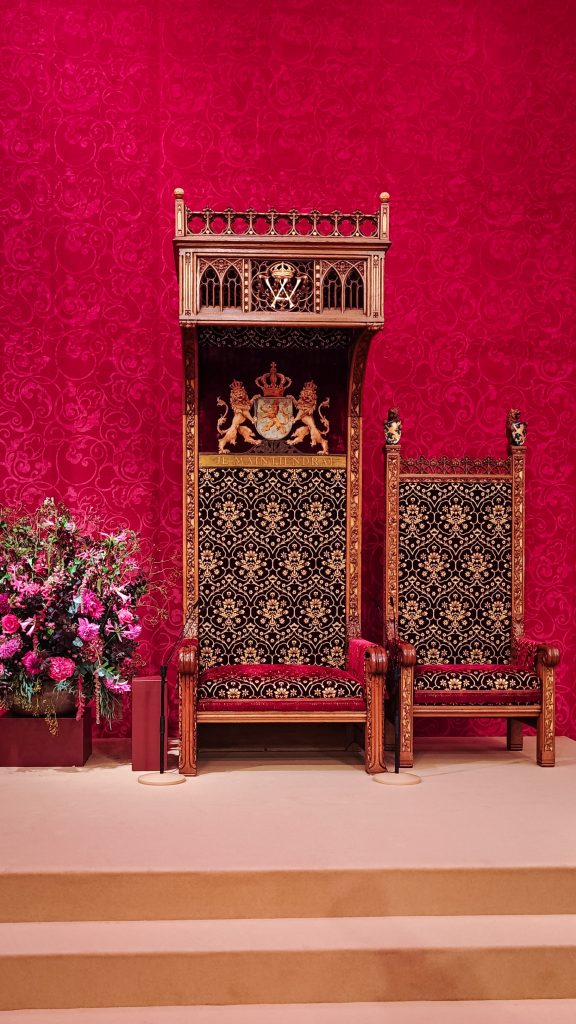
At this joint meeting of the Senate and House of Representatives, King Willem-Alexander delivers the Troonrede, or Speech from the Throne. Although the King reads the speech, it is written by the government and sets out its main plans and priorities for the coming year.
Later in the afternoon, the Minister of Finance (Eelco Heinen) presents the Miljoenennota and the national budget for 2027 to the House of Representatives. The Miljoenennota is essentially the government’s financial overview and explanation of the budget. It sets out the bigger picture: how the Dutch economy is doing, what the government expects to receive in taxes and other income, what it plans to spend, the projected deficit or surplus, and the main financial policy choices for the coming year.
The actual budget is contained in the separate departmental budget bills that together make up the Rijksbegroting.
So while the horses, uniforms and hats receive plenty of attention, Prinsjesdag is also very much about what the government’s plans could mean for people living and working in the Netherlands.
Where is the Troonrede taking place?
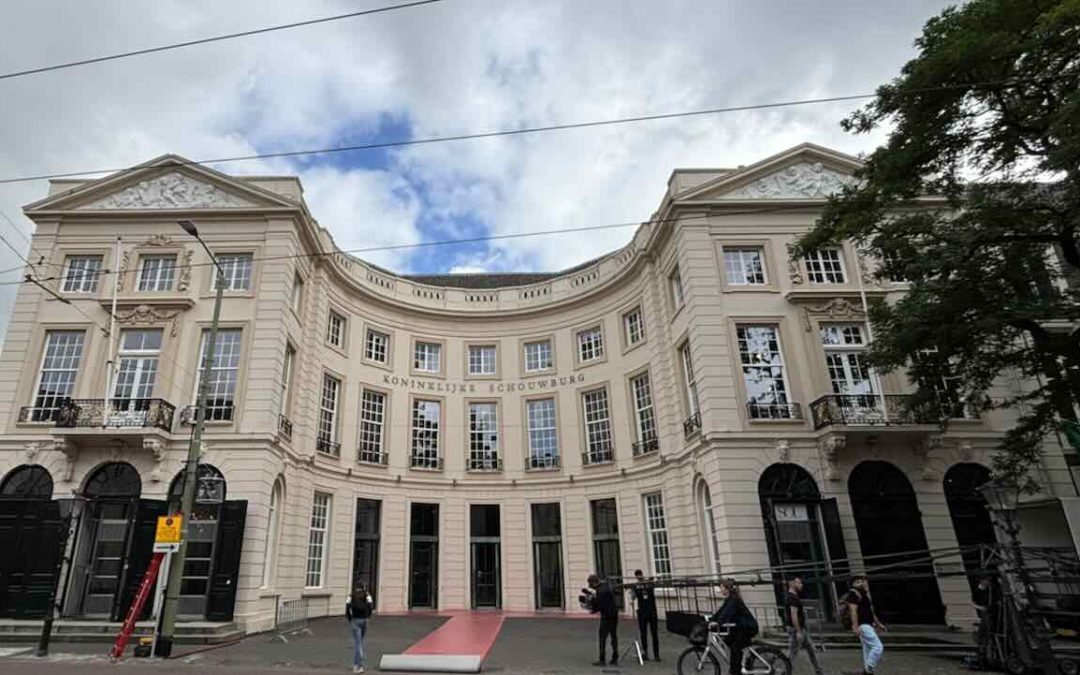
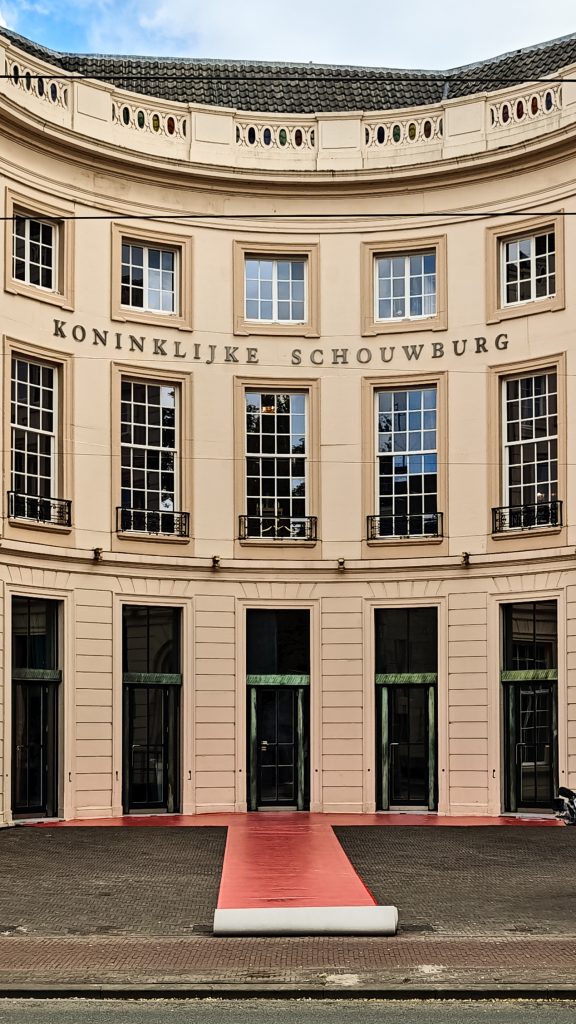
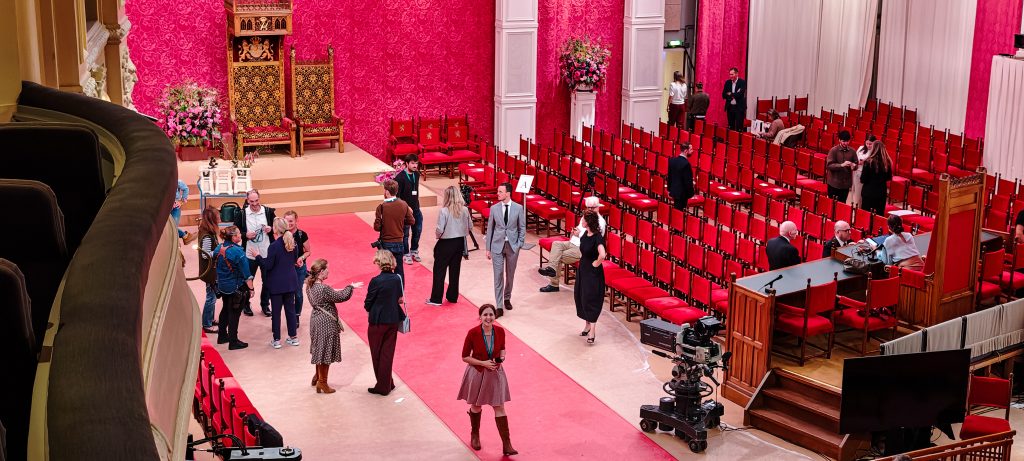
Traditionally, the Speech from the Throne has been delivered in the Ridderzaal at the Binnenhof. However, with the Binnenhof undergoing major renovation, the ceremony will again take place in the Koninklijke Schouwburg on Korte Voorhout. This Royal Theatre has been used for Prinsjesdag since 2022.
King Willem-Alexander will be joined by Queen Máxima, Princess Catharina-Amalia (the Princess of Orange), Princess Alexia, Princess Ariane, Prince Constantijn and Princess Laurentien. They will be joined by members of the Cabinet, the Senate and House of Representatives, senior officials, diplomats and other invited guests.
When does everything happen?
The ceremonial programme begins well before the King arrives.
From 11:30, military guards of honour will take their positions along the route and outside the Koninklijke Schouwburg.
At 13:00, the joint session of the States General formally opens and the Royal procession leaves Paleis Noordeinde.
The Royal Family is expected to arrive at the Koninklijke Schouwburg at around 13:15, where King Willem-Alexander will deliver the Troonrede.
At around 14:00, the procession returns to Paleis Noordeinde, followed by the traditional balcony appearance.
Then, at 15:30, the Minister of Finance presents the Miljoenennota and the 2027 national budget in the House of Representatives.
Where can you see the Royal procession?
The procession travels from Paleis Noordeinde along:
Noordeinde → Heulstraat → Kneuterdijk → Lange Voorhout → Tournooiveld → Korte Voorhout → Koninklijke Schouwburg.
After the Troonrede, the procession follows the same route back to Paleis Noordeinde.
The Glazen Koets, or Glass Coach, carries members of the Royal Family, with mounted police, military units, musicians and members of the Royal Household forming part of the wider procession.
If you want a place along the route, arriving well before the 13:00 departure is advisable. The military ceremonial elements begin from 11:30 and the city centre becomes increasingly busy as lunchtime approaches.
The balcony scene
One of the easiest parts of the day to understand, regardless of how closely you follow Dutch politics, is the balcony scene.
After returning from the Troonrede at around 14:00, members of the Royal Family appear on the balcony of Paleis Noordeinde to greet the crowds gathered outside. It is traditionally one of the busiest locations of the day.
Expect road closures and a very busy city centre
Prinsjesdag has a significant impact on traffic through central The Hague.
Parts of the route are closed from early in the morning. The section between Tournooiveld and Bosbrug closes from 06:00, while the route between the Royal Stables and Tournooiveld closes at 10:30.
Many streets in and around Noordeinde, Lange Voorhout, Korte Voorhout, Plein and the surrounding area will also be closed to traffic until approximately 16:00.
Pedestrians should also be aware that you cannot simply cross the procession route wherever you like. Barriers will be in place, although designated crossing points remain available at several locations.
Public transport, walking or cycling to the edge of the affected area will generally be easier than trying to drive into the city centre.
Why all the hats?
The elaborate hats worn by politicians and guests have become an unofficial Prinsjesdag tradition.
The tradition is generally associated with former MP Erica Terpstra, who wore an eye-catching hat to Prinsjesdag in the late 1970s. Since then, the hats have become one of the day’s most photographed features, sometimes fashionable, sometimes political and occasionally deliberately provocative.
A particularly Hague tradition
For residents of The Hague, Prinsjesdag is much more visible than an ordinary parliamentary event.
Military bands, horses, carriages, politicians, diplomats, journalists and crowds temporarily transform the city centre, particularly around Noordeinde and Lange Voorhout.
And while much of the ceremony is centuries old, the political substance is very contemporary: the Troonrede and national budget give the first major indication of where the government intends to focus its attention and money over the coming year.
Whether you come for the politics or simply the spectacle, Prinsjesdag is one of those days when The Hague’s role as the political heart of the Netherlands is impossible to miss.
Watch online
Can’t make it into the city? You can watch Prinsjesdag live for free via NOS.nl and the NOS app, with television coverage on NPO 1. The Tweede Kamer also provides its own livestream of the King’s Speech and the presentation of the budget documents.
Behind the scenes before Prinsjesdag
Preparations for Prinsjesdag begin well before the Royal procession sets off. Today, Monday 14 September, the city is busy with final rehearsals, security preparations, barriers, ceremonial arrangements and last-minute work around the Koninklijke Schouwburg and the procession route. The Hague Online had the opportunity to take a look behind the scenes before Prinsjesdag. See our Instagram for more.
PrinsjesNach: the festival before Prinsjesdag
The evening before Prinsjesdag also has its own celebration. PrinsjesNach takes place across The Hague on Monday 14 September, with more than 35 acts performing at around 30 locations across the city centre. The free festival runs from 19:00 until 23:30, bringing live music, performances and a very different kind of Prinsjesdag atmosphere to the city before the politics and pageantry begin the following day.
Source: Het Koninklijk Huis, Rijksoverheid and Gemeente Den Haag.
Prinsjesdag 2026 programme – Het Koninklijk Huis
Prinsjesdag traffic and accessibility – Gemeente Den Haag
Updates on/after Prinsjesdag
Here are some additional links on or after Prinsjesdag with more information:
Speech from the Throne: Official English Translation
Protecting democracy takes centre stage in King’s speech (Dutch News)
Prinsjesdag: what you need to know about the rituals (Dutch News)