
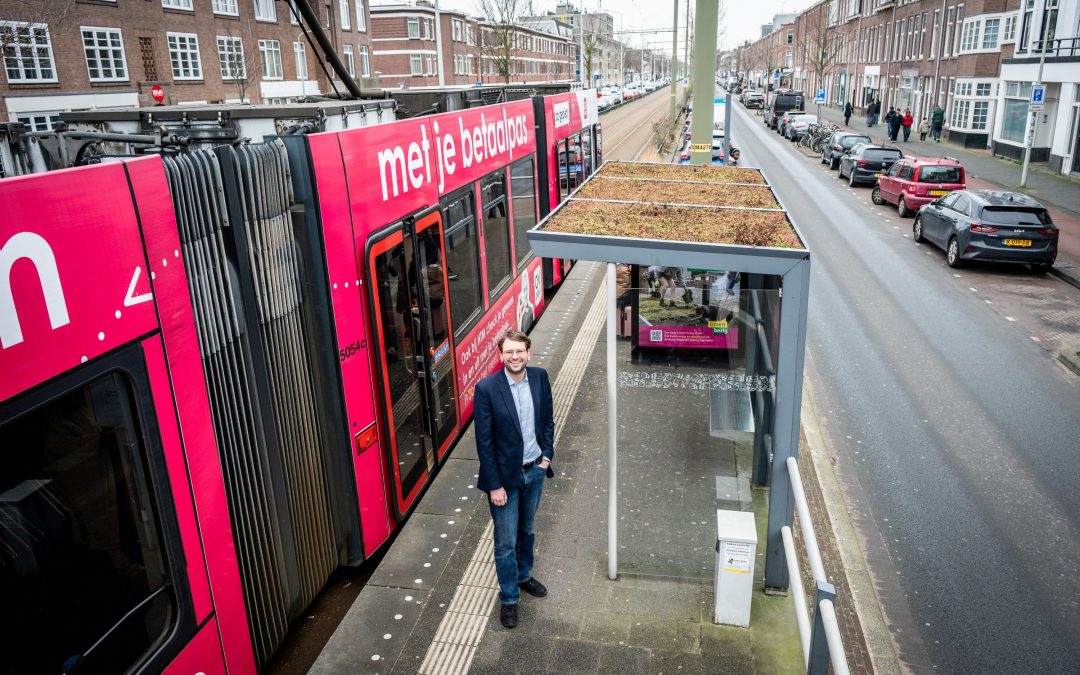
A number of bus and tram stops in The Hague are being fitted with green roofs. With this step, the city is being made more climate-adaptive, and even waiting areas contribute to cooling, water retention, and biodiversity. Barker (PvdD): ‘With these small green roofs, a bit of greenery is added to paved areas.’
The municipality not only wants to encourage residents to go green, but is setting a good example itself. By installing green roofs on tram stops as well, The Hague demonstrates that every available square meter can be utilized for a climate-resilient city. This makes the principle of “practice what you preach” visible in the streetscape. Alderman Robert Barker (Green Spaces, Sustainability): “With these green shelters, we show that every square meter counts. Even a tram or bus shelter can contribute to a cooler, healthier city. It is a small intervention with a big effect: less heat, more greenery, and a city that is better prepared for the climate of the future.”
Cooler during the heat
Green roofs provide natural cooling. The vegetation evaporates water and partially blocks solar heat, keeping it noticeably cooler under the roof during hot summer days. For travelers, this means a more pleasant waiting area during high temperatures. In this way, the bus shelters help make the city more resilient to extreme weather. Alderman Arjen Kapteijns (Energy Transition, Mobility): “By greening our stops, we show that sustainable mobility goes beyond clean vehicles alone. Even the infrastructure surrounding public transport can contribute to an energy-efficient, future-proof city. This is how we seize every opportunity to make The Hague smarter, cleaner, and more comfortable for travelers.”
With the green roofs, The Hague is simultaneously drawing attention to the importance of green roofs in people’s homes. A publicity campaign is currently underway to make people aware that the municipality subsidizes the purchase:
Photo: Alderman Robert Barker at a green bus shelter at the Van Musschenbroekstraat (Laak) stop.
Photographer: Michel Mees