On the International Day of Peace, Hope Box, The Hague Humanity Hub, Leiden University College and Amare come together for an evening of art and dialogue as part of Hope Box – Piece for World Peace.
The programme opens with the hanging of a Hope Box Kite for World Peace, followed by a Fireside Peace Chat exploring the many ways peace is created, through international institutions, communities, artists, activists and individuals.
In this special edition of the Fireside Peace Chats series, we welcome Ilya “Admiral” Shcharbitski, a Belarusian community organiser based in The Hague. He believes peace is not something that arrives; it is something people make.
Drawing on personal experiences from conflict-affected environments, the conversation asks us to look beyond diplomacy and politics and consider the role each of us can play in building peace, solidarity and understanding.
Join us to listen, reflect and ask: Who makes peace and what can I do to contribute?
Practical information: Location: Tribunetrap, Amare, The Hague Date: 21 September Programme: Hope Box: Piece for Peace art event and dialogue 17:00 – Hanging of the additional Hope Box Kite for World Peace 17:30–18:30 – Fireside Peace Chat at the Tribunetrap The hanging of the kite provides a visual and symbolic opening to the programme, followed by a one-hour public conversation.
What are the Fireside Peace Chats? The Fireside Peace Chats aim to create a space where practice, research, and policy in the field of peacebuilding come together in an informal way through the experiences of people on the ground. By sharing personal stories from peacebuilders and other figures with extensive experience in conflict areas, we want to contribute to a locally informed paradigm shift in liberal peacebuilding. The Fireside Peace Chats originally emerged as a joint initiative of Leiden University College (LUC), the Knowledge Platform Security and Rule of Law (KPSRL), and The Hague Humanity Hub (THHH). Read more about previous editions here.
Europe and the Netherlands face a crucial choice: do we remain dependent on Big Tech, or do we take control of our digital sovereignty? Dependence on Google, Microsoft, Amazon and ChatGPT carries risks: privacy, security and control over our own data and infrastructure. But how do we make that change a reality?
We’ve seen just how quickly minds change about how important sovereignty is. The Dutch company DigID went from not worth buying to its sale being blocked by the Dutch government – as a matter of public interest and national security, no less – when an American company intended to buy the company – and its database of citizen’s personal data. Europe’s General Data Protection Regulations (GDPR) are at the forefront of digital security, but dependance on Big Tech leaves us signing over our rights for convenience.
At EU TechFest, we’re creating a unique experience where we bring the tech ecosystem together to get hands-on with European technology, learn what laws govern the tech world, and talk about how to break things off with Big Tech. From local cloud solutions to ethical AI, from open-source software to data management: we’ll show you how to work locally, securely and autonomously.
Read more under video.
How? Through interactive workshops, hands-on sessions and tech talks led by pioneers in sovereign technology. Learn how to implement your own “Big Tech Diet” and become independent, step by step: less dependence, more control. Discover local alternatives for data, the cloud, office software and more.
What? An interactive programme brimming with inspiration and practical insights, covering topics such as:
Local data & the cloud — How do you build a secure, European infrastructure?
Open-source tools — What alternatives exist for everyday use?
Ethical AI — How do you implement AI without relying on Big Tech?
Legal frameworks — What are the rules for sovereign technology in Europe?
For who? For professionals, policymakers, developers and anyone who believes in a digital future in which Europe and the Netherlands remain in control. Come along to network, learn, and above all, do.
On Tuesday 15 September, The Hague hosts Prinsjesdag, the ceremonial opening of the Dutch parliamentary year.
For many internationals, Prinsjesdag is best known for the royal procession, military ceremony and elaborate hats. However behind the spectacle is one of the most important dates in the Dutch political calendar.
Here’s some more information for internationals living in The Hague.
What is Prinsjesdag?
Prinsjesdag takes place on the third Tuesday of September and marks the opening of the new parliamentary year.
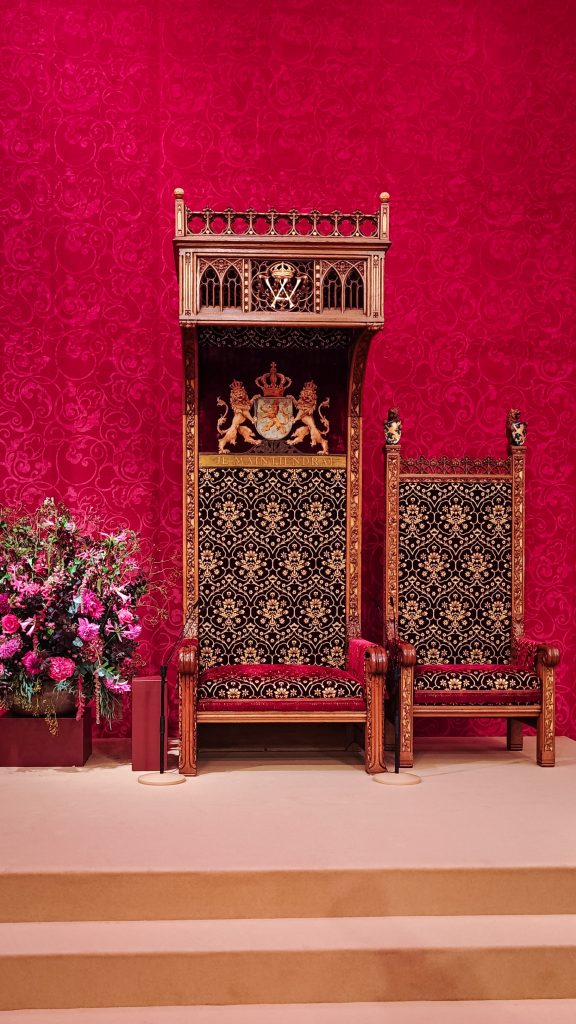
At this joint meeting of the Senate and House of Representatives, King Willem-Alexander delivers the Troonrede, or Speech from the Throne. Although the King reads the speech, it is written by the government and sets out its main plans and priorities for the coming year.
Later in the afternoon, the Minister of Finance (Eelco Heinen) presents the Miljoenennota and the national budget for 2027 to the House of Representatives. The Miljoenennota is essentially the government’s financial overview and explanation of the budget. It sets out the bigger picture: how the Dutch economy is doing, what the government expects to receive in taxes and other income, what it plans to spend, the projected deficit or surplus, and the main financial policy choices for the coming year.
The actual budget is contained in the separate departmental budget bills that together make up the Rijksbegroting.
So while the horses, uniforms and hats receive plenty of attention, Prinsjesdag is also very much about what the government’s plans could mean for people living and working in the Netherlands.
Where is the Troonrede taking place?
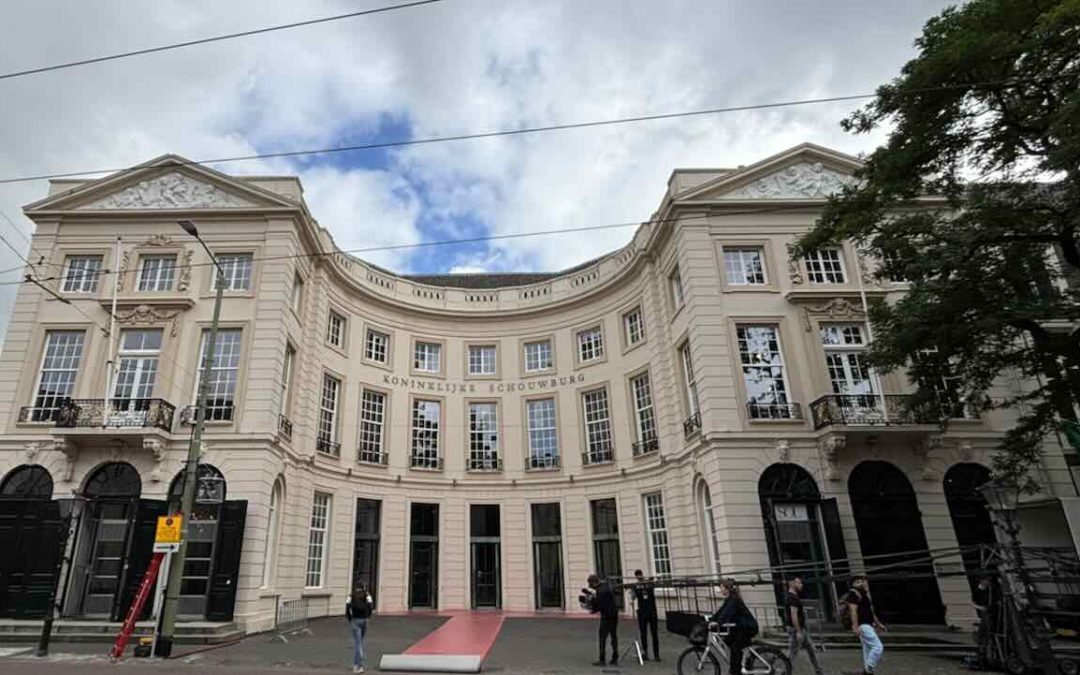
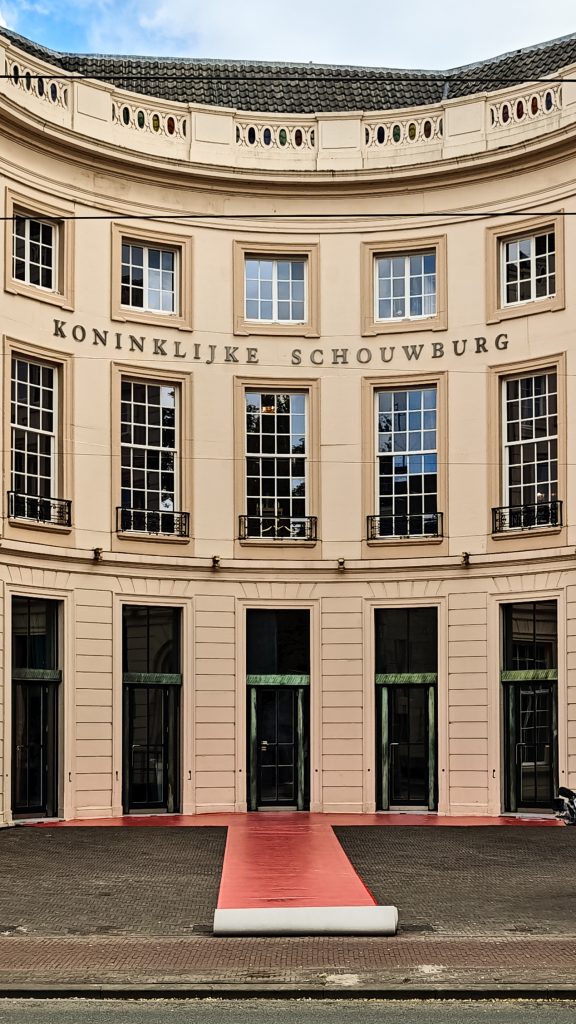
Traditionally, the Speech from the Throne has been delivered in the Ridderzaal at the Binnenhof. However, with the Binnenhof undergoing major renovation, the ceremony will again take place in the Koninklijke Schouwburg on Korte Voorhout. This Royal Theatre has been used for Prinsjesdag since 2022.
King Willem-Alexander will be joined by Queen Máxima, Princess Catharina-Amalia (the Princess of Orange), Princess Alexia, Princess Ariane, Prince Constantijn and Princess Laurentien. They will be joined by members of the Cabinet, the Senate and House of Representatives, senior officials, diplomats and other invited guests.
Image @ The Hague Online
When does everything happen?
The ceremonial programme begins well before the King arrives.
From 11:30, military guards of honour will take their positions along the route and outside the Koninklijke Schouwburg.
At 13:00, the joint session of the States General formally opens and the Royal procession leaves Paleis Noordeinde.
The Royal Family is expected to arrive at the Koninklijke Schouwburg at around 13:15, where King Willem-Alexander will deliver the Troonrede.
Image: Arnoud @ The Hague Online
At around 14:00, the procession returns to Paleis Noordeinde, followed by the traditional balcony appearance.
Then, at 15:30, the Minister of Finance presents the Miljoenennota and the 2027 national budget in the House of Representatives.
Where can you see the Royal procession?
The procession travels from Paleis Noordeinde along:
After the Troonrede, the procession follows the same route back to Paleis Noordeinde.
The Glazen Koets, or Glass Coach, carries members of the Royal Family, with mounted police, military units, musicians and members of the Royal Household forming part of the wider procession.
If you want a place along the route, arriving well before the 13:00 departure is advisable. The military ceremonial elements begin from 11:30 and the city centre becomes increasingly busy as lunchtime approaches.
The balcony scene
One of the easiest parts of the day to understand, regardless of how closely you follow Dutch politics, is the balcony scene.
After returning from the Troonrede at around 14:00, members of the Royal Family appear on the balcony of Paleis Noordeinde to greet the crowds gathered outside. It is traditionally one of the busiest locations of the day.
Expect road closures and a very busy city centre
Prinsjesdag has a significant impact on traffic through central The Hague.
Parts of the route are closed from early in the morning. The section between Tournooiveld and Bosbrug closes from 06:00, while the route between the Royal Stables and Tournooiveld closes at 10:30.
Many streets in and around Noordeinde, Lange Voorhout, Korte Voorhout, Plein and the surrounding area will also be closed to traffic until approximately 16:00.
Pedestrians should also be aware that you cannot simply cross the procession route wherever you like. Barriers will be in place, although designated crossing points remain available at several locations.
Public transport, walking or cycling to the edge of the affected area will generally be easier than trying to drive into the city centre.
Why all the hats?
The elaborate hats worn by politicians and guests have become an unofficial Prinsjesdag tradition.
The tradition is generally associated with former MP Erica Terpstra, who wore an eye-catching hat to Prinsjesdag in the late 1970s. Since then, the hats have become one of the day’s most photographed features, sometimes fashionable, sometimes political and occasionally deliberately provocative.
A particularly Hague tradition
For residents of The Hague, Prinsjesdag is much more visible than an ordinary parliamentary event.
Military bands, horses, carriages, politicians, diplomats, journalists and crowds temporarily transform the city centre, particularly around Noordeinde and Lange Voorhout.
And while much of the ceremony is centuries old, the political substance is very contemporary: the Troonrede and national budget give the first major indication of where the government intends to focus its attention and money over the coming year.
Whether you come for the politics or simply the spectacle, Prinsjesdag is one of those days when The Hague’s role as the political heart of the Netherlands is impossible to miss.
Watch online
Can’t make it into the city? You can watch Prinsjesdag live for free via NOS.nl and the NOS app, with television coverage on NPO 1. The Tweede Kamer also provides its own livestream of the King’s Speech and the presentation of the budget documents.
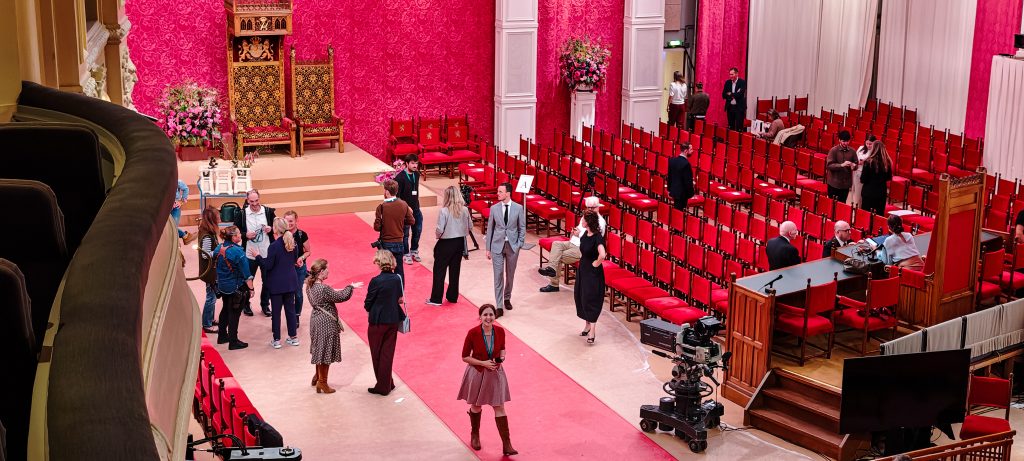
Preparations for Prinsjesdag begin well before the Royal procession sets off. Today, Monday 14 September, the city is busy with final rehearsals, security preparations, barriers, ceremonial arrangements and last-minute work around the Koninklijke Schouwburg and the procession route. The Hague Online had the opportunity to take a look behind the scenes before Prinsjesdag. See our Instagram for more.
Image: Arnoud @ The Hague Online
PrinsjesNach: the festival before Prinsjesdag
The evening before Prinsjesdag also has its own celebration. PrinsjesNach takes place across The Hague on Monday 14 September, with more than 35 acts performing at around 30 locations across the city centre. The free festival runs from 19:00 until 23:30, bringing live music, performances and a very different kind of Prinsjesdag atmosphere to the city before the politics and pageantry begin the following day.
Source: Het Koninklijk Huis, Rijksoverheid and Gemeente Den Haag.
In October, Dennis Russell Davies, Jun Märkl and Antony Hermus conduct the Residentie Orkest in masterpieces by Rachmaninoff, Philip Glass, Tchaikovsky, Richard Strauss, Tsoupaki, Mahler and Dvořák. The soloists performing at Amare are pianist Maki Namekawa, violinist and artist in residence Stefan Jackiw, and mezzo-soprano Barbara Kozelj. At the Nieuwe Kerk, musicians from the Residentie Orkest perform works by Haydn, Martin and Dvořák as part of the Close Up series.
Fri 2 Oct, 8.15pm, Amare: RACHMANINOV & GLASS
Under the baton of master conductor Dennis Russell Davies – who has been conducting with passion and finesse for decades and is also the partner of tonight’s pianist – the Residentie Orkest presents compositions in which past and present intertwine. Pianist Maki Namekawa, Philip Glass’s close musical collaborator, is the soloist in the Dutch premiere of Glass’s Mishima Concerto for piano and orchestra, a cinematic and hypnotic journey. The piece grew out of Glass’s soundtrack for the acclaimed film Mishima and is imbued with contemplation, freedom and inner strength. Rachmaninoff’s Symphony No. 3, by contrast, embraces memory and longing, with lush strings and playful jazzy accents. Rachmaninoff wrote the symphony after emigrating to the United States, and you can hear the balance between nostalgia for his homeland and an open, energetic outlook towards the future. An evening full of contrast, energy and emotional richness.
The stage is bursting with energy today. Stefan Jackiw, violinist and artist in residence for the 2026/27 season, takes on Tchaikovsky’s exuberant Violin Concerto. A lyrical, demanding and irresistibly expressive work. Tchaikovsky’s only violin concerto calls for total commitment: dancing melodies, dazzling technique and an emotional directness that is in safe hands with Jackiw. Afterwards, chief conductor Jun Märkl continues his great journey through the German Romantic repertoire this season, this time with Richard Strauss’s monumental Ein Heldenleben. An orchestra of more than one hundred musicians, rich colours and an outpouring of energy in every bar: unforgettable. In this work, Strauss openly weaves quotations from his own earlier compositions into the score, as if the hero were looking back on his musical life. The impressive violin solos by concertmaster Wouter Vossen give the heroic figure an inner voice. The result is an overwhelming listening experience in which virtuosity, orchestral grandeur and personal stories converge.
Calliope Tsoupaki – former Composer Laureate of the Netherlands and a close associate of the Residentie Orkest – explores in Falling how we seek to find meaning again in a world that has become unsteady. In Tsoupaki’s Thin Air, we return to a work born of compassion and solidarity. Originally written during the pandemic (and premiered in this orchestral version by the Residentie Orkest), it is so timeless that it may perhaps resonate even more powerfully now than it did then. Mahler turns the emotion inward with one of his best-known song cycles: the Rückert Lieder. Five miniature mirrors in which longing, tranquility, self-examination and melancholy are laid bare without drama. Barbara Kozelj makes the songs almost tangible with her warm, rich mezzo-soprano voice. Dvořák’s fascinating Symphony No. 5 brings the evening to a close not with spectacle, but with sunlight: warm-blooded, playful and dancing. A symphony that smells of grass, earth, sunshine and evening air. This is Dvořák at his most open, most free and most blissful. Conductor Antony Hermus weaves a wonderful, breathing programme between Tsoupaki’s air and Dvořák’s earth.
Saturday’s concert is part of the now much-loved RO NOW series. Before the concert, presenter Sander Zwiep, known from NPO Klassiek, and the orchestra will offer a few short, illuminating examples to open your ears to what is about to come. After the concert, the music continues in the foyer and drinks will be waiting, with the first round on the Residentie Orkest.
Wed 28 Oct, 8.15pm, Nieuwe Kerk: CLOSE UP WITH HAYDN, MARTIN & DVOŘÁK
During Close Up at the Nieuwe Kerk, chamber music comes particularly close: you sit around the musicians, the sound is warm and immediate, and every nuance counts. This edition presents three gems for strings, performed by an ensemble from the Residentie Orkest. The programme unfolds from quartet to sextet, allowing the colours of the string ensemble to become increasingly rich and full. Haydn opens playfully with his famous String Quartet ‘The Joke’, which has been taking audiences by surprise for centuries. Frank Martin’s Pavane couleur du temps is a finely crafted gem: softly pulsating, intimate and clear in tone. Dvořák’s String Sextet brings the evening to a close with a warm-blooded blend of dance rhythms, melancholy and melodic richness. An evening where craftsmanship and imagination come together.
Photos above: Maki Namekawa, Stefan Jackiw en Barbara Kozelj
Spending time in nature is one of the most well-researched forms of self-care, and has been scientifically proven to reduce stress, improve concentration, mood and overall well being.
Adina – Gestalt Counsellor and Therapist in The Hague at The Library Within (https://thelibrarywithin.com/) organises at the end of September and November Silent Walks in The Hague/ Kijkduin for people that that look to find space for silent self-reflection and self-care will regain rest in their minds and bodies through walk and movement while being with others, in community.
The gatherings takes place on
– Saturday 26th of September and
– Saturday 28th of November(between 11am-13pm)
Through the dunes and seaside of Kijkduin in The Hague.
What you can expect: a warm welcome, checking in with the needs of the present moment, pausing halfway for spoken reflection and connection, ending with a final reflection and/or meditation. Taking the time intentionally for yourself, you’ll give yourself a simple, yet profoundly powerful experience.
Fee: €5-, (btw exempt) to be paid 2 days in advance, upon receiving an invoice.
Registration: latest 2 days before the planned event.
Cancellation & rescheduling: Free of charge 2 days before the event. Last minute emergencies? Please get in touch with Adina.
Are you part of a community, a neighbourhood group, a volunteer organisation, a support network or a team – and you want to bring the Silent Walks experience to them? Get in touch with Adina! She’d love to hear about your community work and explore how we can create something meaningful together.
Silent Walk Testimonial:
“Taking part in Adina’s silent walk felt like a breath of fresh air. It cleared my mind and grounded me in the most wonderful way. Adina’s warmth and gentle guidance made walking in silence feel completely easy and natural. I loved being able to focus on my senses, my breath, and the nature around me while still feeling connected to the group. It was a very special experience and I can’t wait to join again.” (M. D.)”