Sponsored content: This article is provided by Inburgering.org as a paid contribution to The Hague Online.
If you live in The Hague and are preparing for a Dutch exam, start by checking your own requirements. Then try an official practice task and use it to plan your study week. You can combine focused exam practice at home with language support in the city.
Check which exam and level apply to you
Your required exams depend on your situation. If you must complete inburgering (civic integration), begin with DUO’s guidance. DUO is the Dutch education service that organises the exams. Its online portal, Mijn Inburgering, shows which integration law applies to you. Under the 2021 law, your municipality’s personal integration and participation plan also states your route and required exams. Language tests form part of that plan alongside other requirements.
If you apply for Dutch citizenship by naturalisation, the Immigration and Naturalisation Service (IND) currently requires you to have passed the civic integration exam at A2 level or higher. Exemptions apply in some cases. Passing the exam meets one requirement in the application process.
For work or study, you may need the Staatsexamen Nt2, the Dutch as a second language state exam. Programme I is at B1; Programme II is at B2. Both test reading, listening, writing and speaking. Ask your employer or educational institution which qualification it requires before choosing your preparation materials.
Choose a course for the level and components you need. Inburgering.org’s preparation for the Dutch A2 exam covers language tasks and knowledge of Dutch society. Its preparation for the Dutch B1 examcombines Nt2 exam practice with knowledge of Dutch society for the B1 integration route. Use your own requirements to decide which parts to study.
Try an official practice exam first
An official practice exam shows you the instructions and tasks you need to handle. DUO provides A2 practice exams for reading, listening, writing, speaking and knowledge of Dutch society. For B1 and B2, use the official Nt2 practice environment. Use a computer or laptop for these exercises, especially the Nt2 environment. DUO’s A2 speaking practice does not work in Safari; use another browser for that component.
Choose one skill to begin with. Follow the instructions and timing, then note what caused difficulty. Did you miss a word, misunderstand the question, or struggle to finish your answer? Each problem suggests a different next task.
For example, if you understand a speaking prompt but struggle to answer within the time, record a response and listen back. Check whether you answered every part of the question. Repeat the task after making one change. For writing, check your response against each point in the instructions.
Build a weekly routine around your results
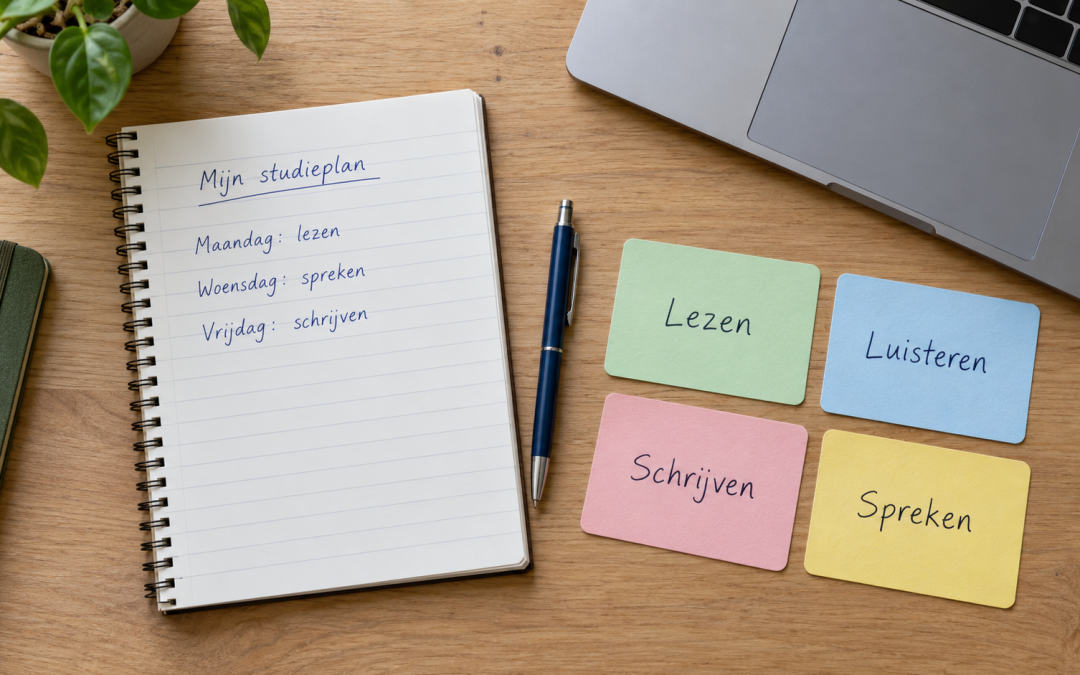
Plan sessions that fit around your work, family or course timetable. If you are already learning Dutch, this example gives each language skill a place in your week.
When
Time
Practice
Monday
20 minutes
Read an exam-style text. Check your answers and save useful words.
Tuesday
20 minutes
Complete a listening task. Review the questions you missed.
Wednesday
20 minutes
Record speaking answers. Check that you respond to the whole prompt.
Thursday
20 minutes
Write a response at your exam level. Check the instructions and revise it.
Weekend
30 minutes
Review the week’s mistakes and repeat one task that caused difficulty.
Adjust the sessions to your starting level and deadline. A beginner may need a language course alongside exam practice. If your route includes knowledge of Dutch society or other components, make time for those too. As your exam approaches, reserve a longer session to practise a complete paper under its official time limit.
Keep a short record of recurring mistakes. A note such as “I missed the reason for changing the appointment” tells you what to check next time. Use your review session to turn that note into a complete answer.
Practise the grammar behind your mistakes
Work on grammar errors that recur in your speaking or writing. Inburgering.org’s Dutch grammar pages explain one rule with examples and a short quiz. You can browse by level or topic, such as word order, verb forms or articles.
If word order causes difficulty, practise changing Ik werk morgen (I work tomorrow) to Morgen werk ik (Tomorrow I work). In both sentences, werk stays in second position. Then write your own sentence about an appointment or a work shift. Use the rule in a new exam task to check whether you can apply it.
Find language support in The Hague
Taalhuis Den Haag offers advice about courses, materials and language activities. You can visit it on the second floor of the Central Library at Spui 68. Tell the adviser your current level, your exam goal and when you can study. The Taalhuis also has a weekday practice table where volunteers help with homework, civic integration or state exam preparation. Check its current opening hours before visiting.
Bring everyday Dutch into your routine too. Read an appointment letter, practise asking a question at the library, or explain your weekend plans to someone. Then use an exam task to practise responding to a specific instruction within a set time.
Use feedback to choose your next exercise
The inburgering courses on Inburgering.org include speaking and writing exercises with feedback generated by artificial intelligence (AI). You can record speaking answers, type writing responses and review the feedback. The independent platform offers paid exam preparation at A1, A2, B1 and B2, including reading and listening practice.
For example, practise a short message asking to change an appointment. Read the task, write your response, then use the feedback to review what you wrote. Check the reason, the request and any details the task asks for. Rewrite the message and apply the same checks to a new exercise. AI feedback guides your practice; official examiners assess your exam answers.
To prepare for inburgering online, start with the course for your required exam. Choose one skill for your next session. Review your answer, note one thing to work on and schedule a task that lets you practise it again.
Exam information and local services checked on 5 October 2026.
Vinita Salome is a branding, lifestyle, and travel photographer working with entrepreneurs, creatives, and international professionals. Her sensitive approach to people and places is shaped by her own multicultural background, having lived in India, Japan and the Netherlands where she is now based. At the heart of her work is a deep appreciation for different perspectives, a desire to bring out the true essence of each person, brand, or business, and the belief that a great photograph begins with paying mindful attention.
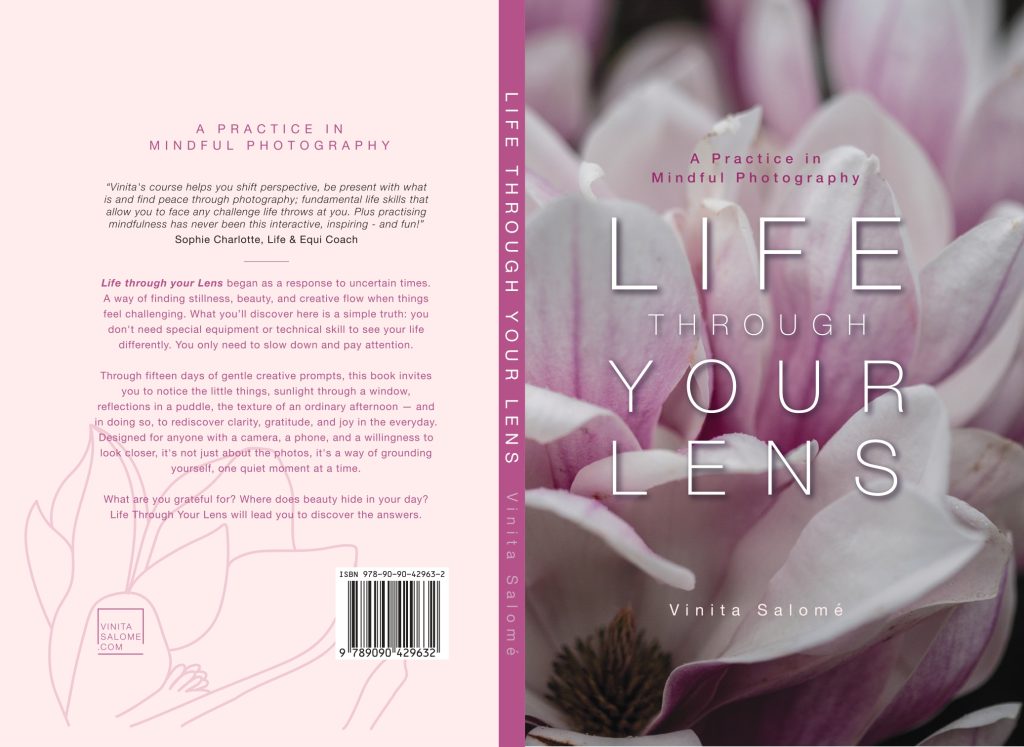
Autumn has always felt like a season of powerful change to me, and this year it brings one I’ve been dreaming of for a long time: my mindfulness photography course, Life Through Your Lens, is now a published book.
Life Through Your Lens was initially created in 2020, a response to those early days of lockdown, when life as we knew it shifted and the future felt uncertain. At that time, I felt inspired to put something beautiful out into the world, something creative that could bring people back to themselves with a sense of appreciation for small, everyday moments. As a photographer who practices mindfulness and meditation myself, I knew that those elements combined would spark the same joy in others as they do for me.
As the years have passed, Life Through your Lens has taken on a new and larger meaning. It’s an antidote to our relentless, A.I driven and divisive culture. A return to slow-living and the beauty of simple things. A way to invite gratitude into your life through quiet, grounded observation.
If your days feel rushed, your phone is full of snaps you never even look at, or you simply want to slow down and see your everyday surroundings with fresh eyes, this book is for you.
It’s a gentle, practical guide to using photography as a form of mindfulness. Through simple daily prompts, it invites you to pause, observe and appreciate the little moments you’d usually walk past. You don’t need a fancy camera, or any photography experience. Your phone and your desire to notice are enough.
From the start I hoped Life through your Lens would one day be something people could hold in their hands. For a long time, I hesitated. Moving from digital course to printed book meant letting go of my ideas about what makes something “worthy” of being published. It was the feedback I received that changed my mind. Again and again, people told me the course had brought them a sense of calm focus and happiness that they had not had before.I knew that was more than enough encouragement.
Inside the book, you’ll find:
Simple, daily exercises you can easily fit into your routine at your own pace.
Reflective prompts to deepen your observation
A way to build a lasting creative habit, without pressure or perfection
The heart of this project has always been about finding a state of appreciation in a single moment, and how much richer life feels when we truly pay attention to it. Photography is simply the best way I know to access that.
Life Through Your Lens is available now https://www.vinitasalome.com/product/lifethroughyourlens/ Whether you pick it up for yourself or as a gift for someone who could use a little more stillness in their life, I’d love to hear what you notice.
National living room festival kicks off anniversary year on Sunday, January 31, 2027
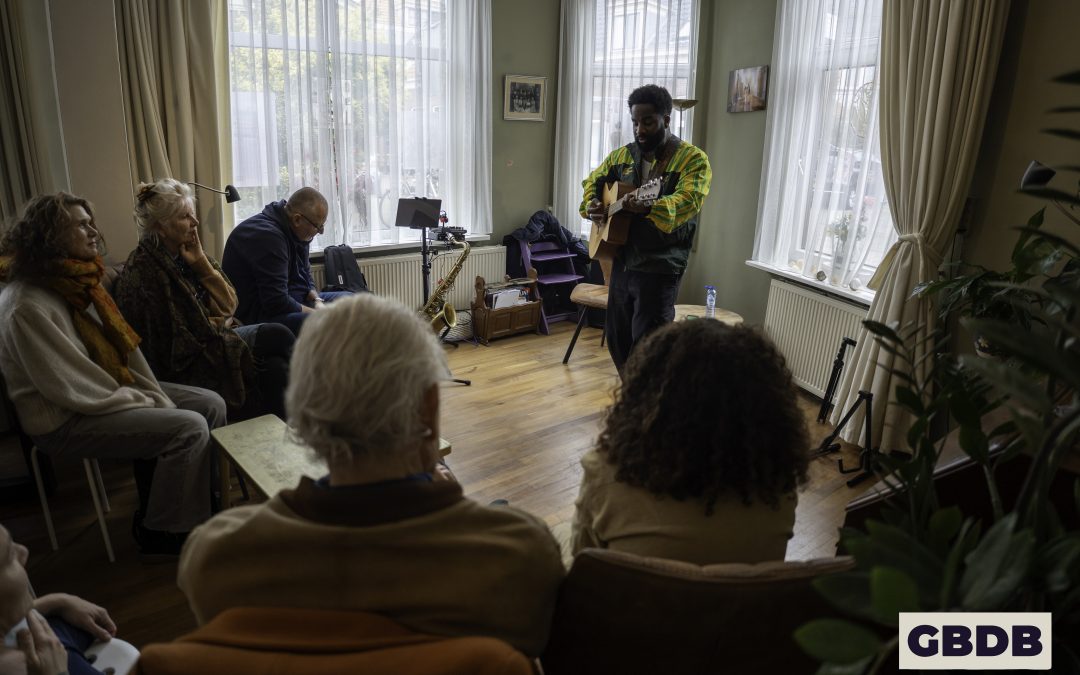
Anyone walking through any residential neighborhood on Sunday, January 31, 2027, might just stumble upon a concert, theater performance, or other event. The Gluren bij de Buren living room festival is celebrating its anniversary and kicks off the jubilee year with its 20th winter edition. In the run-up to the festive edition, the organizers are looking for performing artists and hospitable living room hosts. You can sign up until December 11 via the revamped website.
Twenty years of performing arts and encounter
Since the first edition in 2008, GBDB has grown into a national festival that now takes place in both winter and summer. The basic principle has remained unchanged all these years. Anyone can offer a stage, anyone can perform, and everyone is welcome as a visitor. Living rooms turn into temporary stages, neighborhood residents meet each other, and local talent gets the chance to present itself to a new audience.
Dirkjan van Oord, involved with Gluren bij de Buren from the very beginning: ” Twenty years ago, we could never have imagined that Gluren bij de Buren would become so big. But the best part is that it still revolves around the same thing: people opening their doors, artists sharing their talent, and local residents meeting each other. It is precisely that simplicity that makes the festival so special .”
Participate in the anniversary edition
On Sunday, January 31, 2027, GBDB aims to create stages in over 1,500 locations once again. All types of creators can participate, from singer-songwriters and choirs to cabaret artists, dancers, and theater companies. Residents can register their living rooms. A large house is not necessary: it is precisely the diversity of locations that makes the festival special.
Each act performs three half-hour sets for a changing audience. Visitors can walk in for free and stroll or cycle from living room to living room. In doing so, in addition to surprising performances, they also discover new places and people in their own neighborhood.
Updated website
To mark the anniversary, Gluren bij de Buren has launched a completely revamped website. Participants can easily register here, and visitors will soon find the full program and all the information to put together their own festival route.
Gluren bij de Buren is an initiative of Stichting De Bühne.
Venue provided complimentary food and drinks during Sherika’s visit for this feature. The Hague Online retained editorial control, and the views expressed are the writer’s own
There’s a particular kind of idea that only makes sense once someone says it out loud: build an entire menu around the potato, in a country that eats them almost daily. At Potato Batata, tucked away on Maliestraat 1, that’s exactly what you can expect.
Lama Yazbeck, the owner of Potato Batata, is Lebanese born and bred. She arrived in the Netherlands five years ago, settling first in Amsterdam, where she found much of the food lacking in flavour and variety. When she moved to The Hague two years ago, she knew she wanted to bring something new to the city.
Foto: Anouk BoutenFoto: Anouk Bouten
Back in Lebanon, she had worked mostly in the NGO sector, but she also made and sold chocolate truffles from home as a side gig, and she enjoyed every minute of it. Eventually, she felt the calling to get back into food. This time, the question was what. So Lama did what many of us do when we’re searching for direction: she sat down with her mother and started listing meals.
Somewhere in that list, a pattern appeared. Potatoes kept turning up. In Lebanon, she told me, the potato isn’t a main ingredient, more of a supporting player. But the more they wrote, the more the idea made sense. The Netherlands loves its potatoes, and the quality is excellent. Why not take an ingredient the city already trusts and let it carry an entire menu?
It’s a lovely piece of reasoning, and a very expat one: start with what you know from home, and make it work for the place you’re in now.
The menu is potato from start to finish, with a Lebanese and Mediterranean flavour profile. There are wraps, potato salad, quiche-inspired pies, soufflé and, for dessert, a sweet potato pie. “All potato” sounds unusual, but the range is wider than you’d expect, and it’s clear that real thought went into moving one ingredient through savoury, comforting and sweet flavours.
I tried three dishes:
The messy potato wrap, filled with roast potatoes, coleslaw, pickles and lettuce, and served with a tangy sauce. Be warned: it is indeed messy!
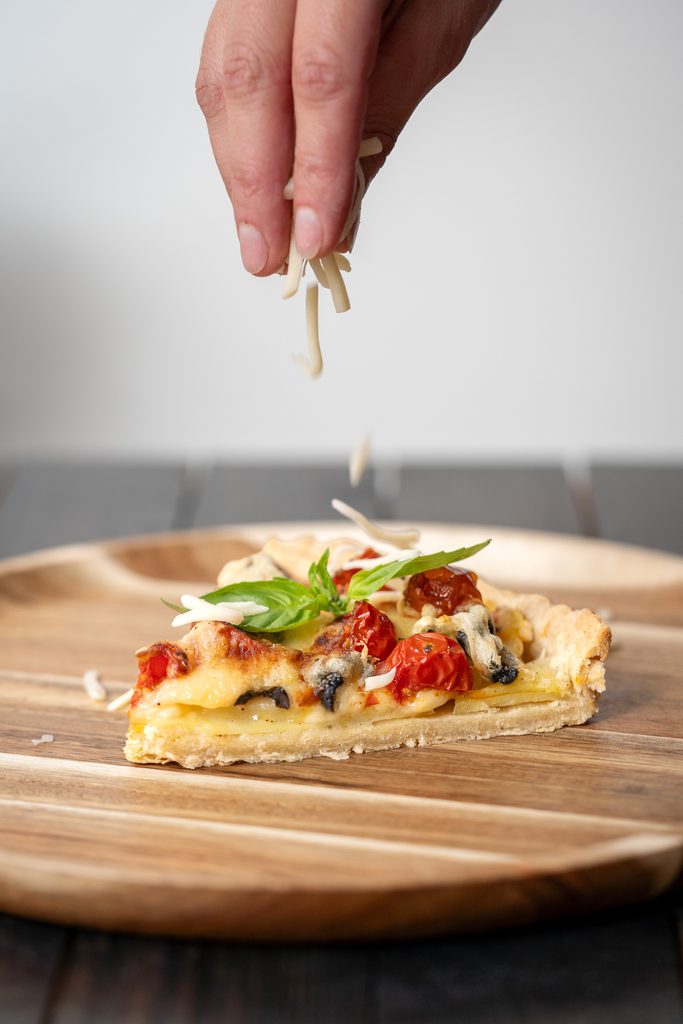
The rustic potato pie, which is similar to a quiche, with basil, cherry tomatoes and olives running through the filling. The crust, made in-house, was flaky and perfectly cooked.
The sweet potato pie, which closes the meal and shows off the sweet potato in a lovely dessert.
The first thing you notice about the flavours here is how gentle they are. Lebanese cooking is often bold with garlic, lemon and fresh herbs, however here the food is simple and mild, comforting rather than punchy: the basil and olives in the rustic pie are present but polite, and the tangy sauce on the wrap is the liveliest flavour on the plate. All in line with a more Dutch palette.
Many items on the menu are homemade, like the hummus, and gluten free. Meat lovers, fear not: marinated beef is available and can be added to your meal. Around 90% of the ingredients are locally sourced, the meat is halal, and vegans will find great options too.
Foto: Anouk BoutenFoto: Anouk Bouten
Potato Batata is a place for a relaxed lunch, for anyone curious about a new concept, and for potato lovers, of whom The Hague has plenty. What it has is a clear idea, a personal story behind it, and a gentle, approachable take on Lebanese flavours.
Go for the crust, the comfort, and a menu that makes one humble ingredient do a surprising amount of work. Potato Batata has only been open for a few weeks, but plenty more is in store. They offer catering for events, and from November will be serving early dinners from 16:30 to 18:30, with more seasonal dishes such as mashed potatoes.
Photos provided by Lama Yazbeck/ Anouk Bouten for Potata Batata
Potato Batata is open for lunch on weekdays at Maliestraat 1 . Follow them on Instagram to stay updated
Do you have a story about your own café, restaurant or bar in the city? Reach out to sherika@thehagueonline.com to possibly be featured.
Sherika Rooplal-Clappers is a contributing writer for The Hague Online, covering culture, lifestyle, and local events. With a passion for storytelling and international perspectives, she highlights the people, places, and experiences that make The Hague a dynamic city.
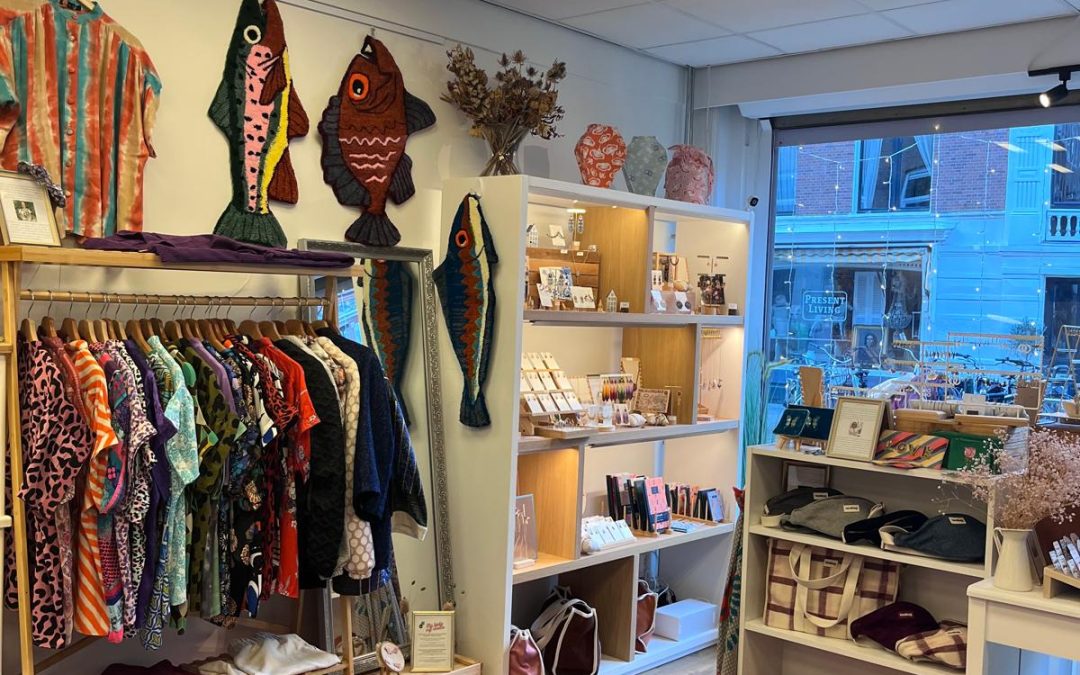
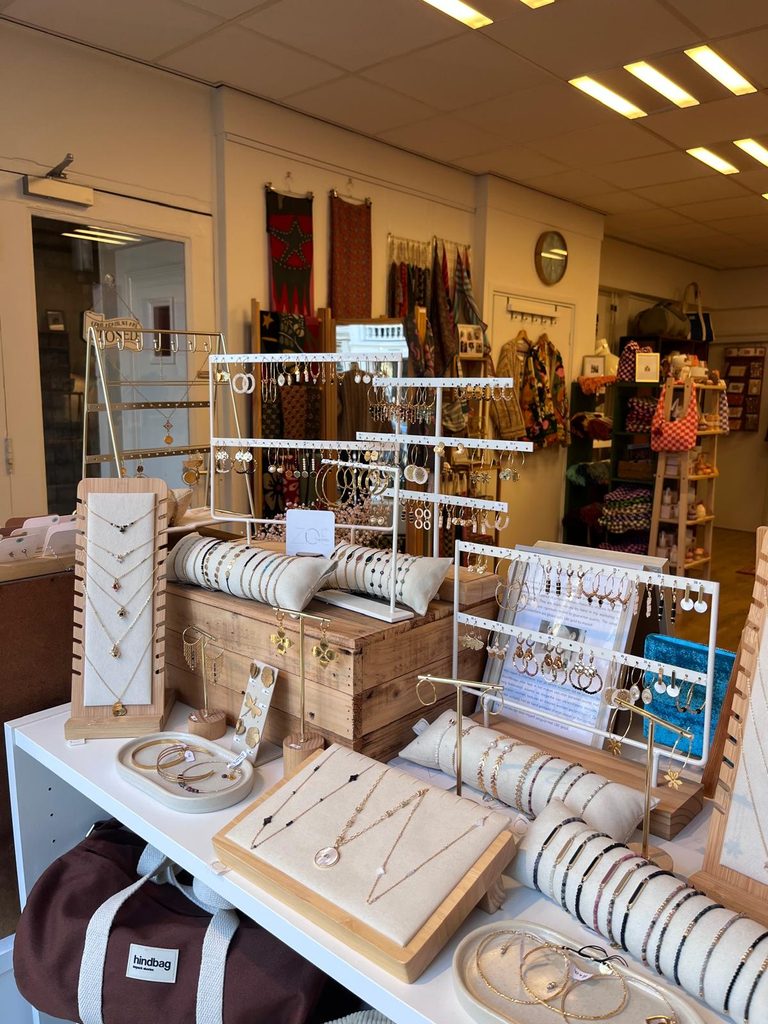
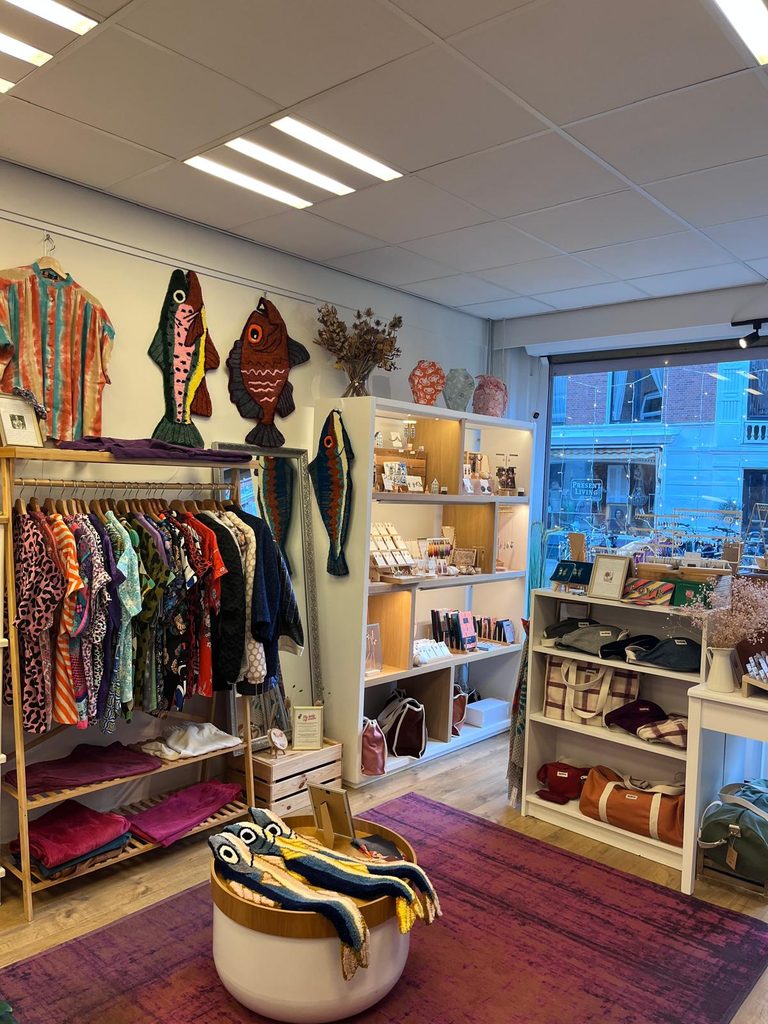
Piet Heinstraat is one of my favourite streets in the city — lovely cafés, restaurants and stores line it, and you could easily spend half a day exploring it all. One of the most charming spaces there is, And Concept Store.
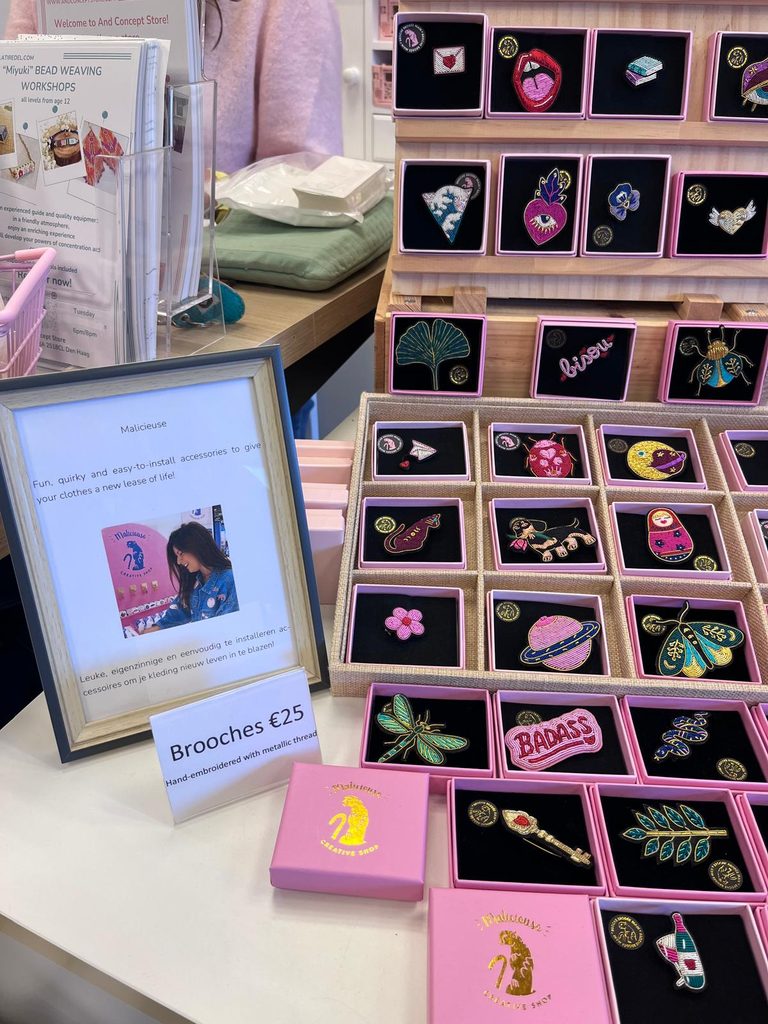
Run by Bénédicte Cador-Robinot, originally from Paris, the store has quietly been part of the neighbourhood for three years now. She brings her French eye for beautiful things to The Hague, both through her own handmade jewellery and a store filled with gorgeous finds.
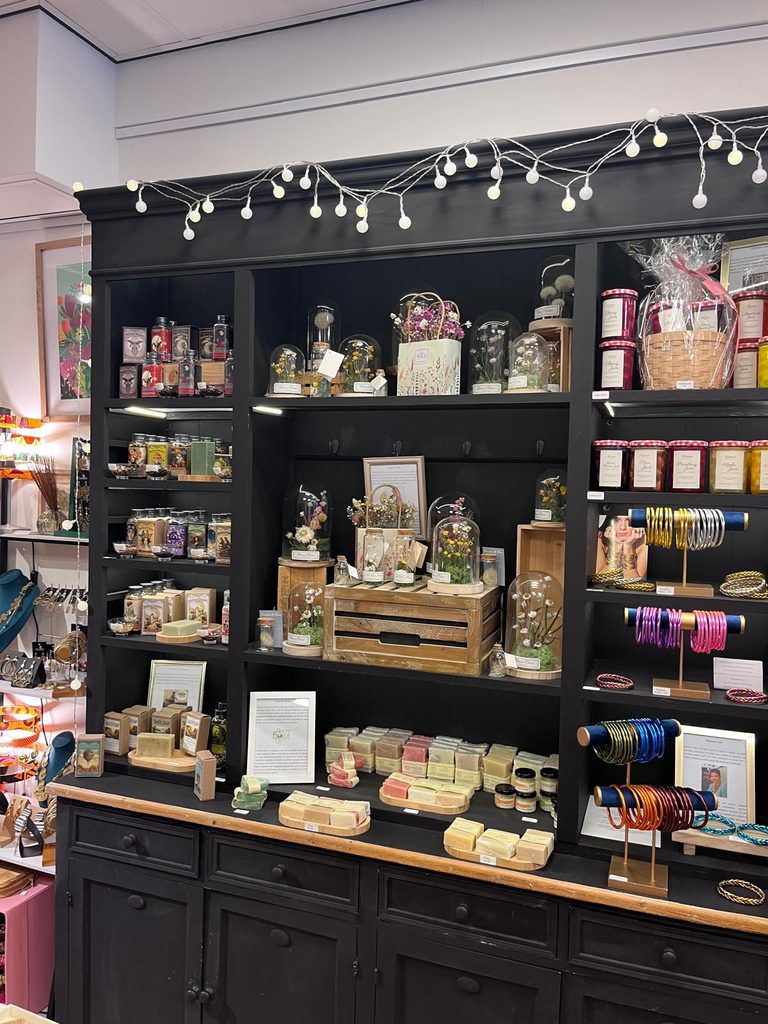
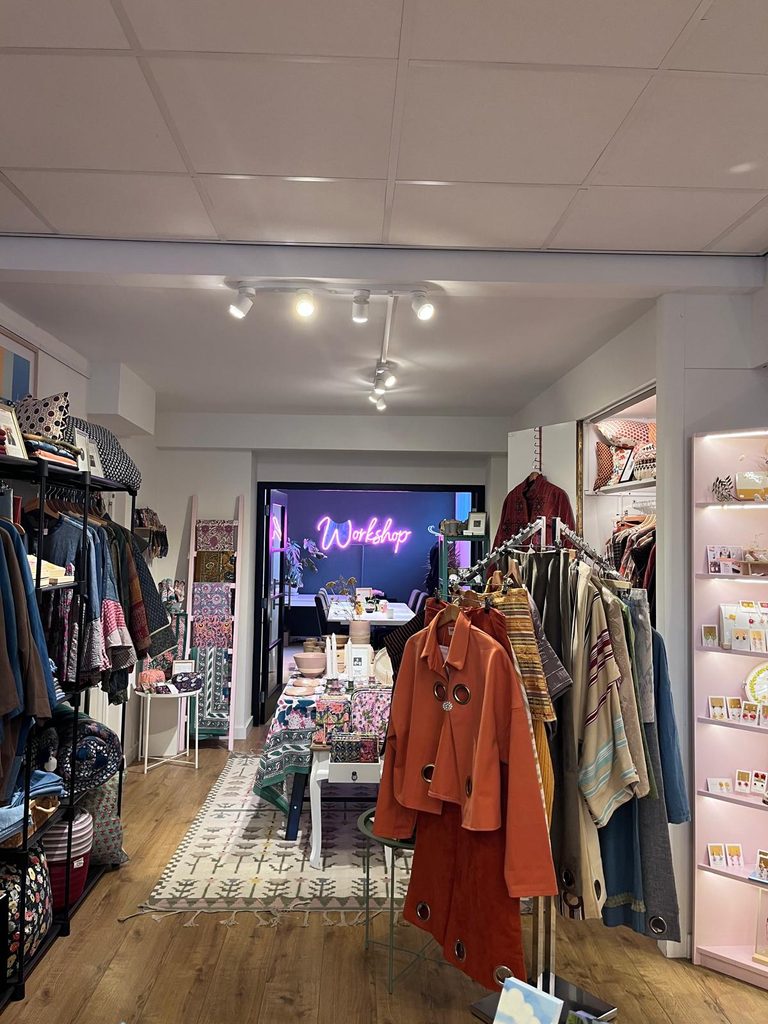
Walk in and you’ll understand immediately why people lose track of time here. The store brings together artists from around the world, and every single piece is handmade: clothing, scarves, candles, jewellery, trinkets, the kind of gifts that feel personal rather than generic. It’s the sort of shop where you go in looking for one thing and leave half an hour later with three, all of them for people you love.
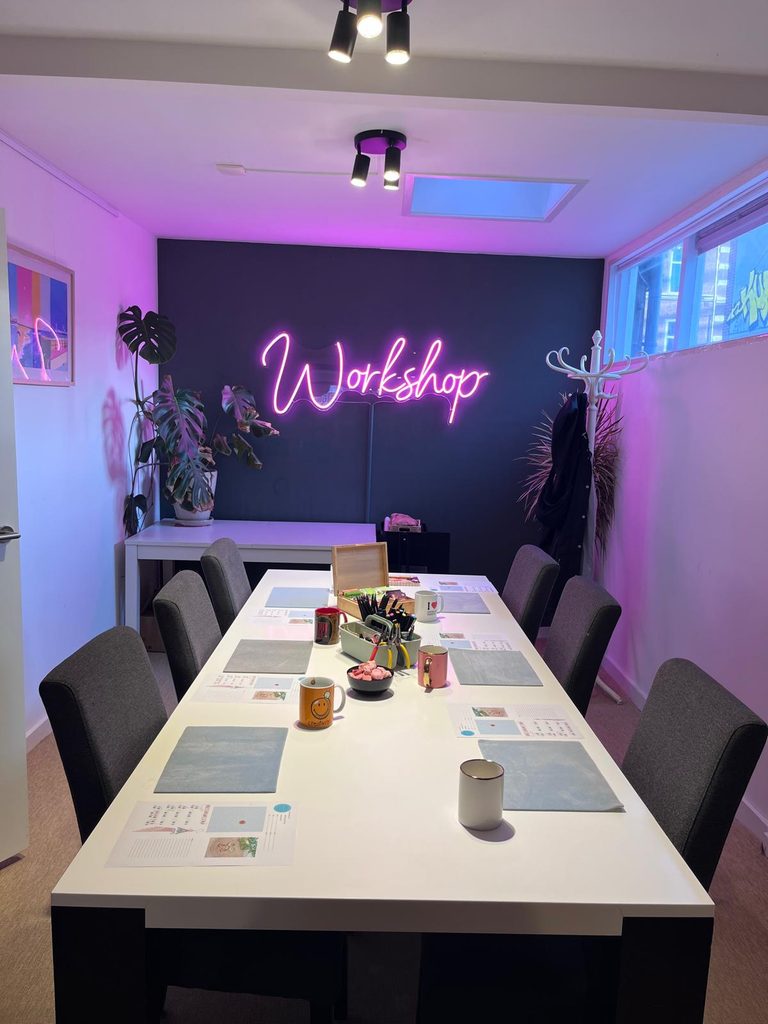
But what I really want to tell you about is the workshop I joined.
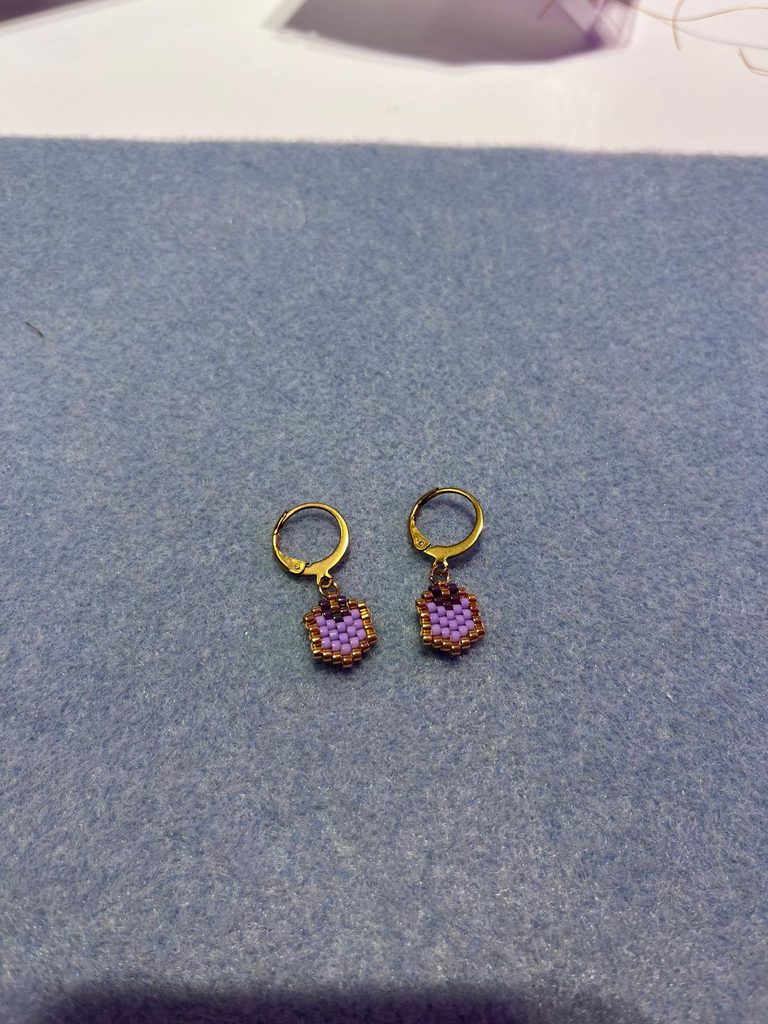
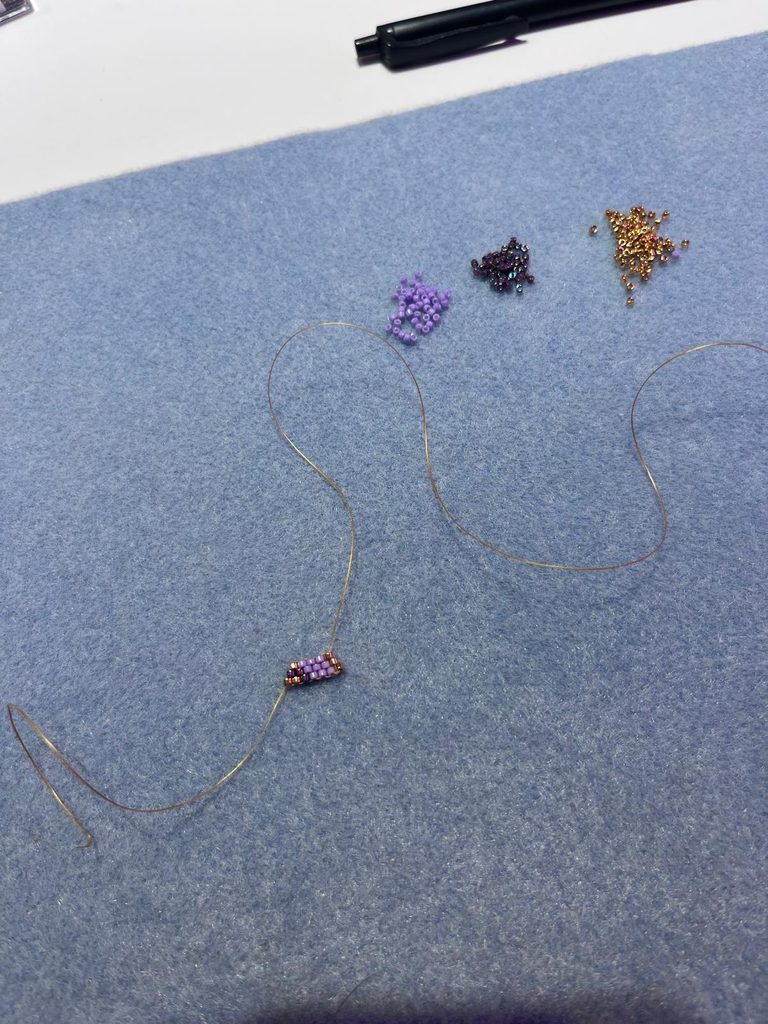
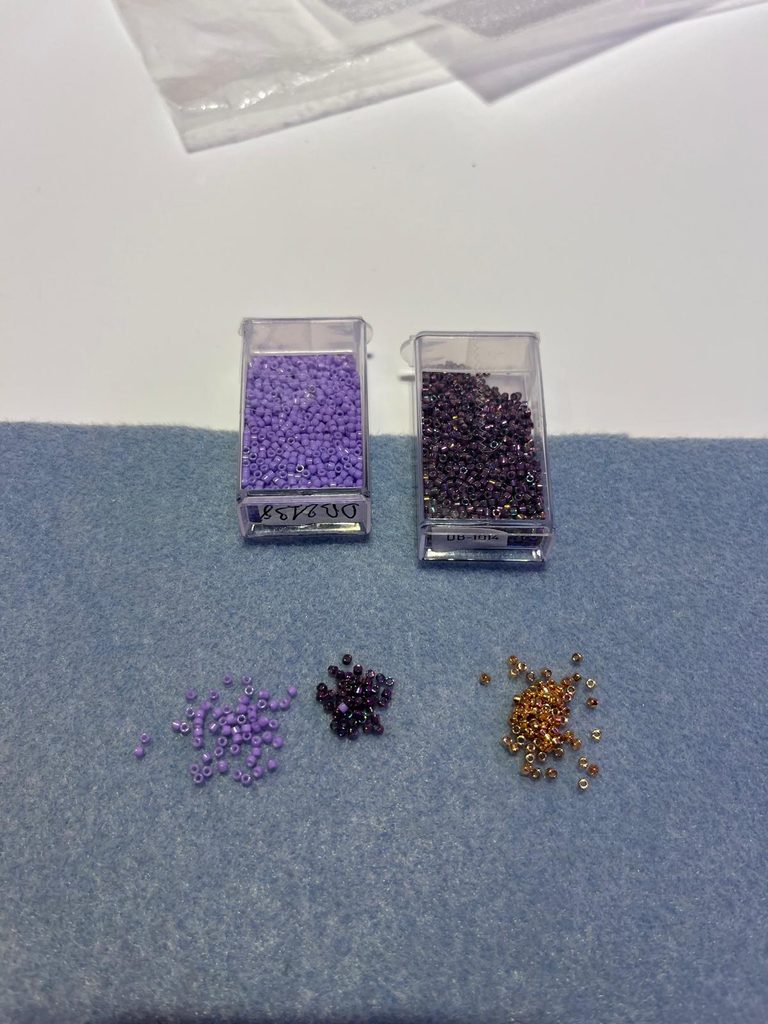
I sat down one Tuesday evening to make a pair of earrings using glass Miyuki beads, those tiny, jewel-toned Japanese beads that catch the light in a way that photographs never quite capture. There was no rush, no pressure to get it right the first time, just the quiet, repetitive motion of threading bead after bead while conversation drifted easily around the table.
It struck me, somewhere in the middle of it, how rare that kind of stillness has become. We fill our days with screens and speed, and here was a room full of people choosing instead to make something slowly, with their hands. It felt less like a craft class and more like a small meditation, the kind where you finish not just with a finished pair of earrings, but with your mind a little quieter than when you sat down.
The rising popularity of analog hobbies says a lot about what we’re all craving right now: fewer screens, less doomscrolling, more time spent actually making something with our hands.
If you’ve been looking for a reason to visit And Concept Store, let this be it, and mark your calendar for something extra special while you’re there. On 26 November, the store is hosting Pink Christmas, an evening of drinks and festive cheer to welcome the season in style. It’s the perfect excuse to start your holiday shopping somewhere that actually feels like a gift in itself.
So next time you’re wandering Piet Heinstraat, step inside. Browse slowly, pick up more than you planned to, and if you get the chance, sign up for a workshop. You might just leave with something you made yourself, and a little more stillness than you walked in with.
And Concept Store is open Tuesday – Sundays on Piet Heinstraat 92A with workshops on Tuesday evenings and one Saturday a month— follow them on Instagram for more details
Do you have a story about your own space in the city? Reach out to sherika@thehagueonline.com to possibly be featured.
Sherika Rooplal-Clappers is a contributing writer for The Hague Online, covering culture, lifestyle, and local events. With a passion for storytelling and international perspectives, she highlights the people, places, and experiences that make The Hague a dynamic city.
By Percy, founder of Tat2holics, tattoo and piercing studio in The Hague
Almost every week, a parent walks into our studio with a teenager by their side. Some parents are excited. Others are nervous, and a few are quietly hoping we’ll say no. And if you moved to the Netherlands from abroad, you may find that the Dutch rules are quite different from the ones you grew up with.
After years of tattooing and piercing in The Hague, I’ve noticed that the families who handle this well all do the same thing: they talk about it before anyone sits in the chair. This article is meant to help with that conversation. It covers what Dutch law says, how to check a studio, what to ask, what normal healing looks like, and what may happen if you or your teen change your mind about a tattoo one day.
The rules come from the Dutch Commodities Act (Warenwet) and the hygiene guidelines of the RIVM, the national public health institute. In short:
Under 12: no tattoos and no piercings. The only exception is the earlobe.
From 12 until their 16th birthday: a tattoo or piercing is allowed, but only with permission from a parent or guardian, and a parent must be present. Even with permission, a few things are not allowed at this age: tattoos on the head, neck, wrists or hands, genital piercings, and nipple piercings for girls.
From 16: young people decide for themselves. By law, no parental permission is needed.
Studios are allowed to be stricter than the law, and many are. They may also ask for ID when they are unsure about someone’s age.
At Tat2holics we use our own house rules, which are stricter than the law:
Earlobe piercings from age 5, only with a parent present and written permission
Other piercings from 16
Tattoos from 17, and at 17 only with written permission from a parent or guardian
Genital and nipple piercings from 18
Why stricter? A piercing can come out. A tattoo stays for life. Taste changes a lot between 16 and 26, and so does the body. We would rather say “come back next year” than help someone make a choice they will want to undo later.
Every tattoo artist and piercer in the Netherlands needs a permit from the GGD, the regional health service. In The Hague that is GGD Haaglanden. The permit is valid for three years and is tied to the studio’s location, not to one person. The GGD inspects studios against the RIVM hygiene guidelines.
The government website has a search function where you can find licensed studios: veiligtatoeerenenpiercen.nl
You can also simply ask a studio to show you its permit. A good studio won’t mind.
One thing many parents don’t know: someone who only pierces earlobes does not need a permit. They still have to follow the hygiene rules. For anything beyond the earlobe, always choose a licensed studio.
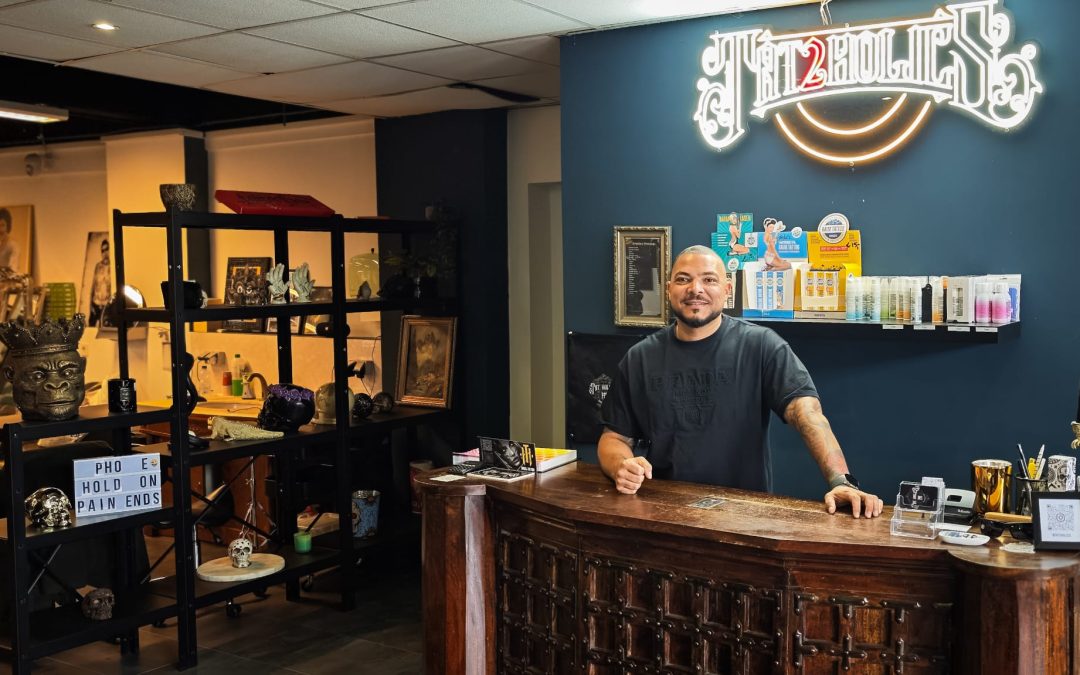
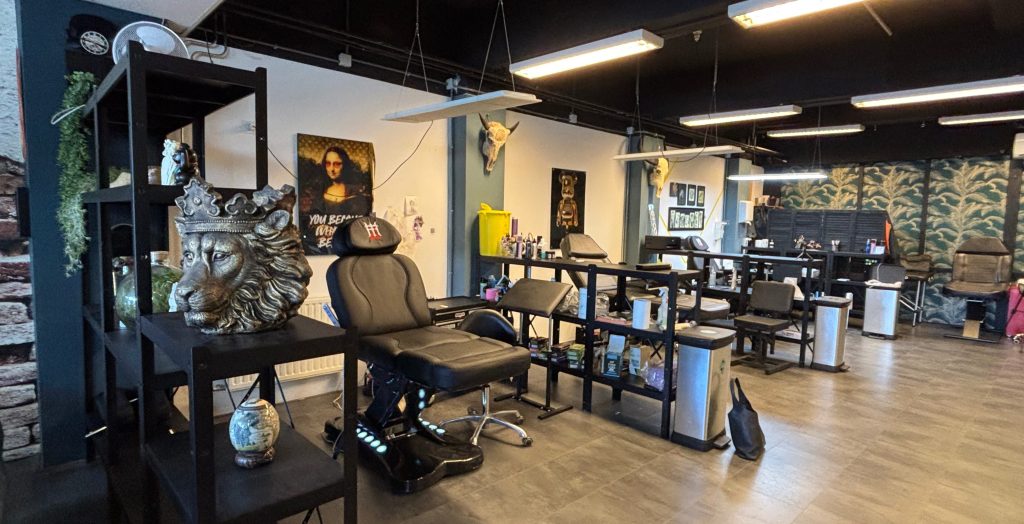
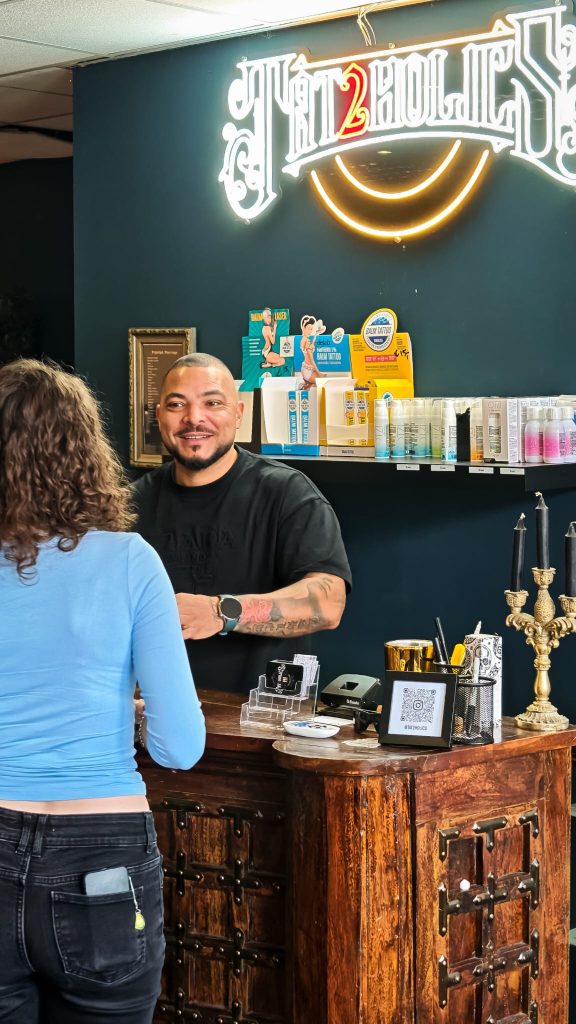
Tat2holics Studio The Hague. Photo: The Hague Online
What is the jewellery made of, and is it sterilised? Under EU rules, jewellery in the body may not release nickel above a strict limit, and for the healing period it should be hypoallergenic and come in sterile packaging. Our advice goes one step further: choose a studio that only works with implant-grade titanium that has been sterilised. That is the standard at Tat2holics. It is the same type of titanium used for medical implants, it contains no nickel that can irritate the skin, and it gives a fresh piercing the best start.
Will we get written aftercare information? For clients under 16, the parent or guardian should also receive information about risks and aftercare before the piercing.
Do you fill in a consent form together with us?
Will you tell us honestly if you think this is a bad idea? A studio that takes the time to say no, or to suggest a smaller or different placement, is usually a studio that cares.
A few warning signs: a studio that doesn’t ask about age, doesn’t use a consent form, or pushes you to decide on the spot.
The RIVM guidelines are the starting point: keep a new piercing clean and as dry as possible, don’t use ointments, sprays or lotions, and stay out of swimming pools, saunas and baths while it heals. Some redness and swelling in the first days is normal.
From experience, we know that good aftercare takes a bit more than rinsing with warm water. A sterile saline solution and a mild antibacterial wash gel help to keep a fresh piercing clean without irritating it. Just as important: not every piercing heals the same way. Cartilage heals differently from an earlobe, and an earlobe heals differently from a navel. Healing time also depends on the placement, the jewellery and how well it is looked after.
That is why the most important tip is this: ask the piercer for advice. A good piercer explains what to do and what to avoid for that specific piercing, gives written aftercare information to take home, and is there for questions while it heals.
Contact your GP (huisarts) if there are doubts about the healing, if your child gets a fever or feels ill in the first days, if itching or redness doesn’t go down after two days, or if symptoms get worse. If your child has a heart condition, check with your doctor before any piercing or tattoo, because some heart conditions carry a higher risk of infection.
Now the other side of the story. Not every tattoo decision works out.
In April 2026, Dutch consumer programme Radar reported that about 5 million people in the Netherlands have a tattoo, that almost one in five of them regrets one, and that among young people this rises to 34%. That is one in three.
We see the reasons behind those numbers in our studio all the time:
A name of an ex, taken at the start of a relationship
A matching tattoo with a friend who is no longer a friend
A trendy symbol that felt meaningful at 17 and feels like a stranger’s choice at 27
A cheap first tattoo from someone at home or on holiday, with lines that have blurred over the years
A spot that turned out to be more visible at work than expected
None of these people were foolish. They were young, and they made a quick decision about something permanent. That is exactly why the conversation at home matters so much.
When a tattoo no longer fits, most people think of laser removal first. Laser can work, but it is a long road. Dutch skin clinics speak of an average of six to eight sessions for full removal, often eight weeks apart, and removal is usually not covered by health insurance. That easily adds up to a year or more.
There is another route: a cover-up. A new tattoo is designed to fully cover the old one, so that the old design disappears into something the person actually wants to wear.
Cover-ups are a craft of their own, and not every studio takes them on. Many of the people who come to us were told elsewhere that their old tattoo could not be covered, or that they should get it lasered first. Covering a dark or large tattoo asks for a different way of designing: you have to plan the new piece around the old lines, choose the right colours and shading, and know how ink behaves on top of ink.
This is exactly what we specialise in at Tat2holics. We have built up the technique and the skills to cover tattoos that other studios turn away, without laser. You can read more about how we approach it on our tattoo cover-up page, but these are the basics:
Every cover-up starts with a free consultation. Our cover-up specialist looks at the skin in person and tells you honestly what is possible.
The old tattoo shapes the new one. The darker and larger the old tattoo, the larger and darker the new design needs to be.
Placement matters. The upper arm, back and belly give the most room to work with. The forearm has less space.
It can take more than one session. A small cover-up is sometimes done in one session. Larger or very dark pieces often need a second layer.
Aftercare matters even more. A cover-up is bigger and denser than a regular tattoo, so it needs careful aftercare to heal well.
Not every tattoo can be covered, and a good artist will say so. But for most people, a cover-up turns something they have been hiding for years into a piece they are proud of again.
If your teenager comes to you with the wish for a tattoo or piercing, these steps help:
Ask why, and listen. The reason often tells you more than the design.
Use a waiting period. If they still want exactly the same tattoo in six months, it is a much stronger choice.
Start small, or start with a piercing. A piercing can be taken out. A tattoo stays.
Think about placement. Hands, neck and face are visible every day, at school, at a job interview and later at work.
Go to a consultation together. Hearing an experienced artist explain the options often calms both sides down.
Don’t just say no and close the door. A flat no can push young people to an unlicensed artist at someone’s home, which is exactly where the hygiene risks and the regret stories start.
By law, yes. From 16, young people decide for themselves. Many studios set a higher age. At Tat2holics, tattoos are possible from 17, and at 17 only with written permission from a parent or guardian.
Not every tattoo, but most can. It depends on how dark and large the old tattoo is, and where it sits on the body. A free consultation will tell you what is possible for your specific tattoo.
Tat2holics is a tattoo and piercing studio at Lekstraat 227 in The Hague, founded in 2017. The studio has won prizes at Dutch tattoo conventions three times and specialises in cover-ups. Parents and teens are welcome to drop by with questions, or to read more about piercing in The Hague first. Tat2holics is open Tuesday to Saturday from 11:00 to 19:00.
Text: Tat2holics
Images: The Hague Online
The Hague Online visited Tat2holics to meet Percy, take photos, get a first hand experience of the studio and received services in exchange for this article.It was a genuinely positive experience