Shilpais a narratologist, writer and founder of The Bridge HUB. She moved to the Netherlands as an undiagnosed neurodivergent expat and learned the cost of masking firsthand. Now she builds ways across. Affordable Dutch classes. Music lessons for those with passion but not privilege. Storytelling for people ready to tell their own. She is a National ECHO Award nominee. Her belief is simple. Access shouldn’t be a privilege. Everyone deserves a way across. She is a guest writer with IamExpat and contributor for The Hague Online.
Have you ever moved abroad and started feeling unwell in ways you could not easily explain? Perhaps you developed stomach problems, struggled to sleep, felt exhausted after ordinary errands, or became more aware of symptoms you had managed for years. It can be frightening, especially when you cannot tell whether you are dealing with an illness, stress, or both.
I want to be careful with that question. I cannot tell you that moving abroad makes people ill because their nervous systems are “panicking”. I can tell you that migration changes the conditions in which a person lives, and those changes can affect physical and mental health. Research on post-migration stress has found links with poorer health and symptoms such as sleep difficulties, loss of appetite, digestive problems, and headaches. Much of that research concerns refugees or people who migrated under circumstances very different from mine, so their experiences should not be treated as interchangeable with mine. But it raises a question worth asking: what happens to health when daily life requires sustained effort to navigate?
I ask it as an AuDHD person who moved to the Netherlands. I am autistic and have ADHD. I am also a writer, which means I am used to looking for connections between events. For a long time, I looked closely at the events in my life but paid less attention to what it cost my body to get through them.
The Netherlands did not greet me with one dramatic difficulty. The work of adjusting appeared in ordinary places. It was there when I read a letter and had to determine not only what it said but also what action it expected from me. It was there when I planned a journey, checked whether I was going in the right direction, and arrived already tired. It was there in conversations where I understood the words but was less certain about the expectation behind them.
A trip to the supermarket could involve more decisions than it once had. I had to find familiar ingredients or choose alternatives, read labels, manage noise and light, and decide what I could eat. None of those tasks was impossible. That was part of what made the exhaustion difficult to explain. I had done the shopping. Why did it feel as though I had done so much more?
Research on autism describes sensory processing differences, including experiences of overload when sensory input becomes too much. That does not mean every autistic person finds a supermarket difficult or that every difficult shopping trip is a medical event. It does help explain why an environment that looks manageable from the outside may demand considerably more from the person moving through it.
For me, there was also the effort of uncertainty. I could enjoy discovering a new place while wanting the day to be predictable. I could be interested in meeting people and still need quiet afterward. My ADHD and autism did not cancel each other out, and neither made me incapable of adapting. They shaped what adaptation required.
I could arrive at an appointment on time, speak clearly, ask questions, and leave with everything I needed. Someone watching might reasonably think it had gone well. They would not necessarily see the preparation beforehand or the time I needed afterward. I often judged myself by the visible result and dismissed the effort that produced it.
That distinction matters when we talk about health. If we count only completed tasks, we may miss the strain involved in completing them. I was studying, writing, learning, and making a life. I was also sometimes frightened by how tired I felt. I did not yet have a useful way to hold those facts together.
My health history did not begin with migration. For more than twenty years, I took medication for allergies. I lived with IBS and, at times, ate from a limited range of foods because eating felt difficult or uncertain. I had learned to organise parts of my life around symptoms. I want to say this clearly because it would make a more convenient story to claim that I moved to the Netherlands, developed health problems, and later discovered a single cause. That is not my story.
What changed was my understanding of the context around those symptoms. I became more aware of the effort of staying alert: noticing how people responded to me, anticipating difficulties, preparing for changes, and keeping some of my own reactions private. I began to wonder whether I was looking at my body one symptom at a time while overlooking how I was living from day to day.
That question is not a diagnosis. Allergies involve immune reactions to allergens; they should not be explained away as a person’s inability to cope. Stress and anxiety are among the possible triggers for IBS flare-ups, but that does not mean stress caused someone’s IBS or that a new digestive symptom should automatically be attributed to it. Physical symptoms deserve assessment on their own terms.
After I was diagnosed with autism and ADHD, I began asking different questions about my days. Had I been coping with more noise than I realised? Had I missed a meal while concentrating on something else? Was I resting only when I became unable to continue? Was I calling a day “easy” because nothing had gone wrong, even though every step had required attention?
Some of those questions concerned interoception, the perception of internal bodily signals such as hunger, thirst, heart rate, and breathing. Research into ADHD suggests that interoception may differ for some people with ADHD, although findings are not uniform and the studies have limitations. In one systematic review, three of five studies comparing people with and without ADHD found reduced interoception in the ADHD groups. That finding cannot explain an individual person’s symptoms, but it offers a useful reason not to assume that everyone notices or interprets bodily needs in the same way.
I recognised something in that uncertainty. Sometimes I noticed a bodily sensation intensely but could not tell what it meant. At other times, I realised too late that I was hungry, tired, or overwhelmed. I had been told to listen to my body, but listening was not always the problem. Interpretation was.
The distinction changed how I thought about my behaviour. Missing a meal did not always mean I had decided food was unimportant. Needing quiet after a conversation did not mean I disliked the person I had spoken with. Struggling with a changed plan did not mean I was unwilling to be flexible. I needed to understand what had happened before I could decide what would help.
Moving abroad added another layer: I was learning a new social and practical environment while still learning about myself. When I could not understand why something felt difficult, there were several possible explanations. Was I unfamiliar with how a Dutch system worked? Had I misunderstood a social cue? Was I overloaded? Was I tired? More than one answer could be true.
Research specifically about autistic people with immigrant backgrounds is still limited. A 2026 systematic review found twelve eligible studies and identified recurring issues including masking, social exclusion, difficulties with identity recognition, and barriers to appropriate support. It also found strengths and potentially protective experiences. The authors cautioned that direct comparisons between autistic immigrants, non-autistic immigrants, and autistic non-immigrants remain limited. That matters to me: the evidence supports taking this intersection seriously, not declaring that every autistic person finds migration harder than everyone else.
The finding that stayed with me was how easily one part of a person’s experience can conceal another. If I struggled in a conversation, I might assume it was because I was new to the country. Someone else might assume the same. Sometimes that would be right. But what if I was also processing sensory information, monitoring my expression, and trying to work out whether I had understood a social expectation? A single explanation could leave important information out.
I know what it is to appear capable while working hard to appear that way. I could prepare for a conversation and get through it, then spend time afterward going over what I had said. I could be grateful for an opportunity and still find the interaction exhausting. When I kept those experiences to myself, people saw that I had managed. They could not see what managing had required.
That pattern affected the way I sought help. Describing a symptom is difficult when it comes and goes. It becomes harder when you are also trying to decide which details matter and how to explain them in an unfamiliar healthcare system. I felt pressure to make my account clear and concise. Yet sometimes the honest account was: this has happened before, it may be changing, and I do not know whether these things are connected.
In the Netherlands, the huisarts, or GP, is the first point of contact for questions about most physical and mental health concerns. That is practical information, but there is also permission in it. I do not have to decide on my own whether a symptom is physical or psychological before asking for help. I can describe what I am experiencing and let a clinician help assess it.
That is especially important when someone offers a reassuring explanation too quickly. “It might be stress” can open a useful conversation. “It is only stress” can close one. The NHS advises seeing a GP for suspected IBS symptoms lasting more than four weeks and identifies symptoms such as unexplained significant weight loss or bloody diarrhoea as reasons to seek urgent advice. Suspected allergies also merit medical assessment; severe allergic reactions require emergency treatment. Those distinctions matter more than a compelling theory about the nervous system.
Over time, many of the symptoms I had written about in earlier years improved. I am glad they did. I am also cautious about what I claim from that change. My autism and ADHD diagnoses did not cure an allergy. I cannot prove that masking caused my IBS, or that moving to the Netherlands caused any particular symptom. I do not have the evidence to make those claims, and my experience should not become a rule for somebody else’s body.
What the diagnoses gave me was a better set of questions. They helped me notice the relationship between my health, my environment, and the effort of getting through a day. They also helped me recognise that support could take more than one form. Medical care mattered. So did knowing when an environment was difficult for me, allowing time to recover, and being more honest about what I needed.
I began paying attention to what happened before I felt unwell. I noticed whether I had slept, eaten, spent a long time in a busy place, or prepared for an uncertain conversation. Not every symptom followed a pattern. Not every pattern pointed to a cause. But recording those details made it easier to describe my experience accurately, including when I spoke to a doctor.
I also stopped using other people’s ease as a measure of what should be easy for me. If someone else could finish a busy day and go straight to a social event, that told me very little about what my body needed. The goal was not to prove I could endure the same amount of stimulation or uncertainty. The goal was to build a life I could participate in without repeatedly ignoring signs that something needed attention.
There is a social part to this finding as well. Moving abroad is often described as a personal achievement, measured by independence, language progress, work, or the ability to fit in. Those are meaningful things, but they do not provide a complete picture of adjustment. A person can be doing well by those measures and still need help. A person can love the country they moved to and have days when the effort of living there is high.
I have learned not to make gratitude compete with difficulty. I can value the life I am building in the Netherlands and speak honestly about the cost of certain days. I can say that I have adapted in many ways without claiming the process is finished. Change takes me time to understand. Sometimes I know I have adjusted only when I notice that something which once demanded careful preparation has become ordinary.
I began this piece with a question about becoming ill after moving abroad. The responsible answer is not that your nervous system is definitely panicking. It is that migration, neurodivergence, stress, environment, and health can interact, while symptoms can also have causes that require investigation. The research is developing, particularly where autism and migration meet, and no study can tell an individual what is causing their illness.
My finding is more personal, and perhaps more useful because it is limited: I understood my health better when I stopped asking for one explanation that would cover everything. I needed medical care and self-understanding. I needed to take symptoms seriously and notice what daily life demanded of me. I needed to ask what was happening in my body without assuming I already knew the answer.
I moved to the Netherlands and learned new ways to find my place here. I am still learning how to recognise what it takes for me to live well in that place. When my body tells me something is wrong, I no longer want to silence it with a neat story. I want to listen carefully, describe what I notice, and get help where I need it.
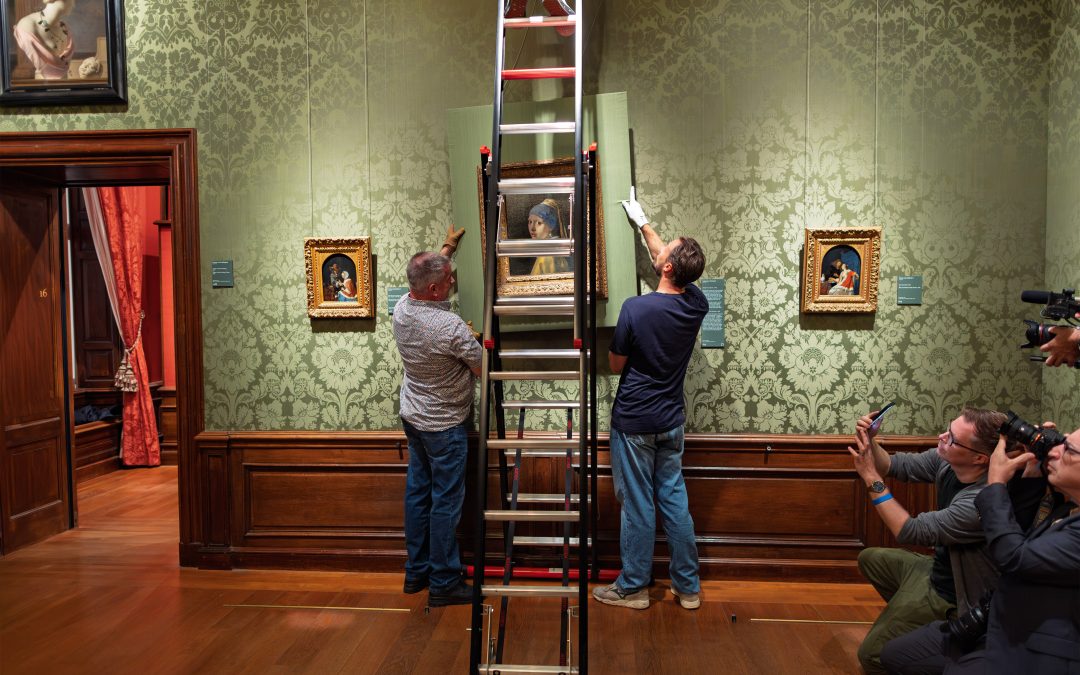
Johannes Vermeer’s world-famous Girl with a Pearl Earring is back home in The Hague following a successful visit to Japan. After attracting considerable attention and long queues in Osaka, the painting returned to its familiar place at the Mauritshuis, where visitors have been able to admire it again since Monday 5 October.
The return comes as The Hague prepares for an autumn filled with art exhibitions celebrating five of the city’s most famous artists: Vermeer, Rembrandt, Mondrian, Escher and Mesdag. With their works displayed in museums within easy reach of one another, this is an opportunity for residents and visitors to explore some of the Netherlands’ most celebrated art collections.
Five Great Artists in One City
“The fact that Girl with a Pearl Earring attracts so many visitors in Japan demonstrates the international appeal of The Hague’s art collections,” said Alderman for Culture Lotte van Basten Batenburg.
“What makes The Hague special is that visitors don’t have to come for just one masterpiece. Vermeer, Rembrandt, Mondrian, Escher and Mesdag can all be seen here within a short distance of each other, each in their own unique setting.”
At the Mauritshuis, Girl with a Pearl Earring has returned to a collection that also includes major works by Rembrandt. From 15 October, the museum will host a special exhibition in collaboration with the Museo Nacional Thyssen-Bornemisza in Madrid, featuring 25 masterpieces from the Spanish museum’s collection.
New Exhibitions Across The Hague
At Museum Panorama Mesdag, Betzy Akersloot-Berg: One of a Kind opened in early October. The exhibition is the first major Dutch retrospective devoted to the Norwegian-Dutch painter, highlighting her dramatic seascapes, international career and role as a successful artist and businesswoman.
The exhibition also explores her friendship with Hendrik Willem Mesdag and Sientje Mesdag-van Houten. Visitors can discover her work alongside Mesdag’s own maritime paintings and his famous panoramic depiction of Scheveningen in 1881.
Meanwhile, Kunstmuseum Den Haag is preparing a new presentation of its internationally renowned Mondrian collection. Opening on 10 October, Mondrian & The Road to Abstraction explores the artist’s development from figurative landscapes to the abstract compositions for which he became famous.
The museum holds the world’s largest collection of works by Piet Mondrian, including his celebrated Victory Boogie Woogie. To mark the opening, Kunstmuseum Den Haag is offering free admission on Saturday 10 October, with additional free activities taking place throughout the weekend.
Last Chance to Discover Escher and Islamic Art
At Escher in Het Paleis, visitors have until 1 November to see Escher & Islamic Art: 20 Perspectives.
The exhibition explores how Islamic architecture and the geometric patterns of the Alhambra influenced M.C. Escher’s fascination with rhythm, repetition and interconnected shapes. His work is presented alongside that of 20 contemporary artists.
For visitors interested in discovering several museums, combination tickets are available for Escher in Het Paleis together with the Mauritshuis or Museum Panorama Mesdag.
With the return of Vermeer’s most famous painting and several exhibitions opening across the city, autumn offers plenty of opportunities to discover The Hague’s rich artistic heritage.
The Netherlands is one of the most dog-friendly countries in the world, and as a dog owner myself, it’s been a joy watching my rescue, Lily, explore and settle into life in The Hague after getting her from Romania. From the dunes to dog-friendly café terraces, this city makes space for dogs in a way that still surprises people who move here.
Dogs have also come to mean more than just companionship at home. More and more owners are recognising the real benefits that come with having one, from lower stress to a built-in reason to get outside and meet people. Walking Lily has certainly been mine; some of my favourite discoveries about this city have come from the places she’s dragged me into.
So here are my favourite spots to enjoy together in The Hague.
The beach. Scheveningen and Kijkduin are among the best places in the country to let a dog loose, but the rules shift with the seasons. In winter, from 1 October to 15 May, dogs are welcome on the whole of the Den Haag beach. In summer, dogs are limited to certain stretches during the day, so check the signs at each beach entrance or the municipality’s website before you go. Make sure you clean up after your dog.
If you want a reliable summer option, locals point to the Noorderstrand, beyond the last beach access at the Zwarte Pad, where dogs can run freely all day.
The dunes. The dunes of Westduinpark and the Hollandse Duinen National Park are beautiful for a long walk, but dogs must stay on the lead. Loose dogs disturb the nesting birds and wildlife that live here, so keep to the paths and read the signs at each entrance.
The Haagse Bos. For shade, space and a quieter pace, the Haagse Bos is a favourite for dog walkers. Look for the “uitrengebied” signs that mark areas where dogs may run free.
Zuiderpark. The Hague’s largest and oldest public park is a major green space, sports hub and cultural venue all in one. A few smaller areas allow off-lead running, but for the rest, it makes for a lovely on-lead walk.
Coffee with your companion
A good dog-friendly café doesn’t just tolerate your dog, it makes room for them. My favourite spots include:
Bartine – the famous bakery on Piet Heinstraat doesn’t just have great coffee, service and pastries, it also makes for a lovely spot to enjoy with your dog.
Arket’s café – the chic Swedish fashion store houses a café serving great cappuccinos and provides the perfect setting for “fika.” The staff love seeing dogs, so expect fresh water to be brought out for yours on arrival.
De Oude Tol – the classic South African lunchroom near The Peace Palace has a lovely outdoor terrace, perfect for warmer days with your furry friend.
Parkoers – housed in Zuiderpark, this makes for a delightful stop after a morning walk with your dog. The menu serves standard Dutch classics, but the atmosphere is properly gezellig.
The Story Café – this cosy neighbourhood café on Appelstraat serves up delicious meals, and they even have pup cups on the menu!
Beach clubs like Hito, De Staat and Zuid – perfect stops after a run on the beach!
Policies can change, so it’s worth a quick message or a look at the door before you go. My rule is to sit outside when the weather allows, and pick somewhere quieter in winter so your dog can settle under the table while you enjoy your meal.
What I love most about walking a dog in this city is how it shapes your day. The same park at the same hour, the same café table — these become a rhythm, and rhythms turn into community. People who would never have spoken to each other end up knowing each other by their dogs’ names.
Lily is not just a dog to me, she’s part of my family. Seeing how excited she gets to explore new places and try new things inspired me to create a dog-friendly event, which I’m delighted to share. On 31 October, I’m teaming up with The Story Cafe’s owner, Meryem Hammiche, and artist Ale, to host Dog P(ART)Y — a few relaxed hours in the morning with you, your dog, and a small group of like-minded individuals.
Here’s what to expect:
Delicious bites for you and your dog
A doggy artwork activity, where your dog gets to make art (yes, really)
A small, cosy group of other owners and their dogs
When: Saturday 31 October 2026 Where: The Story Cafe & Concept Store, Appelstraat 175 Tickets and extra info can be found here Good to know: Dogs must be friendly and socialised, and kept on a leash. You are ultimately responsible for your dog’s behaviour and safety. There will be 2 sessions – one for smaller dogs and one for larger breeds. Check out the link above for full details.
We wanted to create a space where your dog not only feels welcomed, but gets to engage with you in a fun, safe activity. Grab a ticket, bring your best boy or girl, and try something new!
Reach out to sherika@thehagueonline.com for all lifestyle topics and events
Sherika Rooplal-Clappers is a contributing writer for The Hague Online, covering culture, lifestyle, and local events. With a passion for storytelling and international perspectives, she highlights the people, places, and experiences that make The Hague a dynamic city.
Autumn brings a varied month of cinema to Pathé, with big new releases, thrillers and plenty of family adventures. Tom Cruise stars in Digger, while The Social Reckoning explores the story of Facebook whistleblower Frances Haugen. There is also psychological suspense in Verity, arcade-inspired action in Street Fighter and more horror arriving as Halloween approaches.
Beyond the major releases, Pathé’s In the Picture selection includes a new adaptation of Sense and Sensibility, the unusual love story Wicker and Laika’s stop-motion adventure Wildwood. Horror classics return to the big screen throughout the month, while younger visitors can enjoy a new Shaun the Sheep adventure and two Sinterklaas films.
Pathé Specials
Opera: Così fan tutte – 3 October
The season of The Met: Live in HD opens with Mozart’s comedy about love, loyalty and temptation. Phelim McDermott’s production takes inspiration from Coney Island in the 1950s, placing the story in a colourful seaside fairground. Federica Lombardi and Samantha Hankey perform as sisters Fiordiligi and Dorabella, alongside Duke Kim and Andrey Zhilikhovsky as Ferrando and Guglielmo.
Ladies Night: Wen Er Maar Aan – 7 October
Dutch comedy Wen Er Maar Aan follows actress M. as menopause, family tensions and the loss of her regular television role turn her life upside down. Determined to show that her future still holds possibilities, she sets out to reinvent herself. Pathé’s Ladies Night preview includes a snack, drink and goodie bag.
Queen Budapest – 7 October
Queen’s 1986 concert at Budapest’s Népstadion returns to the big screen in IMAX. Filmed during the Magic Tour, the band’s final tour with Freddie Mercury, the concert has been newly scanned and remastered in 4K with a new audio mix. The set includes favourites such as Bohemian Rhapsody, I Want to Break Free and We Are the Champions.
New top movies at Pathé
Digger – 1 October
Tom Cruise plays the most powerful man in the world, who makes a desperate attempt to save humanity from a catastrophe he has unleashed himself. The cast also includes Riz Ahmed, John Goodman, Sandra Hüller, Michael Stuhlbarg and Jesse Plemons. Available in Dolby and IMAX at participating cinemas.
Verity – 1 October
Based on Colleen Hoover’s bestselling novel, this psychological thriller stars Dakota Johnson as struggling writer Lowen Ashleigh. Hired to ghostwrite for celebrated author Verity Crawford, played by Anne Hathaway, Lowen moves into the family’s secluded country house. A disturbing discovery draws her into secrets involving Verity and her husband Jeremy, played by Josh Hartnett.
Forgotten Island – 1 October
DreamWorks Animation’s latest adventure centres on two best friends who must find a way to grow closer before they grow apart. From the studio behind How to Train Your Dragon, Shrek and The Wild Robot, the film is available in its original version as Forgotten Island and in Dutch as Het Vergeten Eiland.
The Social Reckoning – 8 October
This follow-up to The Social Network, written by Aaron Sorkin, draws on the events behind The Wall Street Journal’s“The Facebook Files”. Mikey Madison plays Facebook whistleblower Frances Haugen, who works with journalist Jeff Horwitz, played by Jeremy Allen White, to expose secrets within the social media company.
Whalefall – 14 October
Following his father’s death, Jay Gardiner, played by Austin Abrams, dives off the Californian coast in search of his remains. When a huge whale swallows him, Jay finds himself trapped with just an hour’s oxygen remaining. Lessons from his father, played by Josh Brolin, may offer his only chance of escape. Available in 4DX at participating cinemas.
Street Fighter – 15 October
Set in 1993, Street Fighter reunites estranged fighters Ryu and Ken Masters when Chun-Li recruits them for the World Warrior Tournament. Behind the competition lies a deadly conspiracy that forces them to confront both their opponents and their past. Director Kitao Sakurai brings the arcade game to cinemas with familiar characters, signature moves and spectacular action.
Clayface – 22 October
DC Studios’ horror thriller stars Tom Rhys Harries as Matt Hagen, whose rapid rise from the streets of Gotham to Hollywood ends after a brutal attack. An experimental treatment appears to restore his former appearance, but his hold on reality begins to slip. Directed by James Watkins, the film follows his increasingly destructive pursuit of revenge.
Other Mommy – 29 October
Young Bela forms a connection with a sinister presence in her home that looks disturbingly like her own mother. Directed by Rob Savage, this horror film comes from producer James Wan and Blumhouse Atomic Monster.
In the Picture
Pathé’s In the Picture selection highlights distinctive films that bridge mainstream cinema and the film-house programme.
Sense and Sensibility – 15 October
Jane Austen’s story returns in a new adaptation starring Daisy Edgar-Jones and Esmé Creed-Miles. Produced by the makers of Pride & Prejudice, the film brings another classic literary tale to the big screen.
Wicker – 22 October
Olivia Colman and Alexander Skarsgård star in an unusual story about love, desire and the courage to go against convention. With Skarsgård playing the Wickerman, the film promises a strange and intriguing approach to the complications of love.
Wildwood – 22 October
Laika, the studio behind Coraline, presents a new stop-motion adventure directed by Travis Knight. Its imaginative world and detailed animation make this a film to experience on the big screen, with an adventure designed to appeal to both younger and older viewers.
Classics: Halloween on the big screen
October brings a selection of horror favourites back to cinemas:
Friday the 13th – 1 October: the reopening of Camp Crystal Lake leads to a terrifying series of murders.
The Shining – 8 October: Stanley Kubrick’s adaptation of Stephen King’s novel stars Jack Nicholson and Shelley Duvall as a family spending the winter in an isolated hotel. Also showing in IMAX.
The Craft – 22 October: a new student joins a group of school outsiders who discover the power, and dangers, of witchcraft.
A Nightmare on Elm Street – 31 October: Wes Craven’s horror classic brings Freddy Krueger and his deadly dream world back to the cinema for Halloween.
For the kids at Pathé
Het Vergeten Eiland – 1 October
The Dutch-language version of DreamWorks’ Forgotten Island follows two best friends facing changes in their friendship.
De Club van Sinterklaas Film: Paniek in het Pietendorp – 1 October
Preparations for Sinterklaas’s annual journey to the Netherlands are going smoothly until his staff disappears and bags of presents go missing. Suspecting a thief, the Pieten set out to solve the mystery.
De Grote Sinterklaasfilm en de Vliegende Pieten – 1 October
Extreme winter weather threatens to derail Pakjesavond. Unable to deliver presents across snow-covered rooftops, the Pieten begin working on an invention that could save the celebrations.
Shaun het Schaap: Het Beest op de Boerderij – 7 October
Shaun the Sheep returns for a new family adventure. The farm’s residents are looking forward to Halloween, but their plans are threatened when a clumsy farmer destroys the sheep’s pumpkin patch.
Dutch cinema
De Tatta’s: Daan – 8 October
Daan promises to find an unforgettable birthday present for his crush, Layla. With his grandfather Richard along for the ride, a seemingly simple mission becomes a chaotic journey through the Hollandwijk, full of unexpected encounters.
Pathé news
A cinema visit to bring people together
For the Week against Loneliness, Pathé and the Nationaal Ouderenfonds joined forces to encourage people to take an older person experiencing loneliness to the cinema. The initiative highlights how a shared outing can create opportunities for connection.
Looking ahead: The Hunger Games Marathon
Pathé has announced a marathon of all five Hunger Games films on 14 and 15 November at 25 cinemas. The programme brings together the four original films and the prequel about Coriolanus Snow, ahead of the announced release of The Hunger Games: Sunrise on the Reaping on 19 November.
Pathé Thuis
There are also family films to enjoy at home through Pathé Thuis.
In De Film van Rutger, Thomas & Paco, Rutger and Thomas must solve a mystery when their dog Paco suddenly turns into a cat. They soon discover that other dogs are at risk too.
Paw Patrol: De Dino Film takes the pups to a tropical island inhabited by dinosaurs. When Mayor Humdinger’s plans trigger a volcanic eruption, the team faces a rescue mission of prehistoric proportions.
Pathé Thuis
There are also new releases to watch at home through Pathé Thuis during September, including Minions & Monsters, a new chapter in Illumination’s animated Despicable Me universe.
Release dates and screenings may change, so check Pathé directly for the latest programme, participating cinemas and tickets.
Pathé is the first and largest cinema brand in the Netherlands, founded in Paris in 1896 by true pioneers of film: the Pathé brothers. Their aim was to share the wonderful world of film with as many people as possible. Throughout the Netherlands, Pathé has 30 locations, 253 screens and 1,900 employees. Through its wide range of films, livestreams of opera, sports and gaming, among others, the latest techniques such as IMAX, 4DX, Dolby Cinema and ScreenX, and business events, Pathé creates special and unforgettable cinema stories for all.
Disclaimer& Copyright notice
Pathé is a partner of The Hague Online, and we receive cinema tickets in exchange for sharing monthly updates and links on our website and in our enewsletter. Text is provided by Pathé in Dutch and translated into English by The Hague Online. Images are provided by Pathé. Text and images may not be copied and shared without written permission.
In a recent article, GMW lawyer Seliz Demirci explores a Dutch court case involving an employee who repeatedly recorded that he was working in the office when the evidence indicated otherwise.
The case highlights the importance of honest workplace registration, particularly when attendance records also determine travel expense reimbursements. It also shows why employers need to investigate carefully and give employees an opportunity to explain before proceeding with dismissal.
For international professionals navigating hybrid working in the Netherlands, it is a useful reminder to understand your employer’s policies and keep your records accurate.
In ACCESS Stories this month, Rawia Liverpool reflects on more than three decades of international life, beginning with her first move to the Netherlands in 1992. Relocation, career changes, motherhood, caregiving, bereavement and divorce repeatedly required her to adapt and rebuild her life. Along the way, she discovered the importance of community, transferable skills and asking for support. Now an NLP coach and Transactional Analysis counsellor, she draws on these experiences to support other internationals navigating relocation, identity shifts and major life transitions.
ACCESS is a volunteer-run, not-for-profit organisation that has supported the international community in the Netherlands since 1986. English-speaking volunteers provide free, independent information and guidance on living, working and settling in the Netherlands, via a helpdesk, email support and partnerships across the country.